
Poor Eyesight and Toenail Cutting: What Is Safe
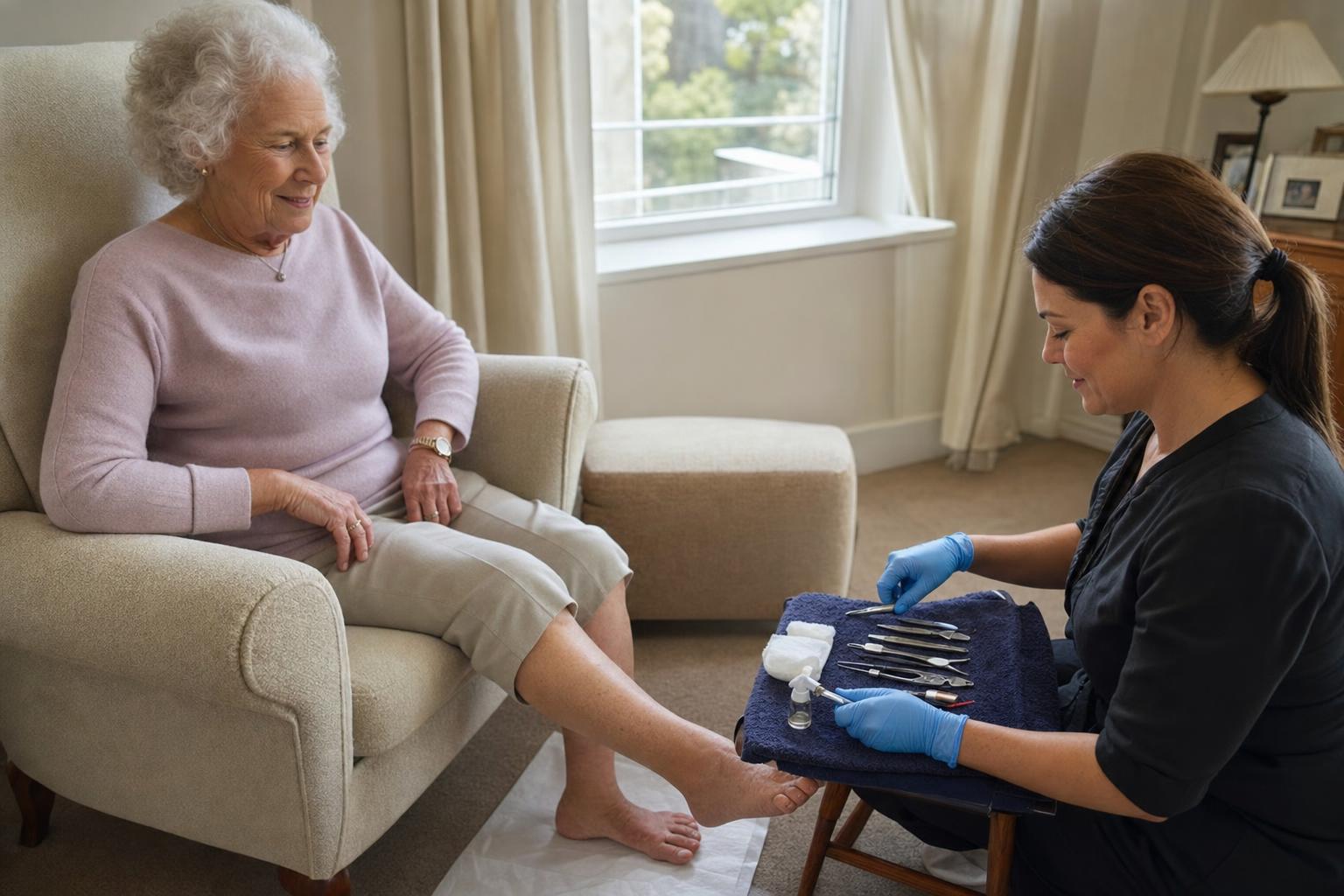
Poor eyesight makes lighting, positioning, and checking the nail edge more important before anyone uses clippers.
The practical search query this article answers is poor eyesight toenail cutting help at home. It is for an older adult, partner, family member, or carer who can see that toenails need attention, but eyesight makes it harder to judge the nail edge, spot sore skin, or cut confidently without causing a nick.
Why poor eyesight changes the decision
Toenail cutting is not only about clipping the nail shorter. It starts with seeing what is safe to cut. Poor eyesight can make it harder to tell where the nail ends, whether the corner is curving into the skin, whether the skin is already broken, or whether the toe is red, swollen, or changing colour.
That matters more in later life because foot problems can affect comfort, walking, footwear, and independence. Age UK describes foot care for older people as a way to reduce pain, infection risk, and falls risk, and says basic services can include help with toenail cutting. If sight is making cutting uncertain, that is a practical safety issue, not vanity.
The Royal College of Podiatry says keeping toenails cut and under control is important because nails that become too long can press against shoes and cause soreness, infection, or ulceration. Poor sight can allow long nails and shoe pressure to creep up before the person notices.
For RMFC, this topic matters commercially because it sits inside strong home visit intent. People search for mobile foot care, toenail cutting at home, chiropodist at home, podiatrist at home, and foot care for older adults when the real problem is that ordinary self care has stopped feeling safe.
What to check before anyone cuts
Before cutting, look at the feet in good light. Check the nail edge, the skin beside the nail, the tips of the toes, the heels, the soles, and between the toes. If the person wears glasses, make sure they are clean and being used. If a family member is checking, ask what has changed rather than only asking whether the nails look long.
The check should look for redness, heat, swelling, discharge, bleeding, broken skin, new pain, sudden colour change, blisters, or a nail corner that seems to be pressing into the toe. NHS guidance on ingrown toenails lists warning signs such as a red, painful, swollen toe, a nail curving into the toe, pus, or feeling hot or shivery. If those signs are present, do not cut into the nail corner.
Sight loss charities often talk about adapting tasks, lighting, contrast, and support so daily life stays manageable. The same practical thinking applies here: if the person cannot clearly see the nail edge, a small clip can become a skin injury. RNIB advice on living with sight loss points people toward practical support for everyday tasks, and foot care may be one of those tasks when sight changes.
Also check shoes and socks. A nail may look acceptable from above but still catch on socks or press against the shoe. NHS advice on home adaptations says a home assessment can look at equipment and everyday tasks when someone struggles at home, which is useful context if small self care tasks are becoming difficult.
When not to cut at home
Do not cut at home if the toe is very painful, swollen, hot, red, bleeding, weeping, or has pus. Do not cut if there is broken skin, a wound, sudden colour change, a bad smell, a new blister, or skin that looks fragile. Do not dig down the side of the nail because poor sight makes it especially easy to cut skin instead of nail.
Diabetes changes the threshold. Diabetes UK explains that diabetes can damage nerves and blood supply, which means people may not feel foot damage properly and cuts or sores may heal less well. If diabetes is involved, new foot changes need extra caution, especially when sight is also poor.
NICE guidance on diabetic foot problems also treats infection, ulceration, and limb-threatening changes as urgent clinical concerns. The practical message for families is simple: if diabetes, poor circulation, reduced feeling, a wound, infection signs, or sudden change are part of the picture, routine clipping should wait until the right clinical advice has been sought.
If a fall, dizziness, or unsafe bending is part of the cutting routine, stop. NHS falls guidance advises people to seek help if they are worried about balance or mobility. In foot care terms, avoiding risky reaching and leaning is part of safer care.
A safer setup if routine care is suitable
If there are no warning signs and the issue is suitable for routine care, make the setup calmer before anyone cuts. Use bright, even light. Sit somewhere stable. Keep the foot supported. Use clean clippers. Avoid rushing. Keep everyday shoes and socks nearby so the person can explain where the nail catches or presses.
Living Made Easy describes impartial advice on aids, gadgets, devices, and equipment for independent living. A magnifier, lamp, long handled aid, or footstool may help some people, but equipment has to match the person’s sight, grip, reach, balance, and confidence. A gadget does not make unsafe clipping safe.
Parkinson’s UK notes that stiffness, balance difficulty, walking changes, and foot problems can affect movement. Even when Parkinson’s is not involved, the same principle helps: foot care decisions should account for movement and balance, not only whether the nails look long.
If the person cannot see the edge clearly, cannot keep the foot steady, or cannot tell whether they are touching nail or skin, stop. It is better to leave the nail slightly longer for a short time than to create a cut that becomes sore or infected.
What carers can do without taking over unsafely
Carers often notice the problem first. They may see torn socks, thicker nails, complaints about shoes, reluctance to walk, or a parent saying they can no longer see well enough to cut. That does not mean the person is careless. Eyesight, confidence, hand strength, memory, pain, and embarrassment can all make foot care harder.
A carer can help by checking in good light, asking what feels different, keeping notes on changes, helping the person gather medicines and health details for an appointment, and making sure footwear is available to inspect. What carers should not do is dig at corners, use blades, cut through thick nails by force, or keep going when the person is in pain.
Carers UK explains that a needs assessment can look at what support someone needs with daily life, and that carers can ask for support too. If nail care difficulty is one sign of wider difficulty with washing, dressing, mobility, or leaving home, asking for wider practical support may be sensible.
GOV.UK also explains that a health and social care assessment can consider healthcare, equipment, help in the home, and adaptations. If eyesight and foot care are part of a bigger pattern, support at home may need looking at more broadly.
When a home visit is the sensible next step
A home visit can be sensible when the skin is intact, there are no urgent warning signs, and the main barrier is poor sight, awkward reach, thick nails, carer uncertainty, or travel difficulty. The visit can help with routine toenail cutting, thickened nail reduction, rough edges, comfort checks, and practical advice about socks and shoes.
The boundary still matters. Wounds, suspected infection, sudden swelling, severe pain, spreading redness, diabetes related concerns, or a toe that looks acutely worse may need GP, NHS 111, NHS podiatry, community nursing, or a foot protection team rather than routine foot care.
If someone uses the title podiatrist or chiropodist, the HCPC register is the place to check regulated professional status. Checking registration can be useful when that title is part of the trust decision.
For Rithik’s Mobile Foot Care patients in Surrey, the commercial fit is direct. Poor eyesight often turns ordinary nail care into something people delay, avoid, or attempt nervously. If the problem is suitable for routine care, booking a home visit can make the next step calmer and safer.
Key Takeaways
- Poor eyesight makes toenail cutting harder because the person may miss nail edges, broken skin, redness, swelling, or colour change.
- Check the feet in good light before cutting, including the nail corners, skin beside the nail, soles, heels, and toe spaces.
- Do not cut at home if there is broken skin, swelling, discharge, severe pain, infection concern, sudden change, or diabetes related foot risk.
- Carers can help by checking, preparing, and noticing changes, but should not dig at nail corners or force thick nails through pain.
- Home visit foot care can help when routine nail care is suitable but poor sight, reach, travel, or confidence makes self care difficult.
Poor eyesight does not automatically mean someone needs professional foot care, but it does change the safety decision. If the person cannot clearly see the nail edge or check the skin properly, cutting becomes easier to get wrong. Start with light, stability, careful checking, and clear red flags. If the issue is routine and suitable, home visit foot care can help. If there is pain, swelling, discharge, broken skin, sudden change, or diabetes related concern, get medical advice first.
Need Professional Foot Care?
Book a home visit and get expert treatment without leaving your house