
Foot Care With Parkinson's: What Helps at Home
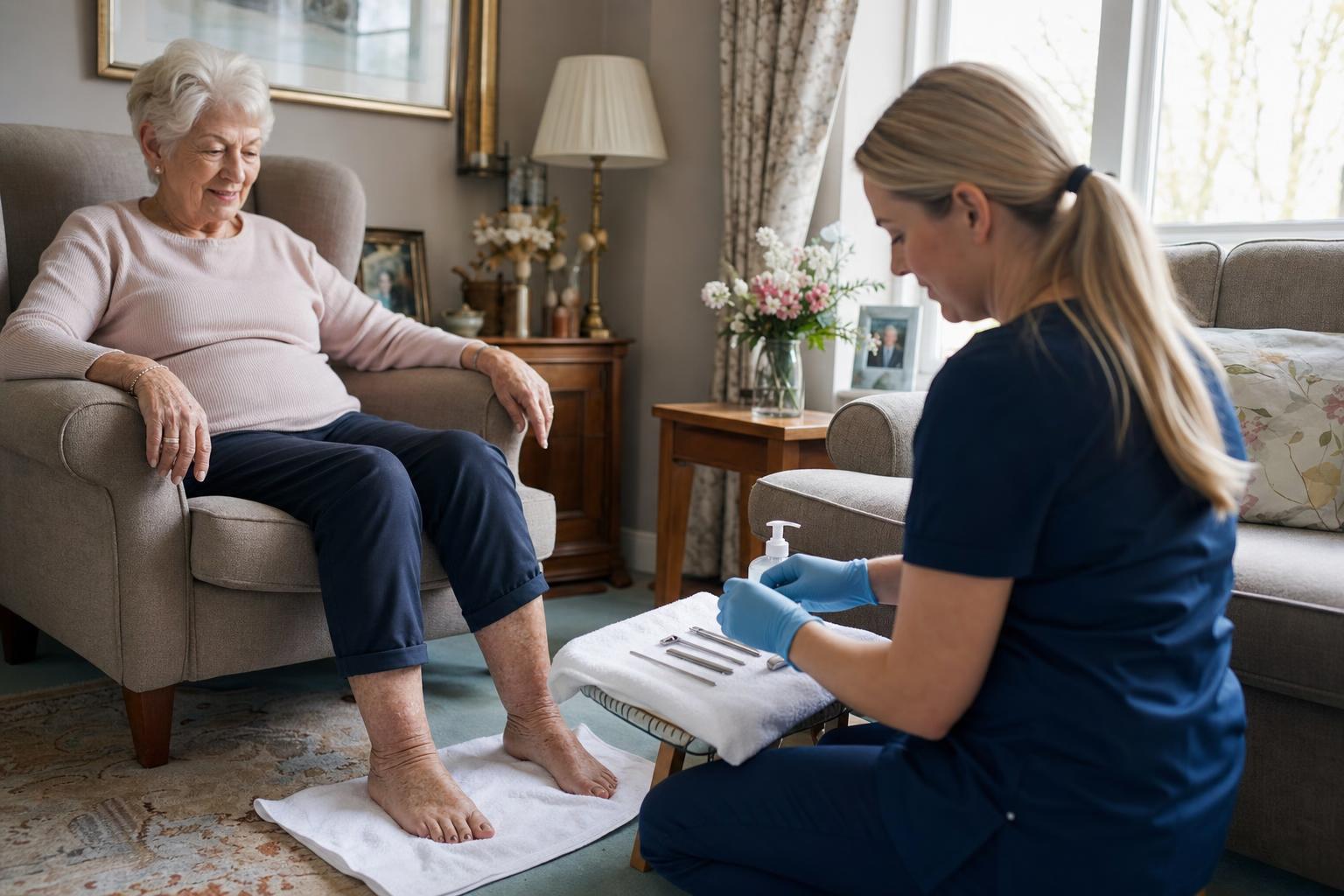
Movement, balance, and positioning changes can make routine foot care harder to manage safely at home.
The practical search query this article answers is Parkinson's foot care at home. It is for the person with Parkinson's, partner, adult child, or carer who has noticed that toenail cutting, checking the feet, managing swelling, putting shoes on, or travelling to a clinic has become harder than it used to be.
Why Parkinson's changes foot care at home
Parkinson's foot care is not only about nails. The real problem is often a mix of slower movement, stiffness, balance changes, tiredness, footwear difficulty, and carer worry. A task that used to take five minutes can become awkward, rushed, or unsafe.
The NHS describes Parkinson's as a condition that can cause tremor, slow movement, stiff muscles, and balance problems that may increase falls risk. Those everyday movement changes explain why routine foot care can become harder to do safely, even when the foot problem itself looks simple.
Parkinson's UK explains that some people experience foot and ankle stiffness, altered walking, freezing, swelling, and difficulty putting shoes on. If the feet are harder to move, inspect, or fit into shoes, foot comfort can affect walking confidence, not just grooming.
For RMFC, this matters commercially because the searcher is often trying to solve an access problem. They may search for home visit foot care, mobile foot care, podiatrist at home, chiropodist at home, or toenail cutting at home because clinic travel, bending, tremor, or stiffness has become part of the problem.
What to check before cutting nails
Start with a foot check, not the clippers. Look at the tops and soles of the feet, between the toes, around the nail edges, and across the heels. Notice swelling, redness, broken skin, pressure marks, new pain, colour change, or areas that rub inside shoes.
The Royal College of Podiatry says ageing feet can develop dry, fragile skin, brittle nails, clawing toes, circulation concerns, and nails that press into shoes if they are not kept under control. That is why checking shoe pressure and nail length together is more useful than looking at the nails in isolation.
Swelling deserves particular care. Parkinson's UK notes that swelling can make shoes feel tighter, and that footwear should still fit well to avoid falls. If the foot is swollen, do not force shoes on or cut nails while the person is uncomfortable.
If diabetes is also involved, raise the caution level. Diabetes UK explains that reduced feeling and reduced blood supply can make foot damage easier to miss and harder to heal. A person with Parkinson's and diabetes should treat new cuts, swelling, sores, or loss of feeling as a reason to seek medical advice before routine trimming.
When not to treat it as routine
Do not treat the appointment as routine if there is broken skin, a wound, pus, spreading redness, sudden swelling, a hot painful toe, severe pain, a new colour change, or a fall injury. Do not dig down nail corners or cut through thick nails by force. Parkinson's can make the foot harder to keep still, which makes aggressive cutting riskier.
NICE guidance for Parkinson's disease is written for clinical care, but the family message is still useful: Parkinson's care should involve monitoring symptoms, information, support, and the right professionals around the person. Foot care should fit into that wider care picture, not sit apart from it.
If the person has new or unexplained swelling, sudden walking change, repeated falls, a suspected infection, or diabetes related concern, contact the GP, NHS 111, the relevant Parkinson's team, NHS podiatry route, or foot protection team as appropriate. A home visit can help with routine care, but it should not be used to work around signs that need medical input.
How carers can make foot care calmer
Carers can help most by slowing the task down. Ask what feels different, what shoes are uncomfortable, whether the person has had more freezing, falls, cramps, swelling, or tiredness, and whether a particular time of day is easier. Parkinson's symptoms can vary, so timing matters.
Parkinson's UK has a guide for home care workers that focuses on person centred care for people with Parkinson's who live at home. That supports a practical rule for families: plan the appointment around the person, not around getting the nails cut as quickly as possible.
A useful carer note might include medication timing, mobility aids, whether one side is stiffer, whether communication is affected, diabetes or circulation history, blood thinning medication, recent falls, footwear problems, and the exact reason the foot care has become difficult.
Carers UK notes that arranging care can feel difficult when families do not know where to start. Turning the worry into clear information can make care and support decisions easier, including whether routine home visit foot care is the right next step.
Setting up a safer home visit
Choose a firm chair where the person can sit comfortably with both feet supported. Make sure there is good light, space to work, and the usual shoes, slippers, socks, dressings, medication details, and mobility aids nearby. If tremor, stiffness, or fatigue is worse at certain times, book around the calmer part of the day where possible.
Age UK explains that foot care services for older people can include basic toenail cutting and may be available at home for people who are housebound. It also notes exceptions where more specialised care may be needed, including diabetes or certain medication such as warfarin. That is why the setup and risk information both matter before anyone starts.
If Parkinson's is part of a wider care need, foot care may be only one piece of the support picture. GOV.UK explains that a needs assessment can look at healthcare, equipment, help in the home, and adaptations. If washing, dressing, shopping, transfers, or leaving home are also becoming difficult, wider help at home may be worth exploring.
When home visit foot care helps
A home visit can help when the foot care need is routine but Parkinson's makes self care or clinic travel difficult. Common examples include toenails becoming too long, thick nails that are hard to manage, rough nail edges catching on socks, hard skin discomfort, shoe pressure, or swelling that makes footwear checks more important.
The value is not only shorter nails. The visit can check obvious pressure areas, smooth rough edges, reduce manageable thickened nail where appropriate, discuss shoes and socks, and explain what should be watched between visits. It can also give the family a calmer answer than guessing with clippers at home.
For people in Surrey, booking a home visit with Rithik's Mobile Foot Care may be sensible when Parkinson's makes routine nail or skin care difficult but there are no urgent warning signs. If there is broken skin, suspected infection, sudden swelling, severe pain, a fall injury, or a new diabetes related change, seek medical advice first.
Key Takeaways
- Parkinson's can make foot care harder because movement, stiffness, balance, swelling, footwear, and fatigue can all affect the task.
- Check the feet, shoes, swelling, pressure marks, and skin before anyone starts cutting nails.
- Do not treat wounds, infection signs, sudden swelling, severe pain, or diabetes related changes as routine nail care.
- Carers can help by preparing clear health details, timing the visit well, and avoiding rushed or forceful cutting.
- A home visit can help when the need is routine foot care but travel, bending, tremor, stiffness, or confidence is the barrier.
Foot care with Parkinson's should start with the real problem: can the person safely see, reach, hold still, walk, wear shoes, and explain discomfort? If the answer is becoming no, it is reasonable to change the plan. For routine nail and skin care, a calm home visit can make foot care easier and safer. For wounds, infection signs, sudden swelling, severe pain, falls, or diabetes related changes, medical advice should come first.
Need Professional Foot Care?
Book a home visit and get expert treatment without leaving your house