
Verruca on Foot: When to Get Help
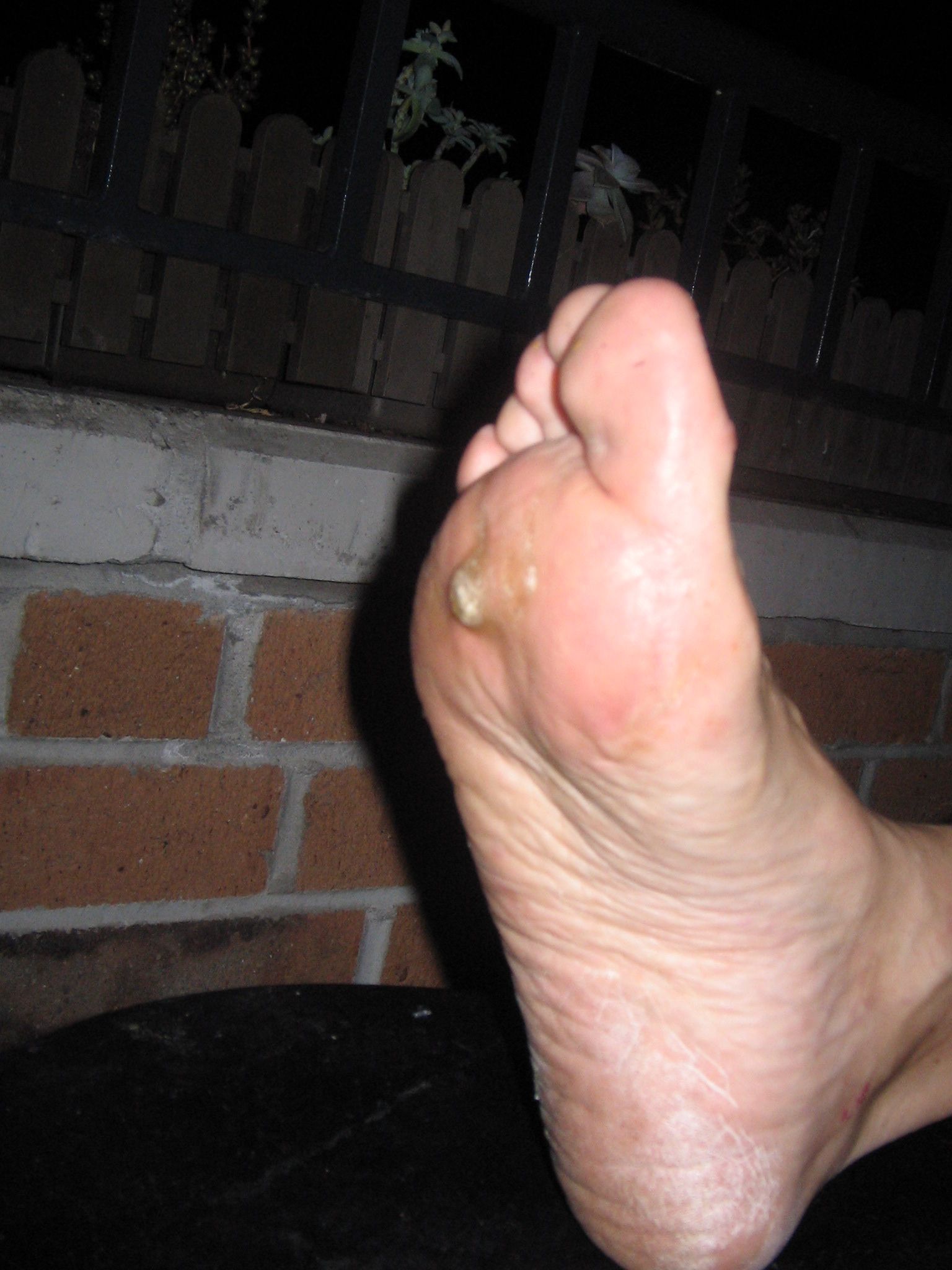
A verruca can look small but still feel painful when it sits on a weight bearing part of the foot. Photo source
The practical search query this article answers is verruca treatment at home Surrey. It is for someone who has noticed a painful rough spot on the sole, a carer checking an older adult's foot, or a family member trying to work out whether a home visit foot care appointment is sensible.
Why a verruca can feel worse than it looks
A verruca is a wart on the sole of the foot. It can be small, flat, and easy to mistake for a corn or patch of hard skin, but it may hurt because body weight presses it into the skin when the person stands or walks.
Public health guidance describes verrucas as foot warts that may have tiny black dots under hard skin and can be painful, sometimes feeling like standing on a needle. That is the problem most patients notice first: not the name of the lesion, but the sharp pressure when they walk.
This matters commercially for RMFC because a painful verruca often becomes a home visit question. The person may be avoiding shoes, walking differently, or asking a carer to look at the sole because clinic travel is difficult.
How to recognise a possible verruca
A verruca often appears on the sole or around the toe area. It may look rough, flat, white, or slightly cauliflower like, sometimes with dark dots. Professional foot health guidance notes that verrucae commonly occur on the soles or around toes and can be recognised by a small growth with tiny black dots.
Pain pattern can help. A corn often hurts with direct downward pressure because it is usually a hard pressure plug. A verruca may be more tender when squeezed from the sides, although this is not a perfect test. If the area has changed, bleeds, looks unusual, or does not behave like a typical pressure problem, it should be checked rather than repeatedly filed.
NHS inform describes verrucas as usually developing on the soles, often appearing white with a black dot in the centre, and sometimes being painful on a weight bearing part of the foot. That is why a small mark can still disturb walking.
What is safe to try at home
If the person is healthy, has normal feeling in the foot, and the area looks like a straightforward verruca, pharmacy advice may be a sensible first step. Treatments such as creams, plasters, or freezing sprays are available, but they need care, patience, and correct use.
The NHS warns that pharmacy treatments can take up to three months, may irritate the skin, and do not always work. NICE also explains that warts and verrucae can clear spontaneously or persist for years, so treatment decisions depend on symptoms, risk, and persistence.
Avoid digging, cutting, or picking at the area. Do not use blades or strong acids on uncertain skin changes. Keep the foot clean and dry, cover the area if it rubs, and avoid sharing towels, socks, nail files, or pumice stones. Practical patient information also explains that warts and verrucas are caused by HPV and can be spread through contact with infected skin or contaminated surfaces.
When home treatment is the wrong answer
Home treatment is not the right starting point if the person has diabetes, poor circulation, reduced feeling, immune suppression, a wound, spreading redness, discharge, sudden swelling, or a rapidly changing lesion. In those situations, the risk is not only the verruca. The risk is damaging skin that may heal slowly or missing a more serious problem.
Diabetes changes the threshold for caution because nerve and blood supply problems can make foot injuries more serious. Diabetes can affect nerves and circulation, making small foot injuries harder to feel and slower to heal, so foot problems should be checked early rather than ignored.
You should also get advice if the verruca is very painful, keeps coming back, is very large, bleeds, or changes in appearance. Healthdirect gives similar practical advice that warts are usually harmless, but medical review is sensible when they are painful, changing, or causing concern, especially where self treatment is not suitable.
Why older adults and carers should be careful
For an older adult, the verruca itself may not be the only issue. The person may not see the sole clearly, may struggle to reach their foot, or may walk differently because of arthritis, poor eyesight, balance problems, thick nails, corns, callus, or painful shoes.
A carer can help by checking the sole in good light, noting where the pain is, and looking for warning signs without cutting or scraping. Home care safety guidance is useful here because safe care depends on the person's needs, the home environment, the task, and the competence of the person helping, not just the condition being treated. A careful setup is part of safe care in someone's own home.
If the person is walking less, changing footwear, avoiding stairs, or becoming anxious about standing, the problem deserves attention even if the mark on the foot looks small. Pain that changes movement can create knock on risks for comfort, confidence, and mobility.
Where RMFC fits
Rithik's Mobile Foot Care can help when someone in Surrey needs a calm home visit foot care check and the problem is suitable for routine support. That may include looking at the painful area, checking whether hard skin or shoe pressure is adding to discomfort, helping with general nail and skin care, and explaining when GP, pharmacist, podiatry, or urgent medical advice is the safer next step.
A home visit can be especially useful when an older adult cannot easily inspect the sole, cannot travel comfortably, or has a family member trying to decide whether the issue is ordinary hard skin, a verruca, a corn, or something that needs medical input. The aim is practical comfort and safe direction, not risky DIY treatment.
Key Takeaways
- A verruca is a wart on the sole and can hurt when body weight presses on it.
- Tiny black dots, a rough flat area, and pain on a weight bearing part of the foot can point towards a verruca.
- Pharmacy treatment may be suitable for low risk adults, but it can take time and may irritate the skin.
- Diabetes, poor circulation, reduced feeling, wounds, bleeding, spreading redness, or changing skin need prompt advice.
- A home visit can help when pain, poor visibility, reduced mobility, or carer uncertainty makes safe foot checks harder.
If a rough spot on the sole is painful when walking, do not assume it is just hard skin. Check whether it looks like a verruca, whether there are risk factors such as diabetes or poor circulation, and whether the pain is changing how the person moves. Simple pharmacy advice may be enough for some people, but older adults, carers, and anyone with higher risk feet should avoid cutting or strong home treatment and arrange the right help early.
Need Professional Foot Care?
Book a home visit and get expert treatment without leaving your house