
Toenails Hurt in Shoes: What to Check
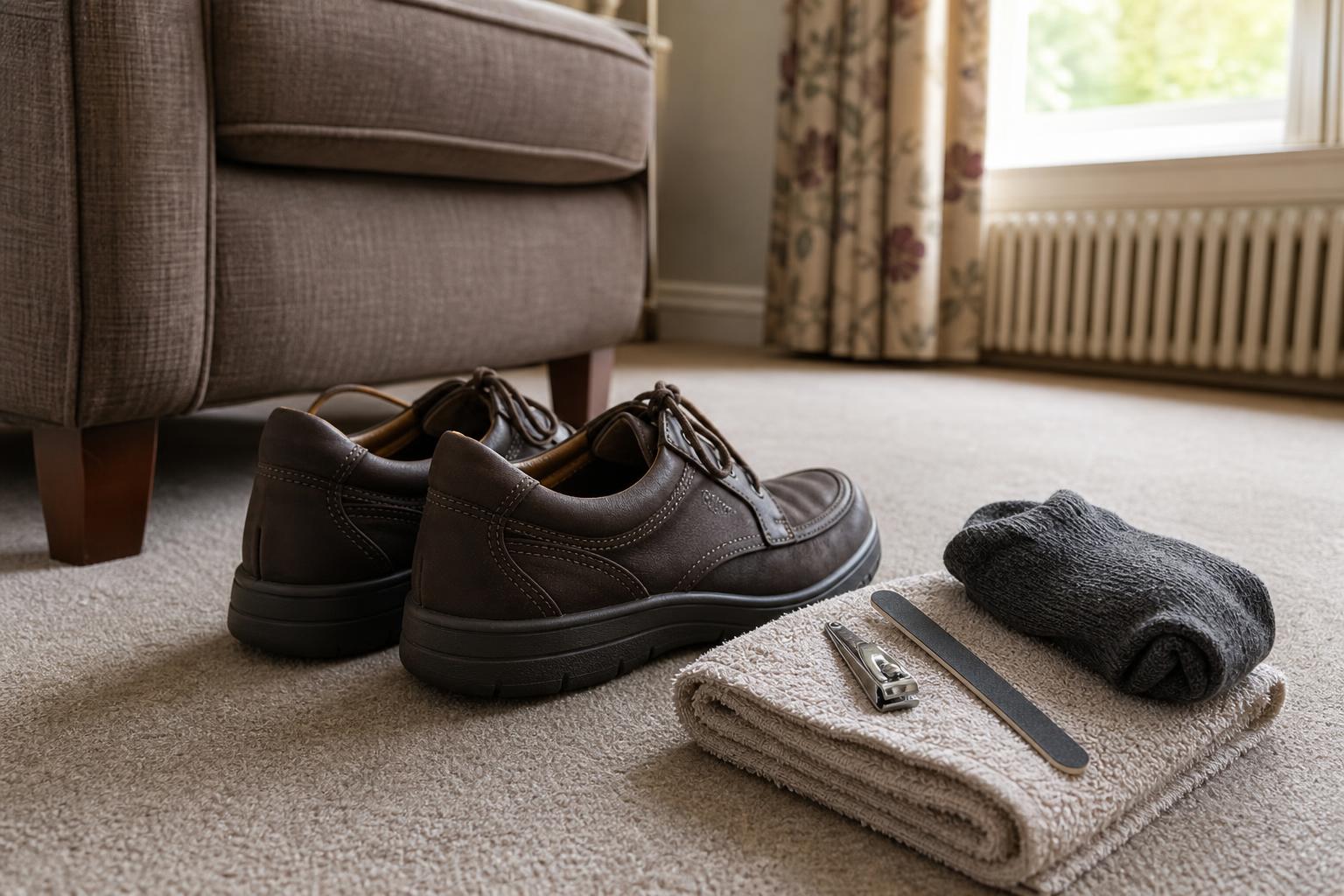
Sore toenails in shoes should prompt a check of nail length, nail shape, and pressure from footwear.
The practical search query this article answers is long toenails hurt in shoes. It is for an older adult, family member, or carer who has noticed toenails catching on socks, pressing into shoes, rubbing the next toe, or making walking less comfortable, and wants to know what to check before trying to cut them at home.
Why toenails can start hurting in shoes
Toenails usually become a problem gradually. A nail grows a little too long, becomes thicker with age, curves at the edge, or starts pressing against the shoe. The first clue may not be dramatic pain. It may be a sock catching, a shoe feeling tight on one toe, a sharp corner rubbing the next toe, or an older parent avoiding their usual shoes.
NHS guidance says nails can become thicker or break more easily as people get older, and that people should see a podiatrist if a nail is too tough to cut or they cannot reach it. That makes pain from ordinary shoe pressure a practical warning sign, not just a grooming issue.
For RMFC, this topic matters commercially because the searcher is often close to booking help. They may not search for a service first. They may search the problem first, then realise that home visit foot care, mobile foot care, toenail cutting at home, or a podiatrist at home is the safer next step.
Check the nail before blaming the shoe
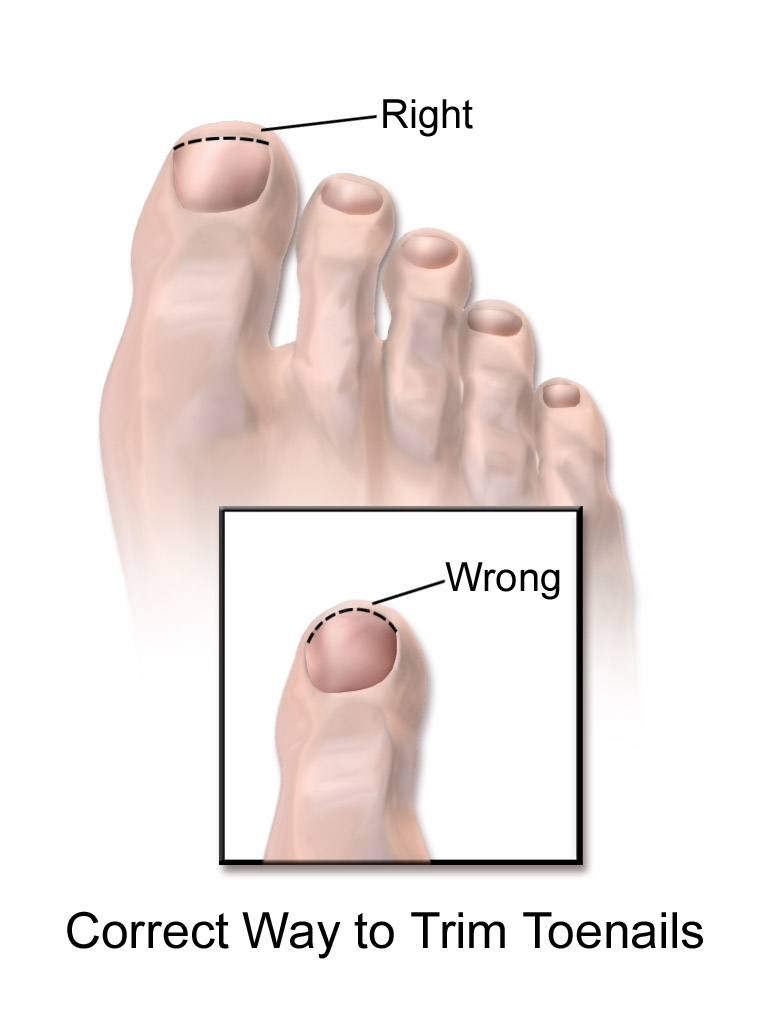
Nail shape matters because cutting too deeply down the sides can make pressure and soreness worse. Photo source
Start by looking at the exact nail that hurts. Is it too long? Is one corner sharp? Is the nail thick, crumbly, curved, lifted, or pressing into the skin? Is the pain at the end of the toe, down one side, under the nail, or where the nail touches the next toe?
If the toe is red, swollen, very painful, hot, bleeding, or producing pus, treat that as more than routine cutting. NHS ingrown toenail advice lists redness, pain, swelling, nail curve into the toe, and infection signs such as pus or feeling hot and shivery. Those signs mean the problem may need proper assessment rather than deeper cutting at home.
If the nail is simply too long and the person can see clearly, reach comfortably, and use clean tools safely, careful straight trimming may be enough. If the nail is thick, hard, painful, awkward to see, or close to the skin, stop before cutting turns a pressure problem into a wound.
Check the shoe, sock, and pressure pattern
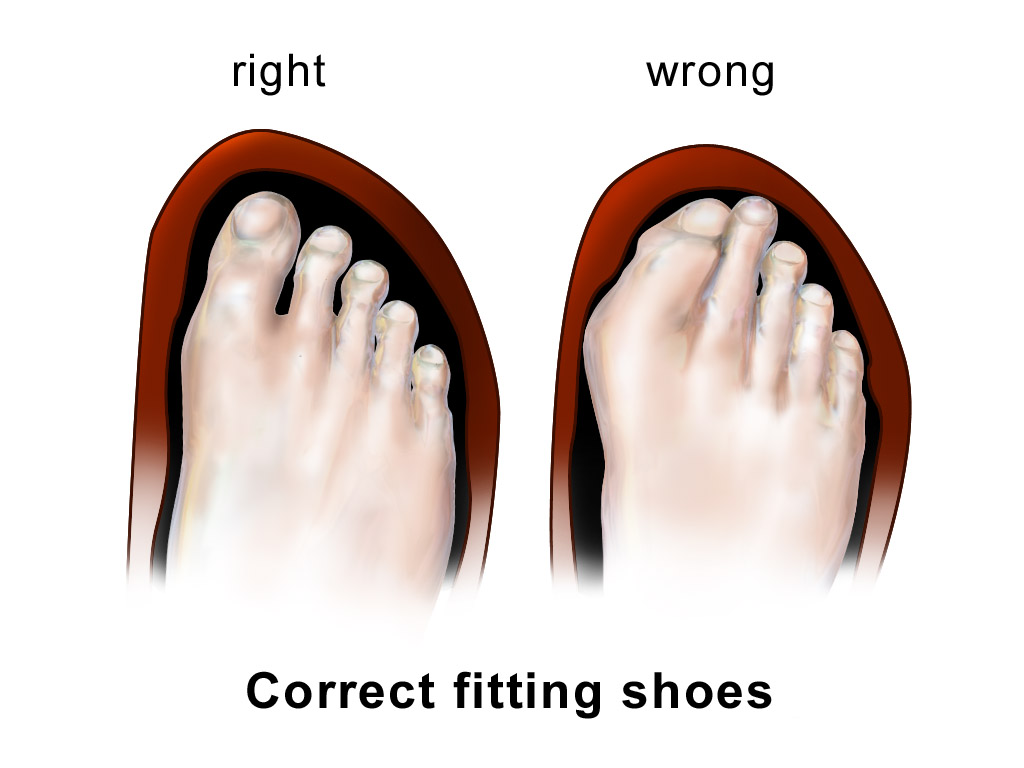
Shoes, socks, seams, toe room, and pressure marks can explain why one nail hurts more than the others. Photo source
A sore toenail is often a footwear problem and a nail problem together. Check whether the shoe has enough toe room, whether a seam sits across the sore nail, whether socks bunch up, whether slippers are too loose, or whether one pair of shoes always triggers the discomfort.
The Royal College of Podiatry explains that sore feet can be linked to skin changes from friction and pressure, including blisters, corns, and callus. That matters because shoe pressure rarely affects only the nail. The toe, surrounding skin, and way the person walks may all be involved.
Corns and calluses can also sit beside a nail or on a toe joint, making the shoe feel as if the nail is the only problem. NHS advice says corns and calluses can be tender or painful and are often linked with pressure or rubbing, so hard skin should be checked before anyone assumes cutting the nail will solve everything.
When older adults need extra help
For older adults, the barrier is often not willingness. It is reach, eyesight, hand strength, hip stiffness, balance, confidence, or fear of cutting skin. A person may put off nail cutting until the nails press in shoes because cutting them now feels stressful or unsafe.
Age UK says foot care in later life can reduce pain, lower falls and infection risk, and help older people who are unable to look after their feet. That makes routine nail care a comfort and mobility issue, especially when shoes are starting to hurt.
Families can help by noticing practical clues: socks snagging, shoes being avoided, walking slowing down, feet not being washed or dried well, or a parent saying their feet are uncomfortable but refusing to let anyone look. A calm check is more useful than waiting until the nail becomes urgent.
When diabetes changes the decision
Be more cautious if the person has diabetes, reduced feeling, poor circulation, a previous ulcer, fragile skin, or slow healing. Pain may not be a reliable guide if feeling is reduced. A nail pressing in a shoe can create rubbing before the person realises there is a problem.
The CDC advises people with diabetes to check their feet every day for cuts, redness, swelling, sores, blisters, corns, calluses, and changes to skin or nails. That means a sore nail should be checked as part of the whole foot, not treated as a quick clipping job.
Diabetes UK explains that diabetes can affect nerves and blood supply in the feet, which can make foot problems more serious. If there is broken skin, colour change, warmth, spreading redness, discharge, swelling, numbness, or a new diabetes related concern, medical or specialist advice should come before routine foot care.
What is safe to do at home
If the foot is lower risk, the nail is visible, there is no broken skin or infection sign, and the person can sit safely, home care should stay gentle. Use good light, clean tools, a stable chair, and enough time. Do not cut while standing, balancing, rushing, or holding the foot awkwardly in mid air.
Self care advice from Guy's and St Thomas' recommends checking the top and bottom of the feet and between the toes, looking for cuts, scratches, bruises, blisters, wounds, painful areas, and colour changes. That gives families a useful checklist because the foot should be inspected before the clippers come out.
Do not dig down the sides of a nail, cut into corners, use blades on hard skin, or keep cutting because the nail is difficult. If the nail is too hard, too thick, too painful, or too close to the skin, the safer home step is to stop and arrange help.
When a home visit is sensible
A home visit may be sensible when the problem is routine but self care or clinic travel is difficult. Examples include long nails pressing in shoes, thickened nails that normal clippers cannot manage, nails catching on socks, sore nail edges, hard skin around toes, or a carer who is worried about accidentally cutting skin.
If you specifically need a podiatrist, the HCPC register lets the public check registered health and care professionals. That is useful where the concern sounds clinical or complex. For routine home visit foot care, matching the type of professional to the risk level matters.
For patients and families in Surrey, RMFC can help with routine toenail cutting at home, thickened nail care, hard skin, corns, callus, cracked heels, and general foot comfort where suitable. If the sore toenail involves infection signs, a wound, severe pain, sudden swelling, or a new diabetes related change, medical advice should come first.
A simple checklist before booking help
Write down which toe hurts, when it hurts, which shoes trigger it, whether socks catch, whether the nail is thick or curved, and whether there is redness, swelling, broken skin, bleeding, discharge, numbness, or diabetes. Those details help the visit start with the real problem rather than a vague request for nail cutting.
If the person is also struggling with washing, dressing, shoes, stairs, shopping, medicines, or getting out, the issue may be wider than toenails. Keep the checklist practical: what hurts, when it hurts, what shoes make it worse, and what the person can no longer do safely without help.
Practical aids may help with daily routines, but they do not make unsafe cutting safe. Foot care tools still need clear sight, steady hands, good lighting, and sensible risk judgement. If those are missing, booking help is usually safer than cutting by feel.
For higher risk feet, prevention matters as much as the current sore nail. New rubbing, pressure, numbness, colour change, or skin damage should not be ignored. If the problem is unclear, painful, or linked with diabetes or poor circulation, get advice before trying to solve it with clippers.
Key Takeaways
- Toenails that hurt in shoes usually need a check of nail length, nail shape, footwear, socks, pressure marks, and skin around the toe.
- Do not dig down the side of a painful nail or keep cutting if the nail is too hard, thick, curved, or close to the skin.
- Redness, swelling, pus, broken skin, severe pain, diabetes concerns, or poor circulation should move the decision toward professional or medical advice.
- Older adults may need help because reach, eyesight, grip, balance, or confidence can make safe nail cutting difficult.
- Home visit foot care may help when the need is routine but toenail cutting at home or clinic travel is no longer safe or comfortable.
A toenail hurting in a shoe is a small problem worth taking seriously. Check the nail, the shoe, the sock, the skin around the toe, and the person’s ability to cut safely before reaching for clippers. If the issue is routine but the nail is too long, thick, awkward, or hard to manage, home visit foot care can be a practical way to reduce discomfort. If there are infection signs, wounds, severe pain, sudden swelling, or diabetes related changes, get medical advice first.
Need Professional Foot Care?
Book a home visit and get expert treatment without leaving your house