
When Is Toenail Cutting at Home Safer for Older People?

Home visits can make routine care easier when travel, mobility, or confidence has become a barrier. Photo source
Toenail cutting at home becomes important when an older person can no longer reach their feet safely, the nails are too thick for ordinary clippers, or travelling to a clinic is harder than the treatment itself. The practical search query this article answers is toenail cutting at home for elderly people. It is for the patient who has been putting it off, and for the son, daughter, partner, neighbour, or carer trying to arrange help without making the person feel embarrassed.
Why toenail cutting becomes harder with age
The problem is rarely laziness. Nails often change as people get older. Public health guidance notes that nails can become thicker or more brittle with age, and thick nails can be difficult to trim cleanly with normal household clippers.
Reaching the feet can also become harder because of stiff hips, arthritis, breathlessness, poor balance, reduced eyesight, or hand weakness. Practical NHS foot care guidance suggests using a mirror or asking for help if you find it hard to reach your feet, which is exactly where many older people get stuck with nail care.
That is why a toenail cutting problem can build quietly. The nails grow longer, catch on socks or bedding, press into shoes, and make walking feel less comfortable. By the time someone mentions it, they may already have tried to cut them and stopped because it felt unsafe.
When home cutting is no longer the safest option
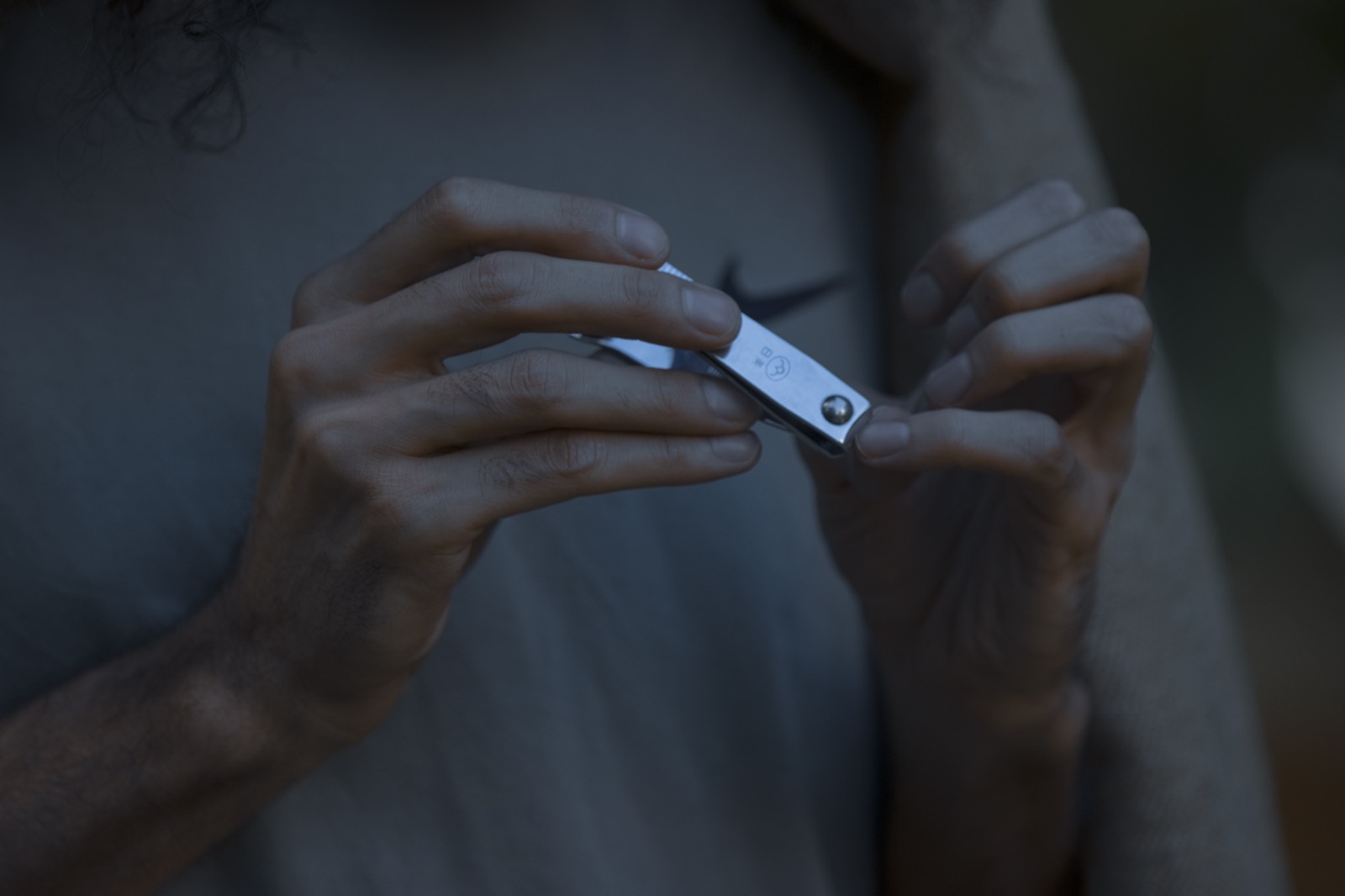
Ordinary clippers can be the wrong tool when nails are thick, curved, painful, or hard to reach. Photo source
Home trimming may be reasonable when nails are thin, easy to see, and easy to reach. It becomes a poor idea when the person has to twist, rush, or guess where the nail edge ends. Sight loss guidance warns that reduced vision can make it easier to accidentally cut the toes, especially when toenails are being managed without a clear view.
The NHS gives a simple threshold: consider podiatry support if your nails are too tough to cut or you cannot reach them. That is often the moment when professional foot care is more sensible than another attempt with small clippers, scissors, or a file.
It is also worth getting help if the nail is painful, curling into the skin, pressing into the next toe, changing colour suddenly, or surrounded by red, swollen, warm skin. Nail cutting guidance from an NHS podiatry service warns that cutting down the sides can leave a spike of nail, and that nails which are difficult to manage should prompt professional advice on safer nail care.
Why carers often notice the problem first
Many older adults feel embarrassed about needing help with feet. Carers often notice the problem indirectly: socks are harder to put on, shoes are avoided, walking slows down, or the person says their feet are uncomfortable but does not want anyone to look.
For families, the decision is usually practical rather than medical. Someone needs regular care, but the task is awkward, personal, and easy to get wrong. General carer guidance recognises that arranging support can feel hard at the start, especially when you are trying to make an informed choice in someone else's best interests.
A home visit reduces that friction. The older person does not have to travel, park, wait, or explain the problem at a busy clinic reception. A carer can be present if helpful, and the appointment can focus on comfort, dignity, and a clear plan for the next visit.
What a home visit can solve
A home visit for toenail cutting is not just clipping nails shorter. It can include checking nail shape, reducing thickened nail where appropriate, smoothing sharp edges, looking for pressure points, and giving simple advice about footwear, socks, moisturising, and when to ask for medical support.
Older people's foot care services commonly exist because foot discomfort affects more than appearance. Age UK explains that good foot care in later life can relieve pain and reduce the risk of infection and falls. That does not mean every long nail is dangerous, but it does show why routine care matters when small problems start changing how someone walks.
For people in Surrey, the home visit model is especially useful when routine nail care is needed but NHS podiatry is unlikely to be the right route. Local NHS community podiatry access is usually based on clinical risk, and the Surrey service information notes that general nail care, including thick and fungal nails, may be outside its acceptance criteria unless risk factors are present. That is why many families look for private toenail cutting at home when the main need is comfort, safe trimming, and regular maintenance.
Diabetes, wounds, and warning signs need extra caution
If the person has diabetes, poor circulation, numbness, a history of ulcers, or a wound on the foot, the decision needs more caution. NICE guidance describes diabetic foot care as a joined up pathway across community and hospital services, including foot protection and multidisciplinary foot care services for higher risk problems.
That does not mean every person with diabetes needs hospital care for nail cutting. It does mean cuts, cracks, redness, swelling, heat, discharge, sudden colour change, or new loss of feeling should not be treated as ordinary nail maintenance. Diabetes foot guidance advises urgent contact with a podiatrist or GP for new skin damage, swelling, heat, shape change, or new foot pain.
A careful mobile foot care appointment can still be useful for routine support, but the boundary matters. The aim is to keep everyday care safe while recognising when the foot needs medical assessment rather than simple trimming.
Mobility and health conditions change the decision

For many families, the practical barrier is getting safe help without making travel harder than the foot care itself. Photo source
Reduced mobility can make nail care risky even when the nails themselves are not complicated. Parkinson's UK describes how balance, stiffness, gait changes, and foot problems can affect daily movement, and those same issues can make bending down with sharp clippers feel unsafe.
Foot care can also become harder when a person has stiffness, tremor, poor balance, reduced grip, or fatigue. The detail matters because a person may need help not because the nail is unusual, but because the act of reaching it is the unsafe part.
After a stroke, walking patterns and foot position may also change. Stroke support information on foot drop and physical effects is a reminder that footwear pressure, toe position, and safe movement are connected. If nails are catching or pressing in shoes, they can add one more avoidable source of discomfort.
How to prepare for a toenail cutting home visit
Preparation should be simple. Make sure there is good lighting, a comfortable chair, enough space near the feet, and a clean towel if requested. The person should wear or keep nearby the shoes and socks that cause the most pressure, because those often reveal where nails or hard skin are catching.
It helps to mention diabetes, blood thinning medication, circulation issues, allergies, recent infections, recent falls, and any pain before treatment begins. Self care advice on foot and toenail checks recommends looking for cuts, scratches, bruises, blisters, wounds, and painful areas, which gives carers a useful checklist before an appointment. If a family member is arranging the visit, write down the main concern in plain language: for example, "left big toenail is too thick to cut", "nails catch on socks", or "Mum cannot bend safely anymore".
If the person may need wider care at home, a foot care visit can sit alongside other support rather than replace it. A council needs assessment can look at help in the home, equipment, or adaptations, while private foot care can solve the narrower problem of uncomfortable nails and routine foot maintenance.
When to book instead of waiting
Book help when toenails are already affecting comfort, footwear, socks, walking, sleep, or confidence. Do not wait for a nail to become infected before arranging routine care. The best time is often when the problem is annoying but not yet urgent.
It is also sensible to book if a carer is tempted to cut thick nails but feels unsure. Mayo Clinic notes that clinicians may examine nails and take clippings or scrapings to identify the cause when nail fungus is suspected. In real life, careful trimming is hard for a family member who is kneeling on the floor, worried about hurting someone, and using clippers that are not designed for thick nails.
For RMFC, this topic matters commercially because the searcher is often close to booking. They are not just reading about nail biology. They need a practical answer to a home based problem: safe toenail cutting for an older person who cannot easily travel or do it alone. If that sounds familiar, asking about a home visit is a reasonable next step.
Key Takeaways
- Toenail cutting at home is often about access, safety, and dignity, not just nail length.
- Professional help is sensible when nails are too tough to cut, painful, curling, or hard to reach.
- Carers should be cautious with thick nails, diabetes, poor circulation, numbness, or signs of infection.
- A home visit can reduce travel stress while still giving the feet proper attention.
- The best time to book is before discomfort becomes a painful or infected problem.
Toenail cutting at home for elderly people is a practical solution to a common problem: nails that are too difficult, too thick, or too awkward to manage safely alone. For patients and carers in Surrey, a calm home visit can turn an embarrassing, delayed task into straightforward routine care, with clear advice on when a foot problem needs more specialist medical attention.
Need Professional Foot Care?
Book a home visit and get expert treatment without leaving your house