
Loose Toenail in Older Adults: What to Check
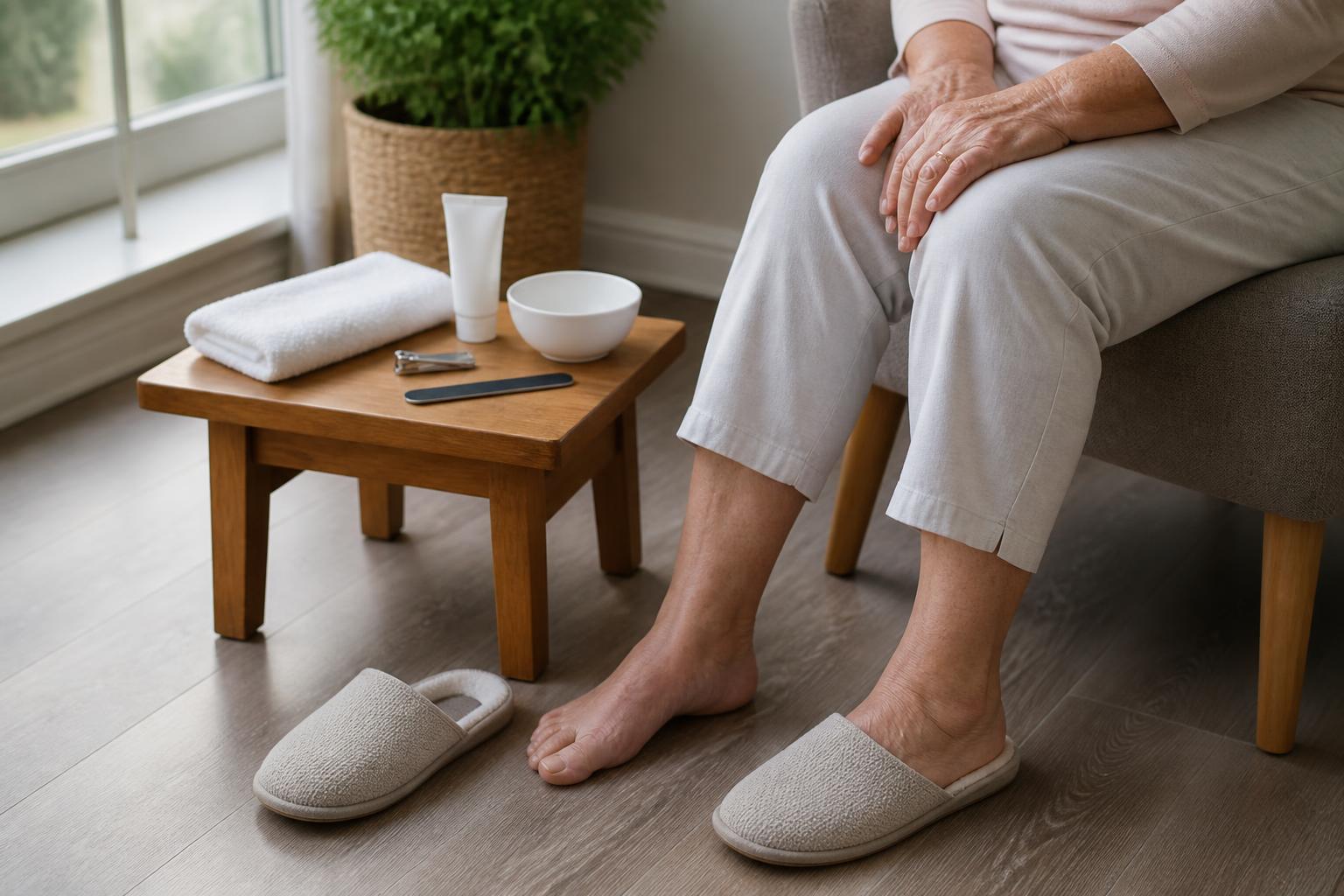
A loose toenail should be checked calmly before anyone pulls, digs, or clips at the nail edge. Generated image
The practical search query this article answers is loose toenail older adult what to do. It is for an older person, carer, or family member who has noticed a toenail lifting, catching on socks, looking bruised, or feeling unsafe to cut. This article belongs to the pillar Nail care and painful nail problems.
Why a loose toenail needs a calm check first
A loose toenail can look dramatic, but the first step is not to pull it off. The safer question is what has made it loose. Common reasons include shoe pressure, a knock or stubbed toe, a fungal or thickened nail, repeated catching on socks, or a nail edge that has started separating from the skin underneath.
That matters more in later life because eyesight, grip, bending, circulation, and sensation can all make self care harder. Age UK explains that foot care in later life can reduce pain, lower infection risk, and help people who are unable to look after their own feet. For families, getting help with basic foot care is often about comfort and safety, not appearance.
If the nail is loose but the toe is not hot, bleeding, discharging, badly swollen, or extremely painful, it may be suitable for routine foot care advice. If any of those warning signs are present, the decision changes.
Do not pull or dig at the nail
The tempting thing is to pull the loose bit away or cut it back until it looks neat. That can expose tender skin, create a raw edge, or leave a sharp corner that catches again. If the nail is still attached at one side, pulling can turn a small problem into a wound.
Healthline's patient guidance on a toenail falling off says that if only part of a toenail has come away, you should not try to remove the rest yourself, and should keep the area protected while watching for infection. The useful point for home care is simple: a partly detached nail needs protection, not force.
If a nail is catching on socks, cover it with a clean dressing if needed and avoid tight footwear until it can be checked. Do not use scissors to chase the loose edge down the side of the toe.
Check for pressure, infection, and diabetes risk
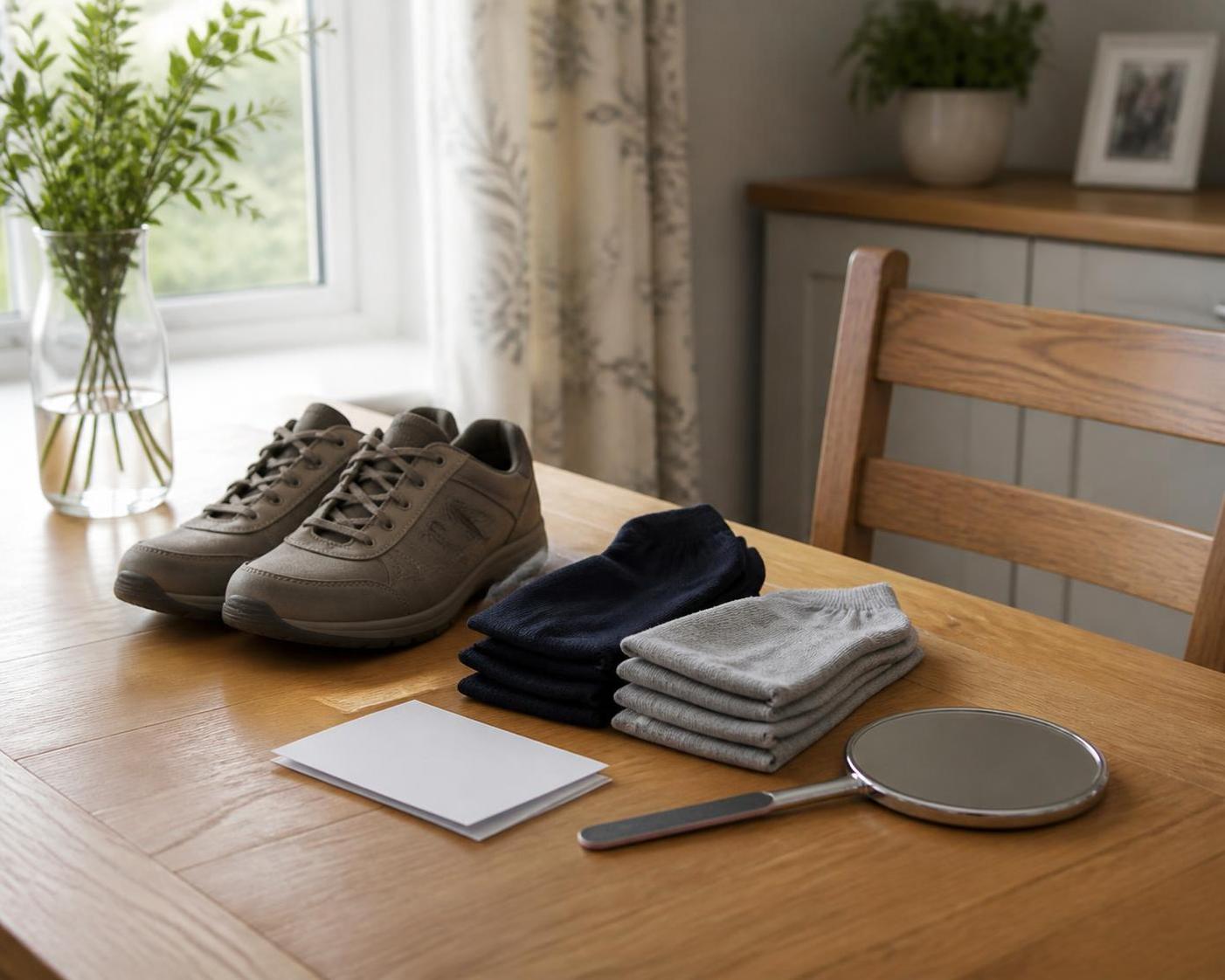
Good light, roomy shoes, and a simple check make it easier to explain what has changed before a home visit. Generated image
Look at the whole toe in good light. Check for redness, heat, swelling, discharge, smell, bleeding, dark bruising under the nail, skin breaks, and whether the nail is lifting from one corner or across most of the nail bed. Also check whether the shoe or slipper is pressing on the toe.
NHS ingrown toenail advice lists red, painful, swollen skin and pus as warning signs, and says people with diabetes should seek help because foot problems can be more serious. Even when the issue is a loose nail rather than a classic ingrown nail, pain, swelling, pus, feverish symptoms, or diabetes change the level of caution.
Diabetes UK also explains that reduced feeling can make foot care harder and that people may need help from a podiatrist or foot protection service. If diabetes is involved, checking the feet regularly and getting expert advice is safer than guessing with clippers.
Work out what may have caused it
A loose toenail often has a pattern behind it. Shoes may be too short at the toe box, slippers may let the foot slide forward, or a thick nail may be taking repeated pressure with every step. A recent trip, stub, dropped object, or long walk in tight shoes can also loosen a nail.
Mayo Clinic notes that fungal toenails can become thickened, discoloured, brittle, crumbly, ragged, misshapen, and separated from the nail bed. So if the nail has been slowly thickening or lifting before it became loose, fungal change may be part of the picture, especially when several nails look similar.
Better Health points out that foot problems are often linked with footwear, support, abnormal pressure, and movement, and that people with diabetes should check their feet daily and have yearly podiatry assessment. A loose nail is therefore worth treating as a pressure and footwear clue, not just a nail problem.
When home visit foot care may help
Home visit foot care may be useful when the nail is loose, thick, catching, difficult to reach, or uncomfortable in shoes, but there are no urgent signs such as spreading redness, discharge, a wound, severe pain, or sudden colour change. The appointment can focus on safe reduction where appropriate, smoothing sharp edges, checking nearby skin, and advising on footwear pressure.
This is especially helpful when the person cannot safely bend, see the nail clearly, or hold clippers steadily. The National Institute on Aging notes that many falls happen at home and recommends practical changes such as good lighting, tidy walkways, and safer bathroom arrangements. Nail care should not require an older person to take avoidable balance risks at home.
NHS homecare guidance describes help at home as useful when someone has difficulty walking, getting around, washing, dressing, or maintaining independence at home. That same access problem often sits behind searches for foot care at home, especially when travel is harder than the nail problem itself.
What to tell RMFC before booking
Be specific when you enquire. Say when the nail first became loose, whether there was an injury, whether it is catching on socks, whether the toe is painful, and whether there is redness, swelling, bleeding, discharge, diabetes, poor circulation, numbness, blood thinning medication, or a history of ulcers.
Photos can help if they are clear and not graphic, but the key information is the change over time. A nail that has been slowly lifting for months is different from a nail that suddenly loosened after trauma. A loose nail with a red, hot, swollen toe is different again.
For patients in Surrey, contact Rithik's Mobile Foot Care with those details before booking. If the signs sound urgent or outside routine foot care, the safer step may be GP, NHS 111, podiatry, or urgent medical advice first.
A simple decision rule
If the nail is only mildly loose, not bleeding, not discharging, and the toe looks calm, protect it and arrange suitable foot care advice. If the nail is painful, hot, swollen, infected, suddenly dark, linked to diabetes risk, or sitting over broken skin, do not treat it as routine clipping.
Loose toenails are usually easier to manage when nobody panics. Check the toe, avoid pulling, protect the nail from catching, and get the right level of help early.
Key Takeaways
- Do not pull off a loose toenail, especially if part of it is still attached.
- Check for redness, heat, swelling, discharge, bleeding, sudden colour change, pain, diabetes, numbness, and poor circulation.
- A loose nail may be linked to shoe pressure, injury, thickened nails, fungal change, or repeated catching on socks.
- Home visit foot care may help when the problem is stable and routine, but urgent or higher risk signs need medical advice first.
- Tell RMFC what changed, when it started, and whether there are any warning signs before booking.
A loose toenail in an older adult is not something to yank, dig at, or ignore. Most families need a calm check, a clear view of risk signs, and a practical plan for whether routine home visit foot care is suitable. If the toe looks angry, infected, suddenly painful, or higher risk because of diabetes or poor circulation, pause and get medical advice first.
Need Professional Foot Care?
Book a home visit and get expert treatment without leaving your house