
Itchy Peeling Feet: What to Check

Checking and drying feet carefully can help carers spot whether peeling skin is dry, damp, cracked, or changing. Photo source
The practical search query this article answers is itchy peeling feet in older adults. It is for an older adult, carer, or family member who has noticed itching, peeling, flaking, cracked skin, damp skin between the toes, or sore areas and is not sure whether this is athlete's foot, dry skin, pressure irritation, or something that needs medical advice.
Why itchy peeling feet can be hard to judge
Older feet often change gradually. Skin can become drier, nails may thicken, shoes may rub differently, and reduced flexibility can make it harder to inspect between the toes. That means a small patch of peeling skin can be missed until it starts to itch, crack, smell, or catch on socks.
The important point is not to guess from one symptom. Athlete's foot, dry skin, cracked heels, shoe pressure, sweating, and irritation can overlap. A calm check of the skin, toe spaces, footwear, socks, and medical risk gives a safer starting point than reaching straight for scissors, blades, or random creams.
Signs that can point towards athlete's foot
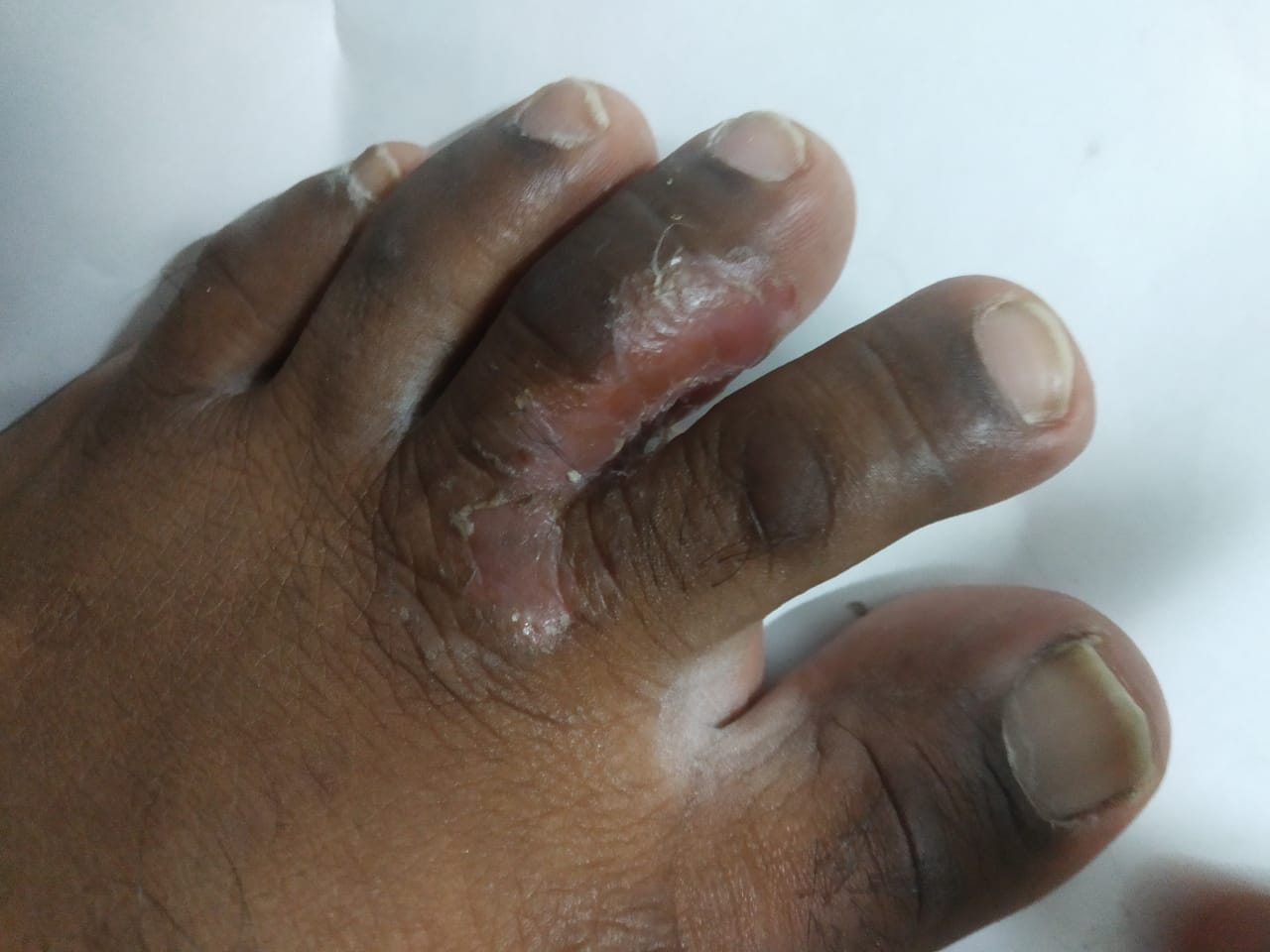
Toe-space peeling, dampness, and splitting can suggest athlete's foot, but persistent or higher risk symptoms should be checked. Photo source
Athlete's foot often starts between the toes. Look for itchy white, soggy, split, or peeling skin in the toe spaces, especially between the fourth and fifth toes. It may also cause a sore, flaky rash, cracking, small blisters, or discomfort on the sole. Public health guidance describes athlete's foot as a fungal infection that can cause itchy white patches, redness, flaking, and cracked skin.
A fungal rash is more likely when the feet stay warm and damp, socks are not changed often, shoes do not dry properly, or the person struggles to dry between the toes after washing. Clinical guidance also notes that tinea pedis commonly affects the toe webs and soles, where skin may become itchy, scaling, macerated, or fissured.
Do not assume every flaky patch is fungal. The pattern matters. Peeling mainly between the toes, dampness, itch, odour, and repeated splitting are more suggestive than a dry heel edge that has slowly thickened over time.
Signs that can point towards dry skin
Dry skin is often more widespread across the heels, soles, or edges of the feet. It may look flaky, rough, powdery, or cracked, and it may be worse after bathing, cold weather, central heating, or long periods in open-backed shoes. Older adult foot care advice commonly emphasises regular checking, careful drying, and moisturising dry areas, because small foot problems can affect comfort and mobility.
Ageing can also make skin thinner and less resilient. Professional foot health guidance explains that ageing feet can become more vulnerable to skin changes, pain, and reduced cushioning, so dryness and discomfort should not be dismissed as only cosmetic.
A dry skin pattern is more likely when both feet look generally dry, the toe spaces are not soggy, there is no spreading rash, and the main issue is roughness, tightness, or cracking around pressure areas. Moisturiser may help dry skin, but it should not usually be put between the toes where extra moisture can encourage fungal problems.
What to check before using creams
Before using an antifungal cream, heavy moisturiser, corn plaster, blade, or home remedy, check five things. First, where is the peeling: between toes, heel edge, sole, side of foot, or around a pressure point? Second, is the skin dry and rough, or damp and split? Third, is there redness, heat, swelling, pus, bleeding, or a wound? Fourth, is diabetes, poor circulation, reduced feeling, or immune suppression involved? Fifth, has the problem persisted despite sensible self care?
For suspected athlete's foot, practical treatment advice usually focuses on keeping feet clean and dry, drying carefully between toes, changing socks, and using an antifungal product as directed. Hospital patient guidance gives similar everyday steps, including drying between the toes and avoiding shared towels.
If symptoms are severe, recurrent, not improving, or the person has higher risk medical factors, it is safer to get advice rather than keep switching products. Treatment guidance for fungal foot infection includes self care and topical antifungals, but also supports escalation when the situation is more complex or persistent, especially when ordinary measures are not enough.
When diabetes changes the answer
Diabetes makes foot changes more important because sensation and circulation may be affected. A person may not feel a sore area clearly, and a small crack or infection can become more serious. If there is diabetes plus a wound, spreading redness, swelling, warmth, discharge, sudden colour change, new pain, or a new loss of feeling, do not treat it as routine dry skin.
People with diabetes are advised to take foot infections and new foot changes seriously because serious foot problems can develop when nerves or blood supply are affected. In that situation, the safest next step may be GP, diabetes foot team, NHS 111, or urgent care advice depending on severity.
This does not mean every itchy patch is an emergency. It means the threshold for checking and escalation should be lower. For an older adult with diabetes, the question is not only what the skin looks like today, but whether there is any break in the skin, infection sign, sudden change, or loss of protective feeling.
How carers can help without making it worse
A carer can help by looking, not digging. Check the feet in good light, look between the toes, note where the peeling is, and compare both feet. Keep a simple record of when symptoms started, what has been tried, whether the person has diabetes or circulation problems, and whether pain is changing how they walk.
After washing, dry gently and carefully, especially between toes. Use clean socks and shoes that have time to dry. For dry heels or rough soles, moisturising the dry skin can help, but avoid leaving cream between the toes. If the skin is split, bleeding, very sore, or not improving, pause home treatment and get advice.
The home setup matters too. Home care safety guidance highlights that risk depends on the person, environment, task, and competence of the person providing care, so a safe setup is part of safe care at home. For foot care, that means good lighting, a stable chair, clean towels, usual shoes nearby, and no rushed cutting or scraping.
Where RMFC fits
Rithik's Mobile Foot Care can help when an older adult in Surrey needs practical home visit foot care and the problem is suitable for routine support. That may include checking dry skin, hard skin, cracked heels, thick nails, corns, callus, and general skin comfort, while being clear when symptoms need GP or medical input first.
A home visit is especially useful when the person cannot easily inspect their own feet, cannot reach their toes, finds clinic travel difficult, or has a carer trying to decide what is safe. The aim is calm, practical help: improve comfort where routine care is appropriate and avoid treating warning signs as ordinary foot care.
Key Takeaways
- Itchy peeling feet in older adults can be athlete's foot, dry skin, pressure irritation, or a higher risk skin change.
- Peeling between toes, damp white skin, splitting, itch, or odour can point more towards athlete's foot.
- Rough, flaky, dry heels or soles without damp toe spaces may point more towards dry skin or pressure.
- Diabetes, wounds, spreading redness, swelling, discharge, sudden colour change, or new loss of feeling need prompt advice.
- Carers can help most by checking carefully, drying between toes, avoiding risky DIY treatment, and arranging help when symptoms persist.
If an older adult has itchy, peeling feet, the safest first step is a careful look rather than a quick guess. Check where the peeling is, whether the skin is dry or damp, whether there are infection signs, and whether diabetes or reduced feeling changes the risk. Routine home visit foot care can help with comfort and monitoring when symptoms are suitable, but wounds, infection signs, sudden changes, and diabetes-related concerns should be checked medically first.
Need Professional Foot Care?
Book a home visit and get expert treatment without leaving your house