
Ingrown Toenail Pain: What to Do at Home
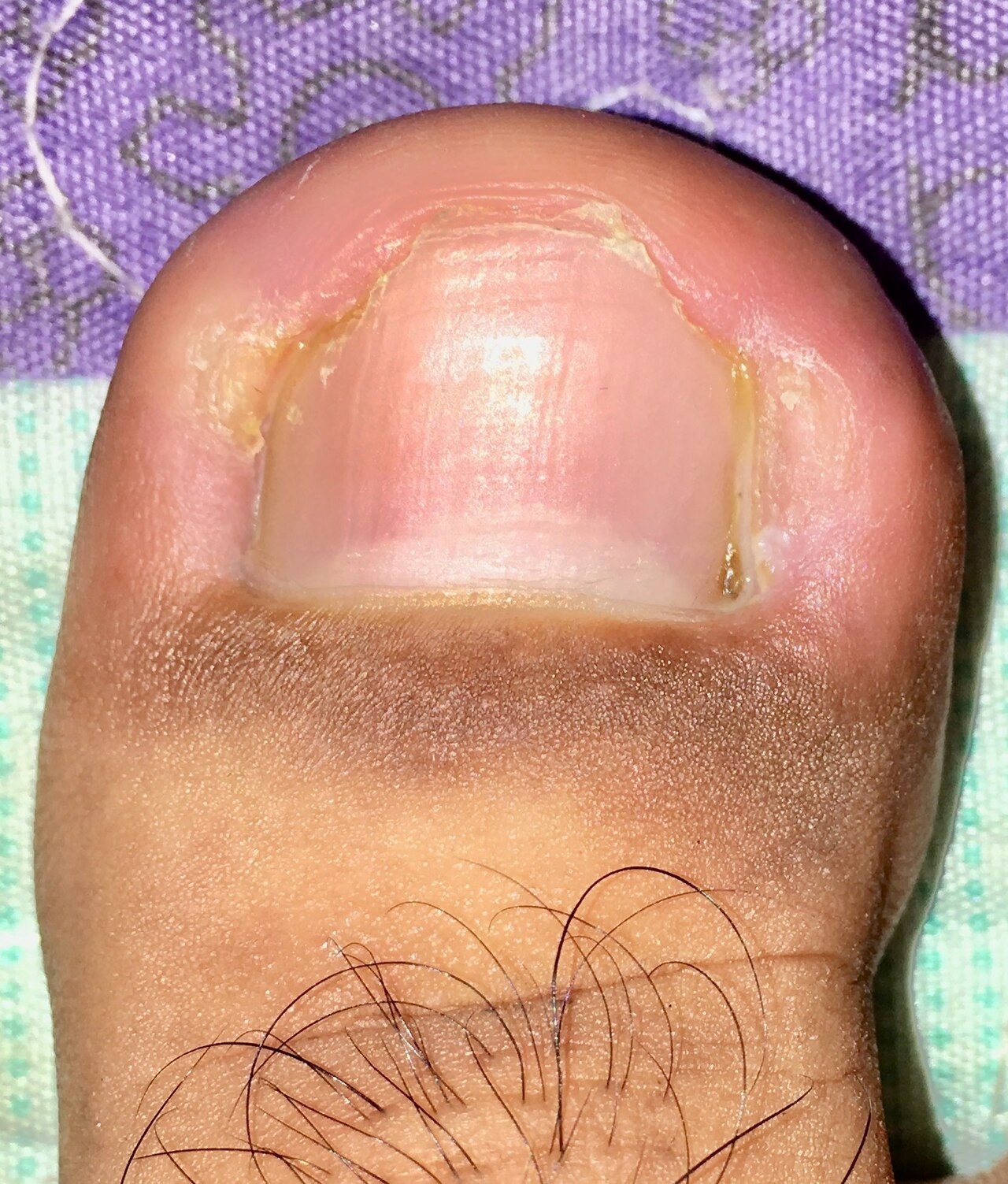
An ingrown toenail can become painful quickly when the nail edge presses into the skin around the toe. Photo source
The practical search query this article answers is painful ingrown toenail home visit Surrey. It is for someone whose toe already hurts, a carer checking an older adult's foot, or a family member trying to decide whether home care, a pharmacist, GP, podiatrist, or a home visit foot care appointment is the safest next step.
Why an ingrown toenail starts to hurt
An ingrown toenail happens when the side or corner of the nail presses into the skin around the toe. The big toe is the most common place, but any toe can be affected. The first sign is often a sore nail edge that catches in socks, hurts in shoes, or feels tender when the person walks.
The common symptoms are redness, swelling, tenderness, and a nail that curves into the toe. Public health guidance describes an ingrown toenail as a nail that may grow into the skin and cause a red, painful, swollen toe. That is why a small edge of nail can become a large day to day problem.
This matters commercially for RMFC because the search often starts when routine nail cutting is no longer routine. Someone may be unable to reach their foot, worried about cutting the corner, or trying to help an older parent without making the toe bleed.
What you can do at home first
If the toe is mildly sore, there is no pus, no spreading redness, no diabetes, and the person has normal feeling and circulation, simple home steps may help while the nail settles. Soaking the foot in warm salty water, drying it well, wearing wide shoes or sandals, and using ordinary pain relief if suitable are widely recommended first steps.
NHS inform gives the same core pattern: soften the skin, dry the foot properly, avoid tight shoes, and do not cut into the nail while it is painful. The key home message is to leave the nail to grow out rather than picking or cutting the edge.
Keep the foot dry for the rest of the day and avoid pressure from tight socks, pointed shoes, or slippers that squeeze the toes. A pharmacist can advise on pain relief, dressings, and whether the toe needs GP input.
What not to cut when the toe is sore
The mistake carers often worry about is cutting a V shape, digging down the side, or trying to pull out a hidden spike of nail. That can break the skin, leave a sharper edge, and increase the chance of infection. If the nail edge is already painful, the safest answer is usually not more cutting at home.
Specialist patient guidance warns that badly cut nails, tight footwear, injury, nail shape, and fungal nail infection can all contribute to the problem. The prevention advice is simple but important: trim toenails straight across and avoid cutting them too short.
If the nail is thick, curved, brittle, or hard to see clearly, leave the difficult edge alone. A painful ingrown toenail is not the moment for kitchen scissors, razors, bathroom blades, or forceful filing.
When pain means you should get help
Get advice if home care is not helping, the toe is very painful, the swelling is increasing, there is pus, the redness is spreading, the person feels hot or shivery, or the nail keeps causing repeated problems. Those signs can mean the toe needs medical assessment rather than another attempt at home trimming.
Orthopaedic patient guidance explains that early home care may prevent further treatment, but if there is no improvement within a few days, or the condition worsens, the person should contact a healthcare professional instead of continuing self care.
A GP may check for infection and may prescribe antibiotics if needed. If the nail is badly ingrown or keeps recurring, a podiatrist or foot specialist may be needed for treatment that can include removing part of the nail under local anaesthetic.
Why diabetes changes the decision
Diabetes, poor circulation, reduced feeling, immune suppression, or a previous foot ulcer should lower the threshold for advice. A sore nail edge can be more serious if the person cannot feel damage clearly or if healing is slower than usual.
Diabetes UK explains that nerve and blood vessel changes can make foot problems harder to feel and slower to heal, and that people should check their feet regularly because cuts, wounds, sores, swelling, and loss of feeling need prompt attention.
Daily checks matter here. Practical diabetes foot care advice recommends checking feet every day, using a mirror or another person if bending is difficult, and getting healthcare advice quickly when there are changes. That is especially relevant when an ingrown nail is painful, red, swollen, or near broken skin.
NIDDK gives the same safety logic: diabetes can reduce feeling and blood flow, so people should look for ingrown toenails, cuts, sores, red spots, swelling, and blisters before small problems become larger ones.
How carers can check without making it worse
If you are helping a parent or older adult, focus on looking, not digging. Sit them safely in good light, compare both big toes, check whether the nail edge is pressing into skin, look for pus or spreading redness, and ask whether shoe pressure or bed sheets make it hurt.
Do not force the toe, cut down the side, or use sharp tools if the person moves suddenly, has poor eyesight, has tremor, has dementia, or cannot describe pain clearly. Safe care at home depends on the person, the task, the setting, and the competence of the helper, which is why a stable setup is part of safe care in someone's own home.
Make a note of when the pain started, whether there is discharge, whether diabetes or poor circulation is involved, and what shoes or socks make it worse. That information helps a pharmacist, GP, podiatrist, or foot care professional judge the next step.
Where a home visit can help
A home visit can help when the problem looks suitable for routine foot care, the person cannot travel comfortably, or a carer needs a calm check before attempting any more nail care. For RMFC, this is often where painful nail problems, thickened nails, reduced mobility, and carer uncertainty meet.
A routine home foot care appointment may help with safe nail care around the wider problem, pressure from thick or awkward nails, footwear discussion, and deciding whether the toe needs GP, podiatry, pharmacist, or urgent medical support first. It should not replace medical care when there are infection signs, diabetes concerns, spreading redness, pus, fever, or a worsening wound.
If the toe is sore but not an emergency, the practical next step is to stop digging at the nail, reduce pressure, check for red flags, and arrange the right level of help. That protects comfort now and reduces the chance of turning a painful nail edge into a bigger foot problem.
Key Takeaways
- An ingrown toenail often starts as a sore nail edge but can become red, swollen, infected, and difficult to walk on.
- Mild cases may improve with warm salty water soaks, careful drying, roomy footwear, and avoiding pressure.
- Do not dig down the side, cut a V shape, pick at the nail, or use sharp tools when the toe is already painful.
- Pus, spreading redness, feverish symptoms, worsening pain, diabetes, poor circulation, or reduced feeling mean you should get advice promptly.
- A home visit can help with practical nail care and safe direction when the problem is suitable, but infection and higher risk feet need medical input.
If an ingrown toenail hurts at home, the safest first move is to reduce pressure and avoid cutting into the sore edge. Check for infection signs, diabetes risk, poor circulation, reduced feeling, and any worsening change. When the toe is mildly sore, simple care and pharmacist advice may be enough. When it is painful, swollen, infected, or hard for an older adult or carer to manage safely, arrange the right help rather than trying to fix it with risky cutting.
Need Professional Foot Care?
Book a home visit and get expert treatment without leaving your house