
Hard to Wash Feet: What Helps at Home
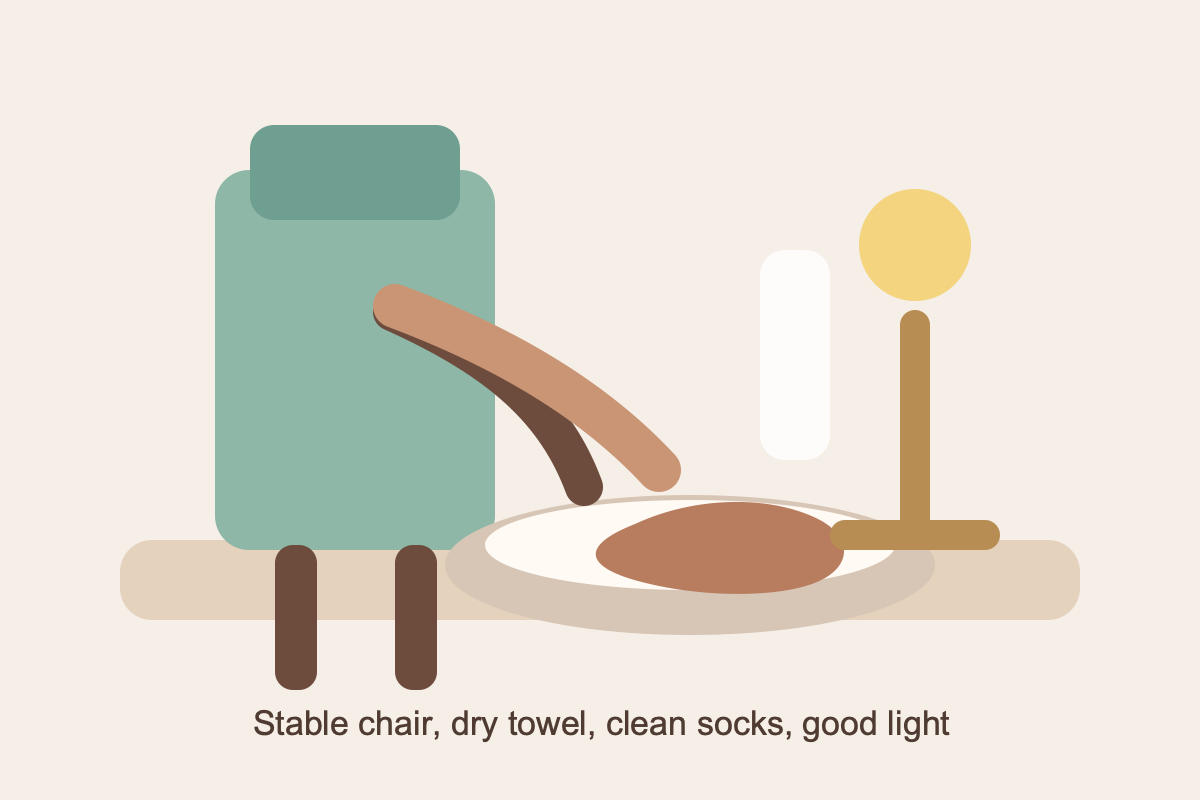
If washing feet means bending, balancing, or rushing, the setup needs to become safer first. Generated image
The practical search query this article answers is hard to wash feet at home. It is for an older adult, partner, adult child, or carer who has noticed that washing feet, drying between toes, changing socks, checking soles, or trimming nails has become awkward or unsafe. This article belongs to the pillar Home visit foot care for older adults, diabetes, and reduced mobility.
Why washing feet can become a foot care problem
Washing feet sounds simple until the person has to bend forward, lift one leg, reach into a shower tray, balance on a wet floor, or dry between toes they can barely see. For many families, the first clue is not a dramatic foot problem. It is socks staying on for too long, toe spaces staying damp, nails catching, or a parent avoiding help because the task feels private.
The NHS explains that help at home can make a big difference when someone has difficulty walking or getting around. That matters for foot care because washing and dressing support is often about independence, not only hygiene.
For RMFC, the commercial reason this topic matters is clear. People searching for hard to wash feet at home, help washing feet elderly, home visit foot care, mobile foot care, chiropodist at home, podiatrist at home, or toenail cutting at home are usually trying to solve a real access problem. They want safer routine care without turning a private task into a stressful argument.
Check what has become difficult
Before buying gadgets or booking care, identify the exact barrier. Is the problem bending, balance, eyesight, hand strength, pain, memory, fatigue, shower access, fear of falling, or embarrassment? Is the person unable to dry between toes, inspect the sole, reach thick nails, or put socks back on afterwards?
The Royal College of Podiatry explains that ageing feet can develop more problems because skin becomes thinner, drier, and more fragile, and because foot pain can affect walking. If feet are harder to wash and inspect, small skin and nail changes can be missed until shoes hurt or walking changes.
MedlinePlus gives basic foot health advice such as checking feet regularly, washing feet daily, wearing comfortable shoes, and trimming nails carefully. That advice is useful, but only if the person can actually reach, see, dry, and check the feet without putting themselves at risk.
Dry between toes without making skin sore
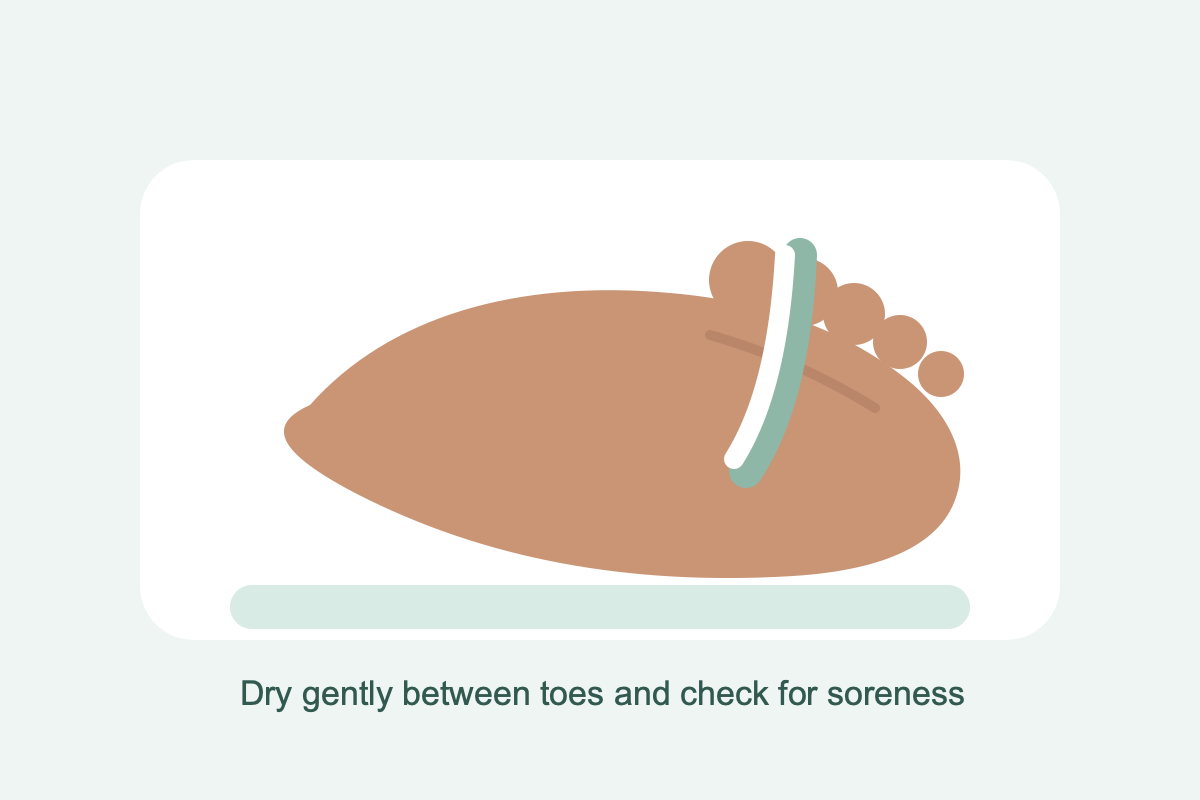
Toe spaces need gentle drying and a quick check for soreness, splitting, odour, or damp white skin. Generated image
Damp toe spaces deserve careful attention. Moist skin between toes can become itchy, white, split, or sore, especially when socks or slippers stay on for long periods. The safest routine is usually gentle washing, careful drying by dabbing, clean socks, and shoes or slippers that have time to air.
NHS athlete's foot guidance says one main symptom is itchy white patches between the toes, and it can also cause sore, flaky, cracked, or bleeding skin. It also advises people to dry feet thoroughly after washing, especially between the toes.
Do not scrape, dig, peel, or force a towel between sore toes. Do not leave heavy moisturiser between toes unless a clinician has advised it. Moisturiser can help dry heels or rough skin, but toe spaces often need dryness and air rather than more dampness.
Diabetes changes the safety threshold
If the person has diabetes, do not treat poor washing or missed foot checks as a small inconvenience. Diabetes can affect feeling and blood flow, so a sore patch, split skin, rubbing mark, blister, corn, or nail problem may become serious before it feels painful enough to notice.
Diabetes UK explains that foot problems can be serious, but many can be prevented with regular checks and good foot care. It advises checking feet, looking between toes, and asking for help if checking is difficult. If someone cannot wash, dry, or inspect their feet safely, that is a reason to arrange support sooner.
Routine home visit foot care may still be suitable for stable nail and skin care, but diabetes plus broken skin, swelling, discharge, spreading redness, new numbness, colour change, or a wound should be checked through the right medical or diabetes foot route first.
Keep dignity in the conversation
Feet can be a sensitive subject. A parent may feel embarrassed, defensive, or worried that accepting help means losing independence. The family member may feel frustrated because the practical risk is obvious. Both reactions are understandable.
Alzheimer's Society guidance on washing and dressing says these are personal and private activities, and that support should protect dignity and independence where possible. Even when dementia is not involved, the same dignity principle applies to foot care. Ask permission, explain what you are checking, and do not turn the foot check into criticism.
If memory problems, anxiety, or confusion make washing or foot checks difficult, keep the setup predictable. Use a familiar chair, good light, a warm room, a clean towel, fresh socks, and short explanations. If the person becomes distressed, pause rather than forcing the task.
When home visit foot care fits
A short note about washing, drying, nails, skin, diabetes, and mobility helps the appointment start safely. Generated image
A home visit fits when the problem is stable but routine care has become hard to do safely. That might mean toenails need trimming, thick nails catch on socks, dry skin needs checking, hard skin is building, toe spaces are hard to see, or the person struggles to travel to a clinic.
Age UK says foot care in later life can reduce fall risk and infection risk, relieve pain, and help older people who cannot look after their feet. Health in Aging also notes that foot pain and foot disorders can affect walking, stairs, getting out of a chair, preparing meals, using the toilet, balance, and falls. These points support a practical view: foot care is part of everyday function, and foot discomfort can affect daily independence.
Living Made Easy focuses on practical advice and equipment that helps people do daily activities when something gets in the way. That is a useful frame for families: adapt the task where safe, but arrange hands on help when bending, balance, vision, pain, or confidence makes the routine unrealistic.
What to tell RMFC before booking
Before booking, describe the person and the practical problem in plain words. Say whether they cannot bend, cannot balance, cannot see the feet, cannot dry between toes, cannot cut nails, or cannot travel. Mention thick nails, hard skin, corns, cracked heels, odour, itching, swelling, pain, wounds, diabetes, poor circulation, reduced feeling, blood thinners, dementia, Parkinson's, arthritis, recent falls, or recent hospital stays.
Also describe what the family has already tried. Has a long handled sponge helped? Is the bathroom unsafe? Are socks difficult to put back on? Are shoes suddenly tight? Are toe spaces damp or sore? Clear details help decide whether routine mobile foot care is suitable, whether the setup needs adjusting, or whether medical advice should come first.
For people in Surrey, contacting Rithik's Mobile Foot Care with those details can be a calm next step when washing, checking, nails, or skin care at home has become too difficult to manage safely.
Key Takeaways
- Hard to wash feet at home is often a reach, balance, eyesight, dignity, or mobility problem, not laziness.
- Dry carefully between toes and check for damp white skin, soreness, splitting, odour, or redness.
- Diabetes, poor circulation, reduced feeling, wounds, swelling, discharge, or spreading redness mean the safety threshold is lower.
- Families should protect dignity and ask permission before checking feet or arranging help.
- Home visit foot care can help when routine nail and skin care is suitable but washing, checking, reaching, or travelling has become difficult.
If washing feet has become difficult, slow the task down and look at the whole situation. The problem may be balance, reach, eyesight, memory, pain, bathroom setup, or embarrassment. Keep toe spaces dry, check for warning signs, and do not force sharp nail care into an unsafe routine. When the concern is stable and practical, RMFC can help with routine home visit foot care in Surrey so feet are easier to check, nails are easier to manage, and families have a clearer next step.
Need Professional Foot Care?
Book a home visit and get expert treatment without leaving your house