
Safe Foot Care After Knee Surgery at Home
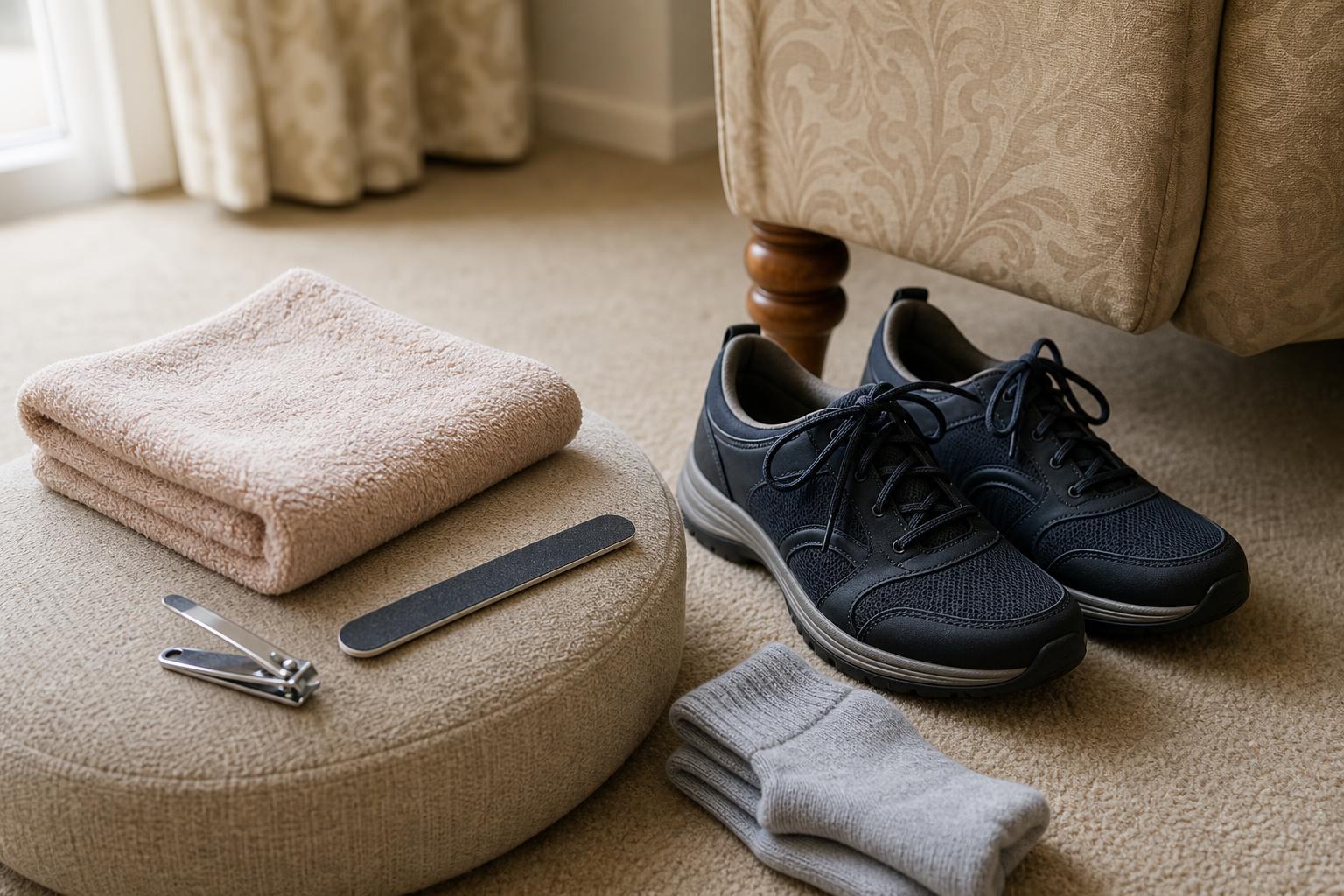
After knee surgery, routine foot care may need safer positioning, less bending, and careful timing around recovery.
The practical search query this article answers is foot care after knee surgery at home. It is for the patient, partner, adult child, or carer who has realised that toenail cutting, checking the soles, drying between toes, managing hard skin, or getting shoes on is suddenly harder while knee recovery is still in progress.
Why knee surgery can make foot care difficult
Knee surgery recovery can change simple daily tasks. The problem is not only the knee wound or pain. Bending the knee, lifting the foot, reaching the toes, standing safely, and using both hands at the same time can all be harder for a while. NHS knee replacement recovery guidance says recovery can take several months or longer, and that people may use crutches or a walking frame at first, with advice from physiotherapy or occupational therapy about daily activities. That is why ordinary home tasks can need adjusting during knee recovery.
Foot care is one of those tasks because it asks for reach, balance, clear sight, and steady hands. A nail that was easy to trim before surgery may now be awkward. A sore corn may be harder to see. Swelling can make shoes or slippers rub. If the person is tired after exercises or walking practice, routine care can be delayed until nails, hard skin, or toe pressure become uncomfortable.
For RMFC, this topic matters commercially because the searcher often has an immediate access problem. They may be searching for home visit foot care, mobile foot care, podiatrist at home, chiropodist at home, or toenail cutting at home because the person cannot safely reach their feet or travel comfortably to a clinic yet.
What to check before cutting toenails
A safer foot check starts with a stable seated position, good light, and no rushed bending or twisting. Photo source
Before anyone reaches for clippers, ask whether the person can sit safely, keep the operated leg comfortable, and see the nails clearly without twisting, straining, or losing balance. NICE joint replacement guidance includes support before and after hip, knee, and shoulder replacement, including rehabilitation and recovery advice, so the hospital recovery plan should guide what is sensible at home.
Look at the feet first. Check for redness, swelling, broken skin, discharge, pressure marks from socks or shoes, sore toes, thick nails pressing into nearby toes, and hard skin that hurts when standing. NHS advice on corns and calluses is clear that people should not cut corns or calluses themselves, and should get advice sooner with diabetes, poor circulation, bleeding, discharge, severe pain, or symptoms that stop normal activity. Those same boundaries help families decide when routine foot care needs extra caution.
If the person has diabetes, reduced feeling, poor circulation, or a history of foot wounds, be more cautious. The CDC advises people with diabetes to check their feet every day, look for changes in the skin or nails, and have a foot doctor trim toenails if they cannot see or reach their feet. After knee surgery, that advice becomes especially practical because reduced reach can hide small problems.
Why swelling and shoe pressure matter
Swelling after knee surgery can change how feet feel in socks, slippers, and shoes. NHS knee replacement recovery advice specifically tells people to keep the leg raised as much as possible to reduce swelling, and not to stand for long periods because this could cause swelling in the ankles. If ankles or feet are more swollen than usual, footwear that fitted before surgery may start pressing differently.
That matters because pressure creates many routine foot problems. Corns and calluses are caused by rubbing or pressure, and can become tender or painful. If a post surgery shoe, slipper, sock seam, or swelling pattern is pressing on one area, cutting a nail alone may not solve the discomfort.
Get medical advice urgently if swelling is sudden, one sided in a worrying way, linked with chest pain or breathlessness, or comes with heat, redness, severe pain, a wound, or signs of infection. A routine foot care appointment should not be used as a substitute for post surgery medical review when symptoms are new or concerning.
What family members can do safely
A family member can help by turning worry into clear information. Note the surgery date, current walking aids, hospital movement advice, medicines that may affect bleeding, diabetes or circulation history, and the exact foot problem. That makes it easier to decide whether the task is simple home help, a routine home visit foot care need, or something that should be checked medically first.
Keep support calm and low risk. Make sure the person is seated, warm, and not rushed. Do not ask them to balance on one leg or put the foot on an unstable stool. Do not cut down the sides of nails, dig at painful corners, cut corns, cut callus, use blades, or use strong acid products on a foot that is hard to inspect.
If wider help is becoming difficult after the hospital stay, foot care may be only one part of the support picture. GOV.UK explains that a needs assessment can look at healthcare, equipment, help in the home, and adaptations. If washing, dressing, stairs, transfers, or mobility are also hard, asking about wider home support may be sensible.
When a home visit is the better next step
A home visit can help when the problem is routine foot care but knee recovery makes self care or clinic travel difficult. Common examples include nails becoming too long after surgery, thick nails that are awkward to cut, hard skin that is uncomfortable in slippers, toe pressure from swelling or footwear changes, and a patient who cannot safely bend or reach.
Age UK describes foot care in later life as helping reduce pain, infection risk, and falls risk, with basic foot care such as toenail cutting and home access in some areas for people who are housebound. That supports the practical value of bringing suitable foot care closer to people who cannot manage alone.
For patients and families in Surrey, RMFC can help with routine home visit foot care where the issue is within scope, such as toenail cutting, thickened nails, corns, callus, cracked heels, and general foot comfort. If there are red flags, a wound, suspected infection, sudden swelling, severe pain, or a diabetes related change that is new or worsening, medical advice should come first.
How to prepare for a calmer appointment
Choose a stable chair with good light and enough room around the feet. Keep walking aids close. Have the usual socks, slippers, and shoes nearby so pressure points can be understood. Avoid booking immediately after physiotherapy, hospital travel, or a tiring exercise session if the person is likely to be sore or exhausted.
Write down what has changed since surgery: swelling, footwear tightness, nail length, pain when standing, difficulty drying between toes, fear of falling, or a carer being worried about cutting skin. Living Made Easy offers impartial advice about equipment and everyday barriers, which is a useful reminder that the right setup should reduce effort and risk, not encourage awkward stretching.
The goal is simple: make routine foot care visible, comfortable, and safe enough while knee recovery continues. A good appointment should leave the person clearer about what was routine, what needs watching, and what should be checked by a GP, NHS service, or another clinician.
Key Takeaways
- Knee surgery can make foot care difficult because bending, swelling, balance, and travel are all affected during recovery.
- Check the feet before cutting nails, especially if there is swelling, pressure, broken skin, diabetes, poor circulation, or reduced feeling.
- Do not cut corns, callus, painful nail corners, or hard skin when the foot is hard to see or the person cannot sit safely.
- A home visit can help when the need is routine foot care but reach, mobility, confidence, or travel is the barrier.
- Medical advice should come first for wounds, infection signs, sudden swelling, severe pain, or new diabetes related changes.
Foot care after knee surgery is not just about nails. It is about reach, swelling, balance, shoes, recovery instructions, and knowing when a small foot problem needs help. If the concern is routine but hard to manage safely at home, a mobile foot care visit can be a practical next step. If there are wound, infection, diabetes, circulation, sudden swelling, or severe pain concerns, medical advice should come first.
Need Professional Foot Care?
Book a home visit and get expert treatment without leaving your house