
What to Check After a Hospital Stay
After a hospital stay, foot care should start with checking comfort, swelling, skin, and safety before routine nail care. Generated image
The practical search query this article answers is foot care after hospital stay at home. It is for an older adult, carer, or family member who has just got home from hospital and has noticed long nails, dry skin, swollen feet, sore shoes, or reduced confidence moving around.
Why feet get missed after hospital
Coming home from hospital can be tiring. Medication, meals, washing, mobility aids, follow up calls, and care visits often take priority. Feet can slip down the list until nails catch on socks, shoes feel tight, heels crack, or walking becomes uncomfortable.
The NHS says a discharge assessment should consider whether someone needs more care after leaving hospital and that a care plan should explain support, responsibilities, and emergency contacts. Foot care is not always named in that plan, but it can affect comfort, mobility, and safe recovery at home.
The commercial value for RMFC is clear: families searching for home visit foot care, mobile foot care, podiatrist at home, chiropodist at home, or toenail cutting at home after discharge are often trying to avoid another difficult trip out while keeping recovery steady.
Check before cutting nails
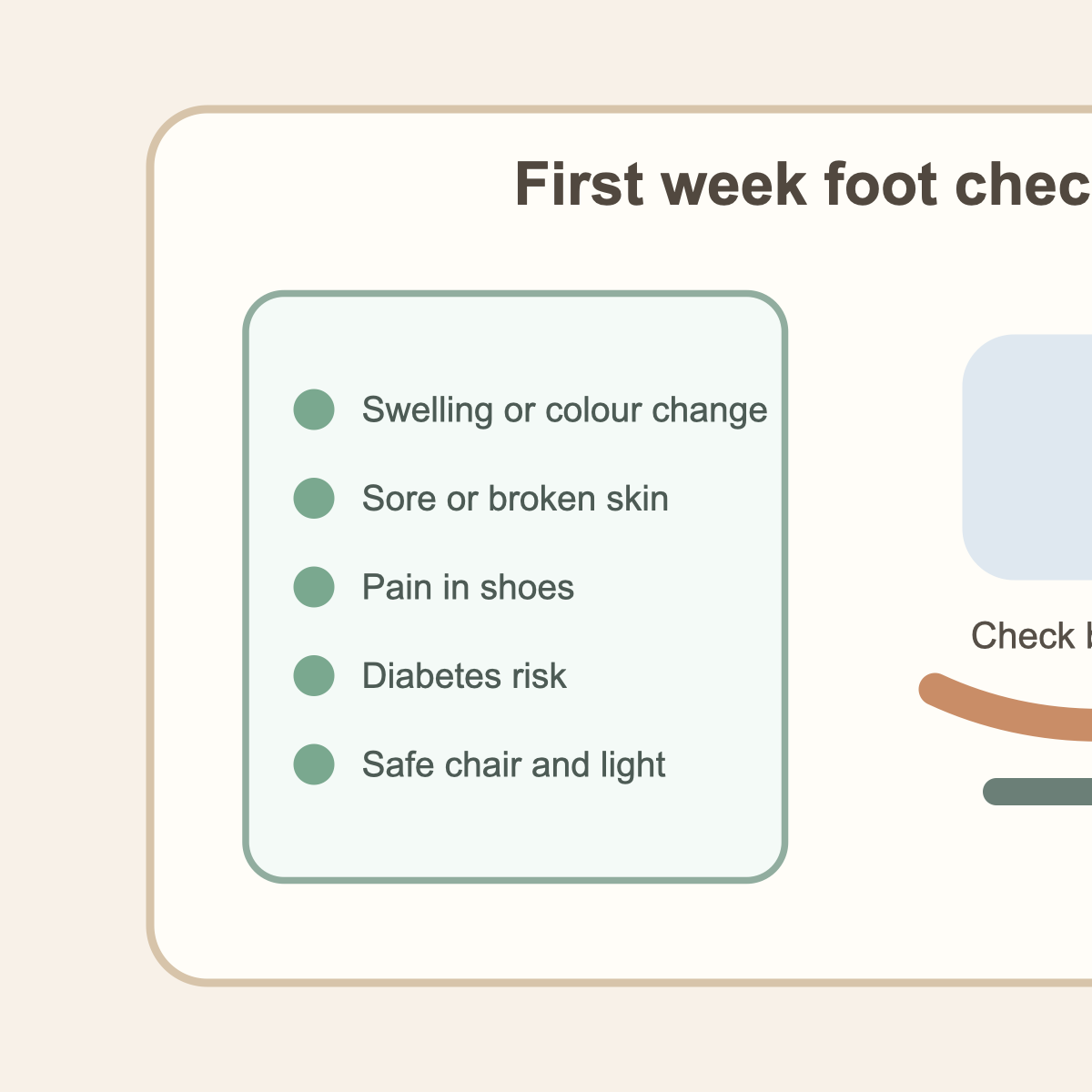
The first foot care step after hospital is a check, not immediate cutting or filing. Generated image
Before anyone cuts nails or files hard skin, look at both feet in good light. Check for swelling, colour change, broken skin, blisters, heat, discharge, new pain, pressure marks, or a sore patch that was not there before hospital.
The NHS warns that people with diabetes, heart disease, or circulation problems should not treat corns and calluses themselves because these conditions can make foot problems more serious. That warning also supports a cautious approach to sharp or forceful foot care after hospital.
If there is a wound, spreading redness, pus, sudden swelling, severe pain, sudden colour change, or a hot foot, do not treat it as routine foot care. Ask for GP, NHS, or urgent medical advice first.
Why swelling changes the plan
Feet and ankles may swell after reduced movement, medication changes, surgery, or illness. Swelling can make shoes tighter, increase pressure on toes, and make nails or hard skin feel worse than they did before admission.
The safe question is not only whether the nails need cutting. It is whether shoes still fit, whether socks leave deep marks, whether one foot looks different from the other, and whether pain or colour change is new.
If swelling is sudden, one sided, painful, hot, linked with shortness of breath, or clearly worsening, seek medical advice. Routine mobile foot care can help comfort when things are stable, but it should not replace medical review when symptoms have changed.
Diabetes and circulation need extra caution
Diabetes changes the risk level after hospital. Diabetes UK explains that high blood sugar can damage nerves and blood vessels in the feet, which can reduce feeling and slow healing. This means a small cut or pressure mark may be missed and foot problems can become more serious without prompt care.
After discharge, families should ask whether the person had their feet checked in hospital, whether there are any new dressings, whether footwear was changed, and whether any clinician gave foot care instructions.
If there is diabetes, poor circulation, numbness, a previous ulcer, or a new wound, routine trimming should be cautious and conservative. The safest appointment may be one that identifies the need for NHS podiatry, GP, or foot protection team advice rather than pushing ahead.
Make walking safer before focusing on appearance
After hospital, foot care should support safe movement. Long nails can catch on socks. Thick nails can press into shoes. Hard skin can change how someone places weight through the foot. Dry cracked heels can sting enough to reduce walking confidence.
The NHS falls advice says to speak to a GP if you are worried about balance or mobility or have had a fall. It also explains that getting up after a fall should be slow and supported. That reinforces why foot comfort, shoe fit, and mobility concerns after hospital should be taken seriously.
NICE guidance on falls in older people focuses on assessment and prevention. Footwear, mobility, medicines, vision, strength, and the home environment can all interact, so foot care is one practical part of a wider recovery plan.
Prepare for a home visit
Choose a warm, well lit room with a firm chair. Have clean socks, the usual shoes or slippers, medication details, discharge paperwork if relevant, and a short list of concerns ready. Do not ask the person to balance awkwardly or sit somewhere too low just to make the feet easier to reach.
The Health and Safety Executive explains that care in people's homes depends on the person's needs, the environment, the task, and practical risks. For foot care after hospital, that means planning around the real home setup, not an ideal clinic room.
If a carer or family member cannot attend, write down the main questions. Include what changed after hospital, whether there was a fall, whether shoes are tight, and whether there is diabetes, poor circulation, swelling, numbness, or pain.
What home foot care may include
When it is safe, a home visit may include careful nail trimming, filing rough edges, reducing uncomfortable hard skin, checking pressure areas, moisturising advice, shoe and sock comments, and guidance on what to watch before the next visit.
The Royal College of Podiatry notes that ageing feet can become drier and more fragile and that foot pain can affect walking and wellbeing. It also says routine care can help avoid serious problems, which supports not waiting until post hospital foot discomfort becomes severe.
The aim is not cosmetic perfection. The aim is comfort, safe routine care, and clear advice about anything that needs medical follow up.
When to book and when to wait
Book routine home visit foot care when the person is medically stable, comfortable sitting, and needs help with nails, hard skin, dry skin advice, footwear pressure, or a practical foot check because travel is difficult.
Wait and ask for medical advice first if there is an open wound, infection sign, sudden swelling, severe pain, new numbness, major colour change, calf pain, shortness of breath, or anything the discharge team specifically told you to monitor.
For stable routine care in Surrey, RMFC can help after a hospital stay when clinic travel feels too much. The right visit should reduce uncertainty, not add pressure to an already tiring recovery period.
Key Takeaways
- After hospital, check both feet before anyone cuts nails or files hard skin.
- Swelling, colour change, wounds, heat, discharge, severe pain, or sudden change need medical advice first.
- Diabetes, poor circulation, numbness, and previous ulcers make routine foot care more cautious.
- Have a firm chair, good light, usual footwear, medication details, and discharge notes ready for a home visit.
- Home visit foot care can support comfort and mobility when the person is stable but travel is difficult.
Foot care after a hospital stay should begin with a careful check. If the feet look stable, a home visit can help with nails, hard skin, comfort, and practical advice without asking an older person to travel again. If there are wounds, infection signs, sudden swelling, severe pain, or worrying colour change, medical advice should come first.
Need Professional Foot Care?
Book a home visit and get expert treatment without leaving your house