
Safe Foot Care After a Fall at Home
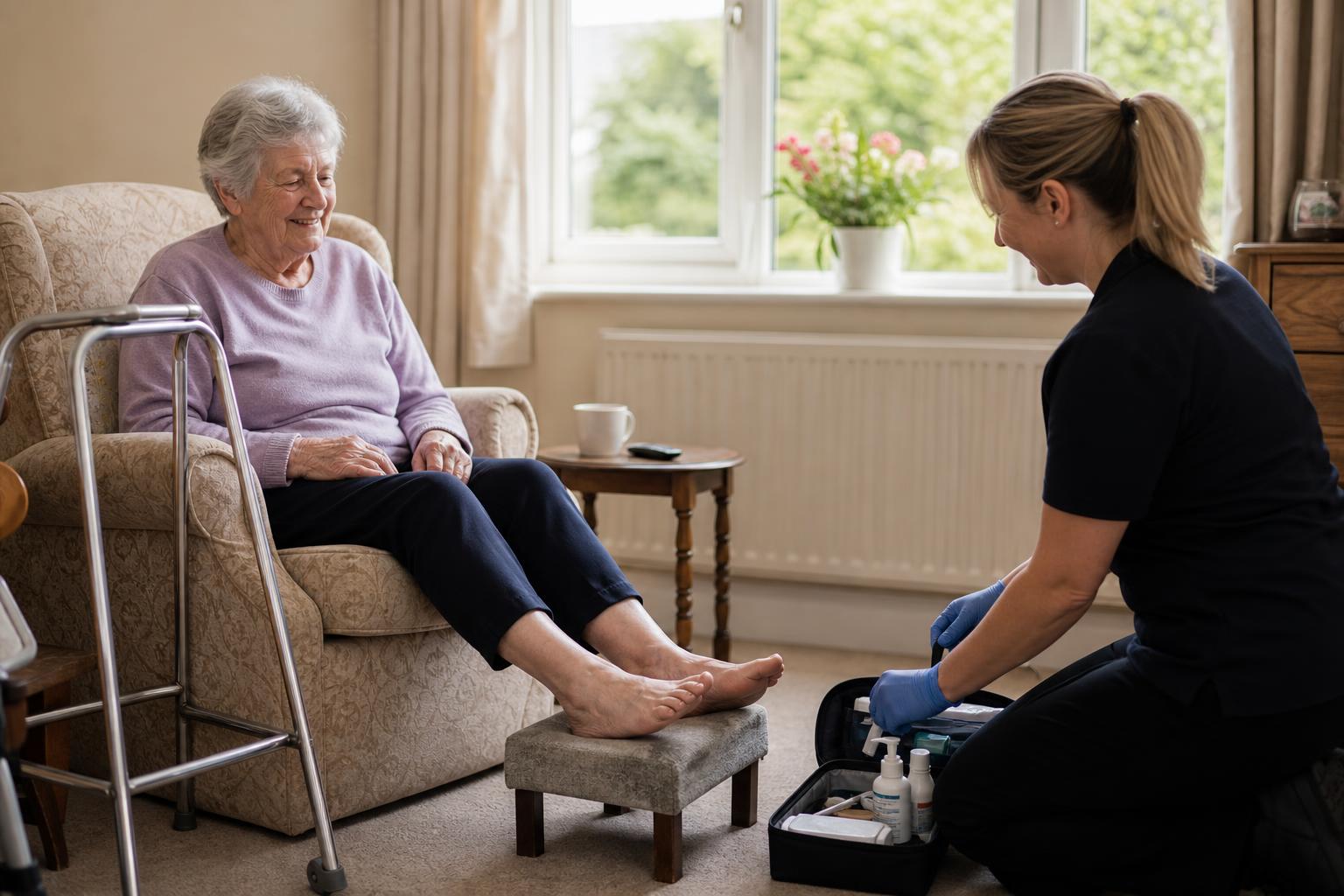
After a fall, steady positioning and confidence with mobility matter before routine foot care starts.
The practical search query this article answers is foot care after a fall at home. It is for an older adult, partner, adult child, or carer who has realised that toenail cutting, checking the soles, drying between toes, putting shoes on, or travelling to a clinic feels harder after a fall.
Why a fall changes ordinary foot care
A fall can change confidence even when there is no obvious injury. Someone who used to bend down, balance on one foot, or lift a leg onto a stool may suddenly feel unsafe doing it. That matters because foot care often asks for reach, balance, clear sight, and steady hands at the same time.
The NHS says that after a fall people should take time, check for pain or injury, and get urgent help if there may be a head, back, neck, or hip injury, or if the person cannot get up. It also advises speaking to a GP if someone has had a fall or is worried about balance or mobility. That means the fall itself needs the right safety response first, before routine foot care is treated as a simple grooming task.
For RMFC, this topic matters commercially because the searcher is often close to needing practical support. They may not be looking for a diagnosis. They may be asking whether home visit foot care, mobile foot care, a podiatrist at home, a chiropodist at home, or toenail cutting at home is a safer route now that clinic travel or bending down feels risky.
Check for injury before checking the feet
Do not rush straight to clippers after a fall. First ask whether there is new severe pain, a head injury, hip pain, back or neck pain, dizziness, confusion, a wound, sudden swelling, or a new inability to bear weight. If any of those are present, foot care can wait. Medical advice comes first.
If the person seems unwell or injured, use NHS 111 or urgent care routes as appropriate. If they cannot get up after the fall, or may have injured their head, back, neck, or hip, the NHS says to call 999. A routine home visit foot care appointment should not be used to work around a possible injury.
Once urgent concerns are ruled out, write down what changed. Is the person frightened of standing? Are they avoiding stairs? Are they walking differently? Are shoes tighter because of swelling? Are toenails now too long because they have delayed cutting them? These details help decide whether the next step is family support, a GP or falls service conversation, wider home help, or routine foot care at home.
Make the setup safer before anyone cuts nails
The person should be seated in a stable chair, warm, unhurried, and able to keep both feet supported. Good light matters. A phone or personal alarm should be within reach. The floor should be clear, dry, and free from loose rugs, trailing cables, slippers that slide, or small objects that could cause another trip.
Age UK explains that feeling unsteady can stop people doing the things they used to do, and that asking for help can support independence. Its falls advice also highlights strength, balance, hydration, eyesight, and home environment. That is why foot care after a fall should sit inside a wider fall prevention mindset, not a rushed nail cutting session.
If bending is the problem, do not improvise with an unstable footstool or ask the person to balance with one leg raised. If they cannot see or reach the nails clearly, the safe answer is not to cut faster. It is to pause and arrange help that fits the new mobility limit.
Look at shoes, socks, swelling, and pressure marks
After a fall, people often change how they walk. They may shuffle, grip the floor with their toes, avoid one side, wear slippers more often, or choose shoes that are easy to put on but less supportive. Those small changes can lead to rubbing, pressure marks, sore toes, hard skin, or discomfort under the ball of the foot.
The Royal College of Podiatry explains that walking can cause sore feet from skin changes such as blisters and callus, and that callus or corns can come from chronic friction and pressure. It also points to footwear, sock seams, moisture, and foot shape as causes. That makes shoe and sock checks part of the foot care problem, especially if the person is walking differently after a fall.
Check inside shoes for loose insoles, grit, worn lining, or seams that rub. Look at socks for tight elastic or wrinkles. Check whether one shoe is suddenly harder to put on, whether there is swelling, and whether any red mark stays after footwear is removed. If swelling is new, painful, one sided, hot, or linked with other worrying symptoms, get medical advice rather than treating it as routine foot care.
What not to do at home after a fall
Avoid cutting nails while the person is standing, sitting on the edge of a bed without support, or holding the foot in an awkward position. Avoid digging down the sides of nails. Avoid cutting hard skin, corns, or callus with blades, scissors, knives, or razors. Avoid strong acid corn plasters unless a suitable professional has said they are safe for that person.
NHS guidance on corns and calluses says not to cut them off yourself, and says people with diabetes, heart disease, or circulation problems should not try to treat corns and calluses themselves. It also advises getting help if there is bleeding, pus, discharge, severe pain, or normal activity is affected. Those same boundaries are useful after a fall because small foot problems can become riskier when mobility and inspection are worse.
Do not assume a family member should take over with sharp tools if the foot is hard to see. A helpful family role is to notice changes, keep the person seated safely, remove obvious trip hazards, check shoes and socks, and arrange the right kind of support. It is not to perform bathroom surgery on a painful foot.
When diabetes or reduced feeling is involved
Be more cautious if the person has diabetes, reduced feeling, poor circulation, previous foot ulcers, fragile skin, or a history of slow healing. After a fall, they may be less able to check the sole properly, and pain may not be a reliable warning sign if feeling is reduced.
The CDC advises people with diabetes to check their feet every day for cuts, redness, swelling, sores, blisters, corns, calluses, and changes to the skin or nails. It also says to use a mirror or ask a family member for help if the bottom of the feet is hard to see. That is directly relevant after a fall because not being able to inspect the soles clearly changes the risk.
If there is broken skin, a wound, spreading redness, warmth, discharge, sudden colour change, new numbness, or a diabetes related concern that is new or worsening, routine foot care should wait. Medical or specialist foot advice should come first.
When home visit foot care may help
A home visit may be suitable when the fall has made routine foot care difficult but there are no urgent injury or medical red flags. Common examples include toenails becoming too long because bending feels unsafe, thick nails that are hard to manage, hard skin that is uncomfortable in shoes, corns or callus that need cautious reduction, cracked heels, or general foot comfort checks.
Age UK says foot care in later life can help lower the risk of falls and infection, relieve pain, and support older people who are unable to look after their feet. It also notes that some services may be accessed at home if someone is housebound. That supports the practical value of bringing suitable routine foot care to someone who cannot manage it safely alone.
For patients and families in Surrey, RMFC can help with routine home visit foot care where the issue is within scope, such as toenail cutting, thickened nails, hard skin, corns, callus, cracked heels, and general comfort. If the fall caused injury, severe pain, a wound, suspected infection, sudden swelling, or a new diabetes related change, medical advice should come first.
When the problem is wider than foot care
Sometimes foot care difficulty is only one sign that more support is needed. If the person is struggling with washing, dressing, getting out of bed, meals, medicines, stairs, shopping, or leaving the house, a toenail appointment alone will not solve the whole problem.
The NHS social care guide explains that help at home can support people who have difficulty walking or getting around, and can include daily routines such as washing, dressing, getting out of bed, meals, medicines, shopping, and getting settled. That helps families separate routine foot care from wider homecare needs.
Carers UK describes how arranging care for someone can feel difficult because people often do not know where to start. If the fall has changed daily life, turning the problem into clear support needs can make the next call easier.
A local council needs assessment can also look at what help someone may need. GOV.UK explains that the assessment can consider healthcare, equipment, help in the home, and adaptations, so repeated difficulty after a fall may justify a wider support conversation. Living Made Easy is another useful place to explore practical aids and equipment that can make daily tasks easier at home.
NICE falls guidance also supports the idea that falls risk can involve multiple factors, including gait, balance, medicines, vision, cognition, home hazards, and cardiovascular issues. In plain terms, a fall is often a prompt to look at the whole situation, not just the sore nail or hard skin that has become difficult to manage.
A simple post-fall foot care checklist
First, rule out urgent injury or illness. Second, make the setup safe with a stable chair, good light, clear floor, and no rushing. Third, inspect both feet, including the soles, heels, between the toes, around the nails, and any pressure marks from shoes or socks.
Fourth, decide what the problem actually is: nails too long, nails too thick, pain from a nail edge, hard skin, corn, callus, cracked heel, swelling, wound, or difficulty reaching the feet. Fifth, choose the safest next step. That may be family monitoring, a GP or NHS 111 call, a falls service conversation, wider care planning, or routine home visit foot care.
The key is not to let embarrassment or urgency push the person into an unsafe position. If the foot care need is routine but the fall has made bending, travelling, or clinic access difficult, a calm home visit can be a practical option. If there are red flags, the right first step is medical advice.
Key Takeaways
- After a fall, check for injury, severe pain, wounds, swelling, or illness before routine foot care.
- Toenail cutting and hard skin care should be done seated, in good light, without awkward bending or balancing.
- Do not cut corns, callus, hard skin, or painful nail edges yourself if the foot is hard to see or risk factors are present.
- Shoes, socks, swelling, and pressure marks matter because walking can change after a fall.
- Home visit foot care may help when the need is routine but travel, bending, confidence, or mobility has become harder.
A fall can make ordinary foot care feel unsafe very quickly. The practical answer is to slow the process down: check for injury first, make the setup safe, inspect the feet carefully, avoid cutting or digging at painful skin, and choose the right level of help. For routine nails, hard skin, corns, callus, cracked heels, or comfort support, home visit foot care may be sensible when travel or bending is the barrier. For injury, wounds, infection signs, severe pain, sudden swelling, or new diabetes related changes, medical advice should come first.
Need Professional Foot Care?
Book a home visit and get expert treatment without leaving your house