
When Disabled Adults Need Toenail Cutting Help
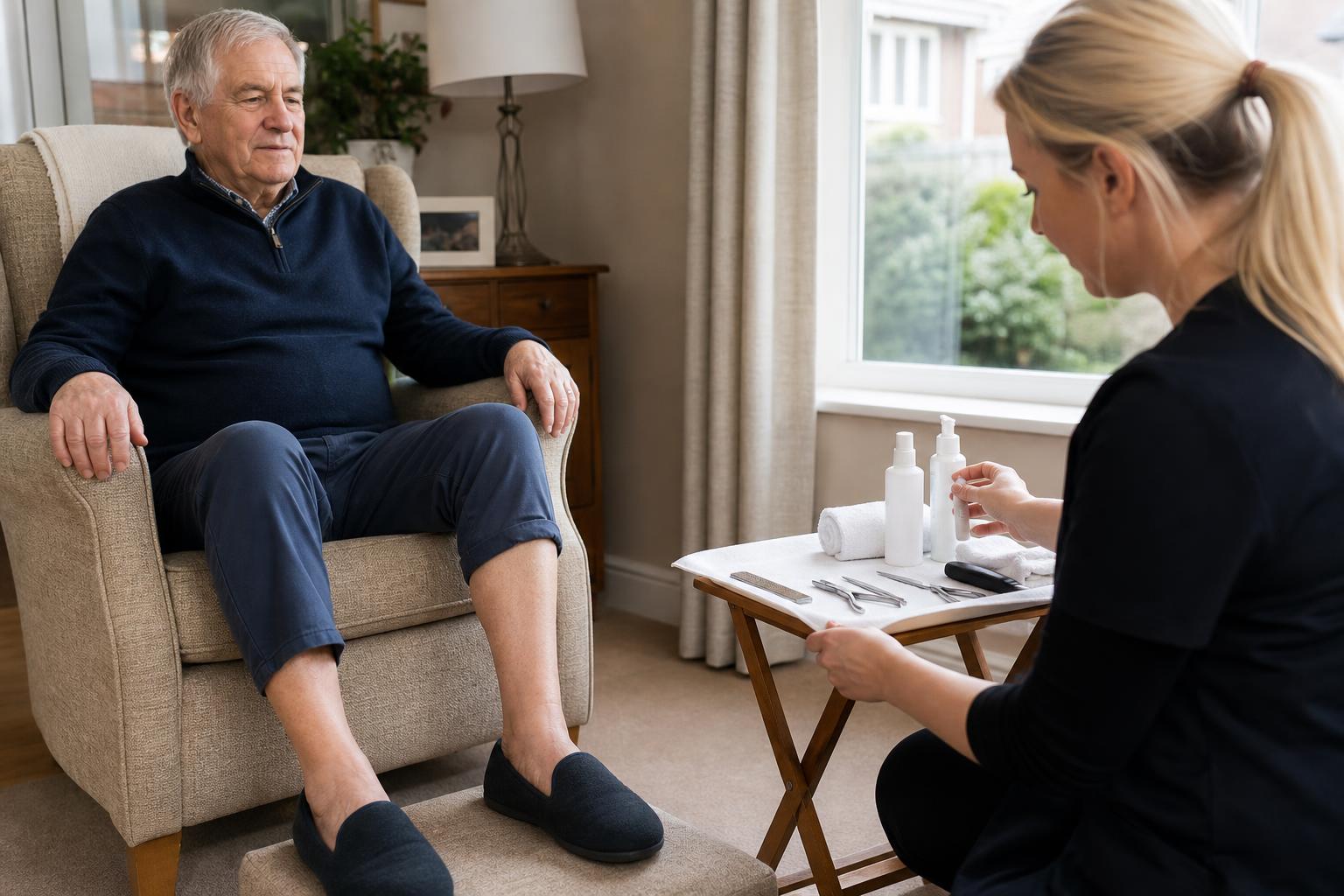
For disabled adults, toenail cutting often becomes an access problem before it becomes an obvious foot problem.
The practical search query this article answers is toenail cutting at home for disabled adults. It is for a disabled adult, carer, partner, or family member who can see that toenails need care, but bending, grip, transfers, pain, eyesight, diabetes, fatigue, or travel make ordinary nail cutting difficult to do safely.
Why disability changes a simple task
Toenail cutting can look like a small job until the person cannot reach their feet, hold clippers steadily, feel a nick quickly, or get into a safe position. The practical problem is not only the nail. It is the chair, lighting, balance, hand strength, pain level, shoe pressure, and whether the person can stop if something hurts.
This is why the search often includes words such as home visit foot care, mobile foot care, podiatrist at home, chiropodist at home, and toenail cutting at home. The person searching usually wants a safe way to solve a physical access problem, not a long medical explanation.
The NHS notes that nails can become thicker or more brittle, and advises seeing a podiatrist if toenails are too tough to cut or cannot be reached. That is the exact point where many disabled adults and carers start looking for help at home.
Age UK also treats foot care as a practical part of staying comfortable and mobile, including toenail cutting support in some local areas. For families, the useful point is simple: regular foot care can affect pain, infection risk, and falls risk, not only appearance.
Check the foot before anyone cuts
Before cutting, look at the whole foot in good light. Check the nails, nail edges, skin between the toes, heel, sole, top of the foot, and any place where socks, slippers, shoes, splints, or footplates rub. Notice redness, heat, swelling, broken skin, bleeding, discharge, colour change, numbness, new pain, or a nail corner pressing into the skin.
The Royal College of Podiatry explains that routine foot care includes regular checking, washing, drying, moisturising dry skin, nail control, and footwear that fits well. It also warns that long nails can press into shoes and contribute to soreness, infection, or ulceration, so nails pressing inside shoes should not be dismissed as cosmetic.
If the person has diabetes, be more cautious. Diabetes UK explains that diabetes can affect foot sensation and blood supply, so cuts, pressure areas, and sores may not be felt normally and may heal less well. That means new foot changes in diabetes need extra care before anyone reaches for clippers.
NICE diabetic foot guidance is written for clinical care, but it reinforces the same practical message for families: higher risk diabetic foot problems need the right route, not a rushed trim in poor light.
When toenail cutting at home is not safe
Do not cut the nail yourself if the toe is red, hot, swollen, weeping, bleeding, very painful, or has pus. Do not cut if the nail corner has disappeared into the skin, if the person cannot keep the foot still, or if the nail is so thick that ordinary clippers need force.
NHS ingrown toenail advice says a toe can become red, painful, swollen, curved into the toe, or infected, and warns people not to cut the toenail when treating an ingrown toenail at home. If the temptation is to dig down the side, the safer choice is to stop before cutting a painful nail corner.
If there is spreading redness, sudden swelling, feverish symptoms, severe pain, an open wound, or a diabetes related change, seek medical advice promptly. Home visit foot care is helpful for suitable routine nail care, but it should not be used to delay urgent care when warning signs are present.
The barriers that make help sensible
Professional help can be sensible even when the foot does not look dramatic. The person may be unable to bend safely, may not be able to hold clippers firmly, may fatigue quickly, may have spasms or tremor, may need help transferring, or may become anxious when a family member tries to cut the nails.
Travel can be the deciding barrier too. For foot care, getting to appointments can be part of the problem, which is why mobile foot care can be more than convenience.
How carers can prepare without cutting
If you decide not to cut, you can still make the next step easier. Write down which nail hurts, whether the pain is in shoes or at rest, whether socks catch, whether the person has diabetes, poor circulation, reduced feeling, blood thinning medication, a recent fall, dementia, or a history of wounds.
Carers UK encourages families arranging support to gather clear information so the right help can be planned. A short note such as "left big toenail catches and hurts in slippers" can make arranging practical support much less vague.
If dementia affects cooperation or distress, plan the appointment around calm timing, familiar surroundings, and consent. Alzheimer's Society guidance on personal care highlights the importance of dignity, reassurance, and the person's feelings, which matters when personal care feels intrusive or confusing.
Sometimes foot care is one sign that wider support at home is becoming harder. GOV.UK explains that a needs assessment can look at help in the home, healthcare, equipment, and adaptations. That is separate from private foot care, but wider help at home may also be worth exploring if several daily tasks are becoming unsafe.
What a home visit can help with
A suitable home visit can help with routine toenail cutting, thick or hard nails where appropriate, rough edges, basic foot checks, pressure points from footwear, and advice on what to watch between appointments. It can also reduce the pressure on family members who feel responsible but are not confident cutting safely.
For disabled adults in Surrey, home visit foot care can be especially useful when transport, transfers, pain, fatigue, or carer availability make clinic visits difficult. It keeps the appointment in a familiar setting and lets the foot care decision start with the person's real day-to-day barriers.
If the need is routine and there are no urgent warning signs, booking a home visit with Rithik's Mobile Foot Care can be a practical next step. If there is broken skin, pus, spreading redness, severe pain, sudden swelling, feverish symptoms, or a diabetes related change, seek medical advice first.
Key Takeaways
- Toenail cutting can become unsafe when disability affects reach, grip, balance, sensation, transfers, or travel.
- Check the whole foot before cutting, especially if there is diabetes, poor circulation, reduced feeling, or new pain.
- Do not cut if there is redness, swelling, heat, pus, bleeding, broken skin, severe pain, or a hidden nail corner.
- Carers can help by recording symptoms, footwear issues, diabetes status, medication concerns, and what has changed.
- Home visit foot care can help with suitable routine toenail care when clinic travel or self care is difficult.
For disabled adults, toenail cutting is not always a simple grooming task. It can involve pain, reach, grip, safe positioning, diabetes caution, transport, and carer confidence. If the foot looks healthy and the need is routine, home visit foot care can make nail care safer and easier to manage. If the foot shows warning signs, get medical advice before anyone tries to cut.
Need Professional Foot Care?
Book a home visit and get expert treatment without leaving your house