
Diabetic Toenail Cutting at Home: What Is Safe

Diabetic nail care is safest when the whole foot is checked first, not when clippers are used in a rush. Generated image
The practical search query this article answers is diabetic toenail cutting at home. It is for someone with diabetes, or their carer, who needs toenails cut safely but is unsure when family trimming is reasonable, when home visit foot care may help, and when medical advice should come first. This article belongs to the pillar Home visit foot care for older adults, diabetes, and reduced mobility.
Why diabetes changes nail cutting
Diabetes does not mean nobody can ever help with routine nail care at home. It does mean the margin for error is smaller. If feeling is reduced, a person may not notice a clipper catching skin, a nail corner pressing into the toe, or a shoe rubbing after a trim.
Diabetes UK advises people to check their feet regularly, cut nails carefully, avoid blades and corn plasters, and get expert advice when foot care is difficult. That makes careful nail cutting part of a wider diabetes foot routine, not a quick cosmetic job.
NICE says diabetes foot checks should happen when diabetes is diagnosed, at least yearly, and when someone thinks they have a foot problem. The check looks at skin, ulcers, hard skin, infection signs, feeling, blood flow, foot shape, and footwear. That is why diabetes foot risk needs more than a simple trim.
What is safe to check before cutting
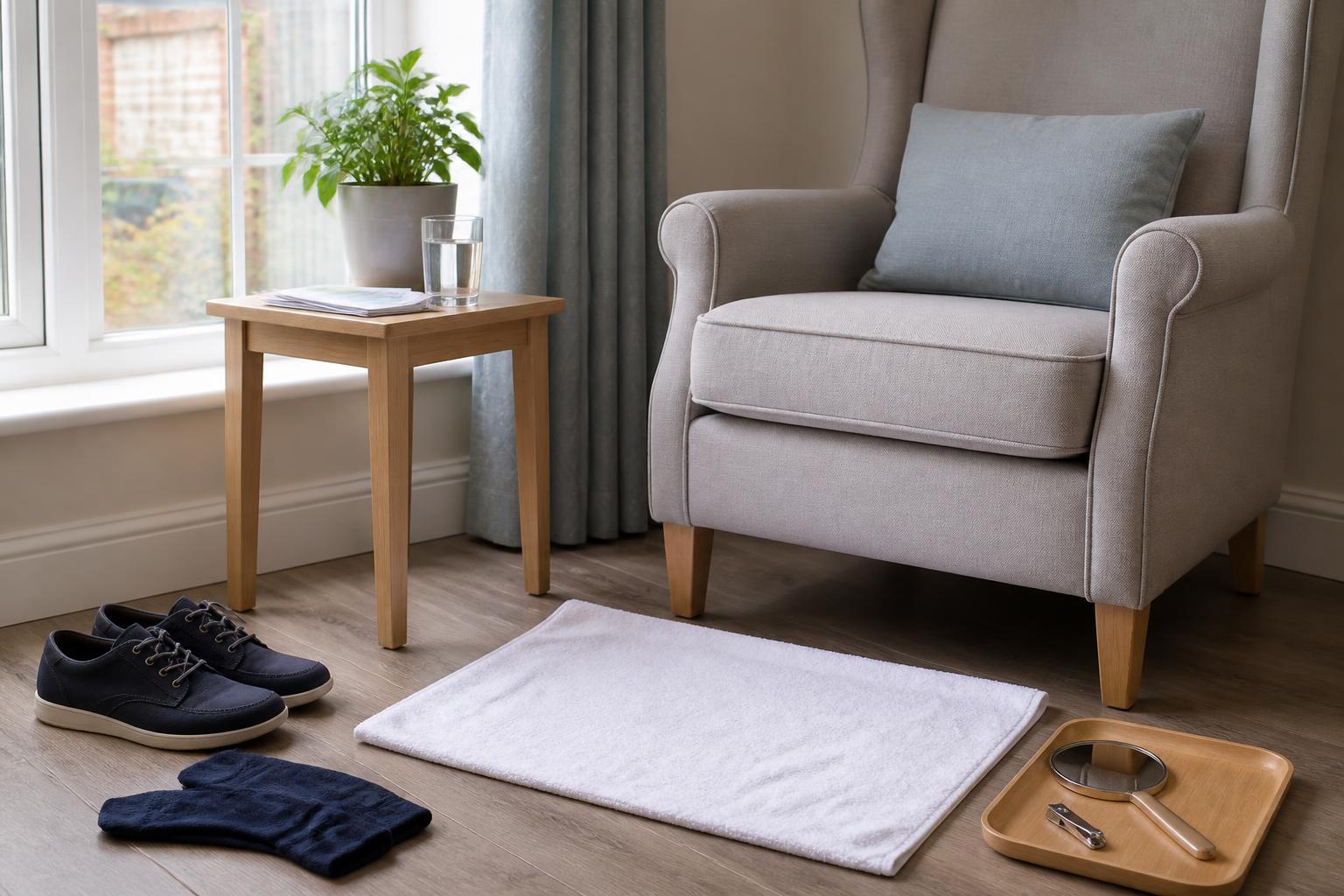
Good light, a steady chair, usual shoes, and clear information make routine home foot care safer and calmer. Generated image
Before anyone reaches for clippers, check the whole foot in good light. Look at the nail edges, toe spaces, skin colour, swelling, broken skin, pressure marks, discharge, and whether shoes or slippers have been rubbing.
The CDC recommends daily checks for cuts, redness, swelling, sores, blisters, corns, calluses, and nail changes, and says to use a mirror or ask for help if seeing the feet is difficult. For families, a repeatable foot check is safer than waiting for pain, because pain may be unreliable when feeling is reduced.
A safe home setup also matters. The person should be seated steadily, not perched on a bath edge or bending awkwardly. Have clean socks, usual shoes, medication details, diabetes details, and any recent foot concerns ready before the appointment or trim begins.
When not to cut at home
Do not cut the nails at home if there is a wound, bleeding, discharge, spreading redness, heat, swelling, sudden colour change, new numbness, or a toe that is too painful to touch. Do not dig down the sides of the nail, cut a deep V shape, use blades on hard skin, or keep trimming because the nail still looks uneven.
NHS inform advises urgent contact with a podiatrist or GP for a hot, red swollen foot, new skin damage, a change in foot shape, or new pain, especially where sensation is reduced. If someone with diabetes has new foot issues and feels feverish, shivery, sick, or generally unwell, the safer route may be NHS 111 rather than routine nail care.
Corns, callus, and thick skin need the same caution. The Royal College of Podiatry explains that corns and callus are linked to pressure and friction, and says it is not advisable to cut corns yourself, especially if you are elderly or have diabetes. That makes blades and aggressive trimming the wrong shortcut when the foot is higher risk.
Who can help with diabetic nail care at home
The right help depends on risk. For stable routine care with no wounds or urgent changes, a home visit foot care appointment may help with careful nail reduction, comfort, footwear pressure checks, and practical advice. For higher risk concerns, medical advice, a podiatrist, a foot protection service, GP support, NHS 111, or urgent care may be more appropriate first.
Families often search for podiatrist at home, chiropodist at home, mobile foot care, foot health practitioner, or toenail cutting at home. Those phrases are used differently, so ask what the person is trained and insured to do, what they will not treat, and when they would stop and refer onward.
If someone advertises podiatry or another regulated health profession, the HCPC register lets the public check professionals who meet standards for training, professional skills, behaviour, and health. It is a useful way to check a registered professional when that level of care is needed.
What to tell RMFC before a visit
A useful enquiry is specific. Say that diabetes is involved, whether there is reduced feeling, poor circulation, previous ulcers, blood thinning medication, swelling, redness, wounds, discharge, recent infection, or sudden pain. Describe the nails too: thick, curved, crumbly, painful, pressing into skin, catching socks, or hard to cut safely.
Age UK foot care services show the practical reason this support exists for older people: some people cannot comfortably look after their own feet and need help with basic foot care. For carers, help with foot care in later life is often about dignity, comfort, and safety, not appearance alone.
For RMFC patients in Surrey, the home visit value is simple. The person does not need to travel while the family guesses with clippers. The appointment can start with the facts already clear. If this sounds familiar, contact Rithik's Mobile Foot Care and explain the nail problem, diabetes status, mobility limits, and any warning signs before booking.
A safer decision rule
Use this rule. If the foot looks stable and the problem is routine nail length, book suitable routine help. If there is diabetes plus a new wound, heat, swelling, discharge, spreading redness, sudden colour change, new pain, or reduced feeling with a worrying change, seek medical advice first.
Diabetic toenail cutting at home should feel steady, not rushed. Check first, cut only if suitable, and ask for the right level of help early.
Key Takeaways
- Diabetes makes toenail cutting higher risk because feeling, healing, circulation, and skin condition may change what is safe.
- Check the whole foot before cutting, including nail edges, toe spaces, pressure marks, broken skin, swelling, redness, and footwear rubbing.
- Do not cut at home if there is a wound, discharge, spreading redness, heat, swelling, sudden colour change, new numbness, or severe pain.
- A home visit foot care appointment may help with stable routine care, but medical advice comes first for urgent diabetic foot changes.
- Tell RMFC about diabetes, reduced feeling, previous ulcers, blood thinners, wounds, swelling, and nail thickness before the visit.
Diabetic toenail cutting at home is safest when it starts with a proper check, not a quick trim. If the feet look stable and the problem is routine nail length, home visit foot care can make the next step calmer. If there are warning signs, pause and get medical advice first.
Need Professional Foot Care?
Book a home visit and get expert treatment without leaving your house