
When Curved Toenails Press Into Skin
Curved toenails that press into skin should be checked carefully before anyone trims down the sides.
The practical search query this article answers is curved toenails pressing into skin. It is for the person whose nail edge is starting to dig in, the older adult whose nails are harder to reach, or the carer who is worried that cutting the corner could make the toe sore or infected.
Why a curved nail becomes painful
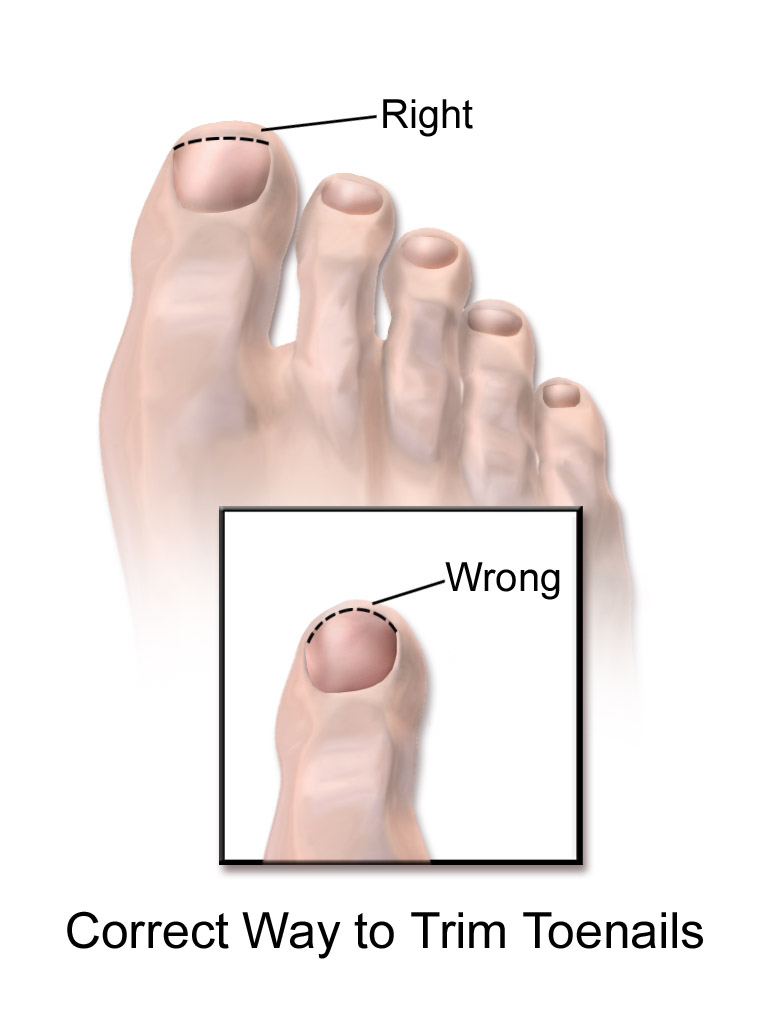
Straight, controlled trimming is safer than cutting deeply into the sides of a painful nail. Image source
A curved toenail becomes a problem when the nail edge presses into the side of the toe, rubs in shoes, or traps skin under pressure. The NHS describes an ingrown toenail as a nail that may curve into the toe, with redness, pain, swelling, and possible infection signs. That is why a curved nail should be treated as a pressure problem, not just a trimming problem. Pain, swelling, pus, or diabetes should change the level of help you seek.
Nails also change with age. They may become thicker, more brittle, harder to cut, or more awkward to shape. The NHS nail problems page advises seeing a podiatrist if toenails are too tough to cut or cannot be reached, and it warns against cutting down the edges because straight trimming helps reduce ingrown nail risk. If a nail is already curling into the side, digging at the corner can make things worse.
The Royal College of Podiatry explains that keeping toenails cut and under control can help avoid pressure, soreness, infection, and ulceration in ageing feet. That matters for curved nails because the pain often comes from shoe pressure and repeated rubbing as much as from the nail itself. Comfort and mobility are part of the reason to deal with it early.
What to check before anyone cuts it
Before cutting, look at the toe in good light. Check whether the skin is red, shiny, hot, swollen, broken, bleeding, or wet. Notice whether there is pus, new colour change, a bad smell, sudden pain, or pain that is stopping normal walking. If the person cannot see the nail edge clearly, cannot hold the toe steady, or needs force to cut it, stop and get help instead of guessing.
Diabetes changes the safety threshold. Diabetes UK explains that diabetes can affect nerves and blood supply in the feet, which means damage may not be felt properly and cuts or sores may heal more slowly. If a curved nail is pressing into the skin and the person has diabetes, new pain, swelling, broken skin, or loss of feeling should be taken seriously.
The CDC gives a practical daily checking rule for diabetes foot care: look for cuts, redness, swelling, sores, blisters, corns, calluses, and nail changes, and use a mirror or ask someone to help if the sole is hard to see. For carers, that is a useful pattern even outside diabetes: if the foot cannot be checked properly, the cutting should not be rushed.
When home trimming is not the right answer
Home trimming is not the right answer when the nail is already painful at the edge, when skin is swollen around it, or when the only way to cut it would be to dig down the side. It is also not right when eyesight, grip, balance, arthritis, tremor, or reduced mobility mean the person cannot control the clippers safely.
If the person has diabetes, reduced feeling, broken skin, or infection worry, the decision is no longer just about routine trimming. It needs a cautious clinical threshold before ordinary foot care continues.
If the problem is mainly reach or grip, equipment can sometimes help with light maintenance, but it still has to match the person's ability and risk. A long handled file or easier grip tool should not create false confidence around a sore nail edge.
What a safer home setup looks like
If the nail is not infected, not broken into the skin, and still looks like routine care, set up carefully. Use a firm chair, good lighting, clean tools, and enough time. The foot should be supported, not held in mid air. Shoes and socks should be nearby so pressure points can be checked after the nail is assessed.
Sight and contrast matter more than people realise. Toenail cutting is a small task, but it needs a clear view of the nail edge and surrounding skin, so poor lighting or poor vision should be treated as a real safety issue.
Families should also think about the wider care picture. If foot care is becoming unsafe because of mobility, grip, sight, or self care difficulty, the nail problem may be a sign that wider support at home is needed.
When to book foot care at home

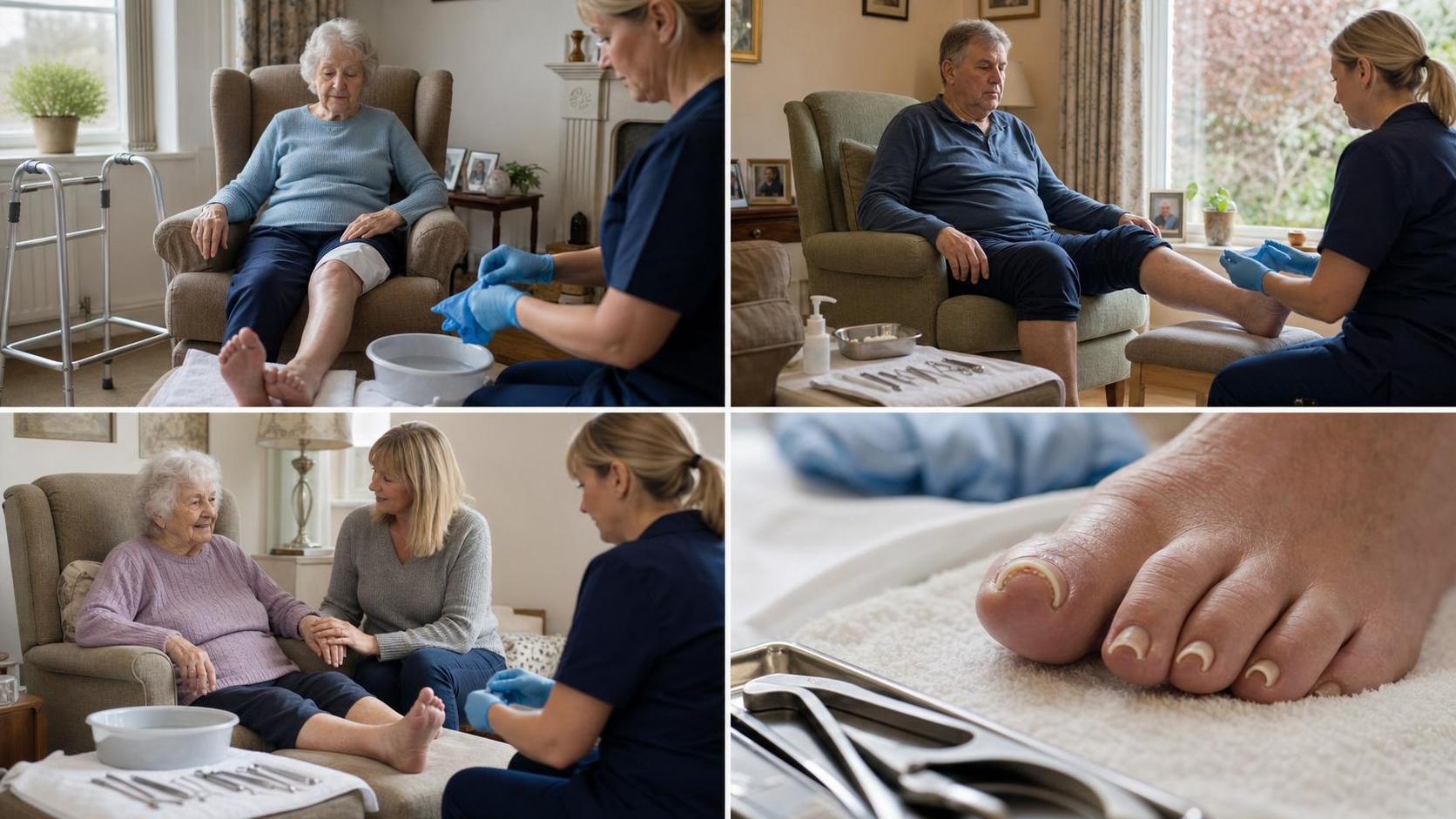
Home visits can be the practical option when nail pain, mobility, or travel makes clinic care difficult. Photo source
Home visit foot care is worth considering when the nail problem is routine enough for foot care, but the person cannot safely manage it alone or travel comfortably to a clinic. That might be because the nails are thick, curved, hard to reach, pressing in shoes, or repeatedly becoming sore after family trimming.
Age UK notes that foot care services for older people can help reduce pain, reduce infection risk, and lower falls risk, and that some services may be accessed at home if someone is housebound. That matches the real intent behind searches like mobile foot care, chiropodist at home, podiatrist at home, and toenail cutting at home. The person is often trying to solve an access and safety problem as much as a nail problem.
Foot pain can affect much more than the toe. If a curved nail is changing how someone walks, whether they avoid shoes, or whether they feel steady at home, dealing with it early can protect daily independence.
How to choose the right help
Choose help that is clear about scope. A good service should explain whether it can help with curved nails, thick nails, nail trimming, corn or callus pressure, and routine comfort care. It should also be clear when a GP, NHS podiatry route, urgent care, or another clinician is more appropriate.
If someone is specifically claiming to be a regulated professional, the HCPC register is a practical trust check. It lists health and care professionals who meet standards for training, professional skills, behaviour, and health. For families comparing podiatrist at home, chiropodist at home, and mobile foot care wording, checking registration where it applies can reduce uncertainty.
For RMFC patients in Surrey, a home visit foot care enquiry may be sensible when a curved toenail is uncomfortable, hard to manage, or difficult to check safely. If there is broken skin, spreading redness, pus, sudden severe pain, fever, diabetes with an ingrown nail, or any worrying change, seek medical advice first.
Key Takeaways
- A curved toenail becomes risky when it presses into the skin, causes pain, or sits in a swollen nail fold.
- Do not dig down the sides of a painful nail or force clippers through a thick or curved edge.
- Diabetes, reduced feeling, broken skin, pus, spreading redness, or sudden severe pain should prompt medical advice.
- A safe setup needs good lighting, stable seating, clean tools, and a clear view of the nail and skin.
- Home visit foot care can help when the problem is routine but self care or clinic travel is difficult.
Curved toenails are easy to underestimate until they press into skin, catch in shoes, or make walking uncomfortable. The safest first step is to check the toe honestly: is the skin calm, can the nail edge be seen, and can it be managed without force? If not, do not turn a sore nail into a bigger problem by cutting deeper. For routine cases where travel or self care is the barrier, home visit foot care can make the next step calmer and safer.
Need Professional Foot Care?
Book a home visit and get expert treatment without leaving your house