
Can You Remove a Corn at Home Safely?

A clear medical illustration helps show how pressure creates a corn or callus on the foot. Photo source
A painful corn can turn a normal walk to the kitchen, the car, or the shops into something you start planning around. Corns and calluses are usually hard or thick areas of skin that can become painful, and they often build where pressure or rubbing keeps returning. The practical question is not just how to remove the hard skin today. It is how to reduce the pressure, stay safe at home, and know when home visit foot care is the better option.
What is causing the painful pressure
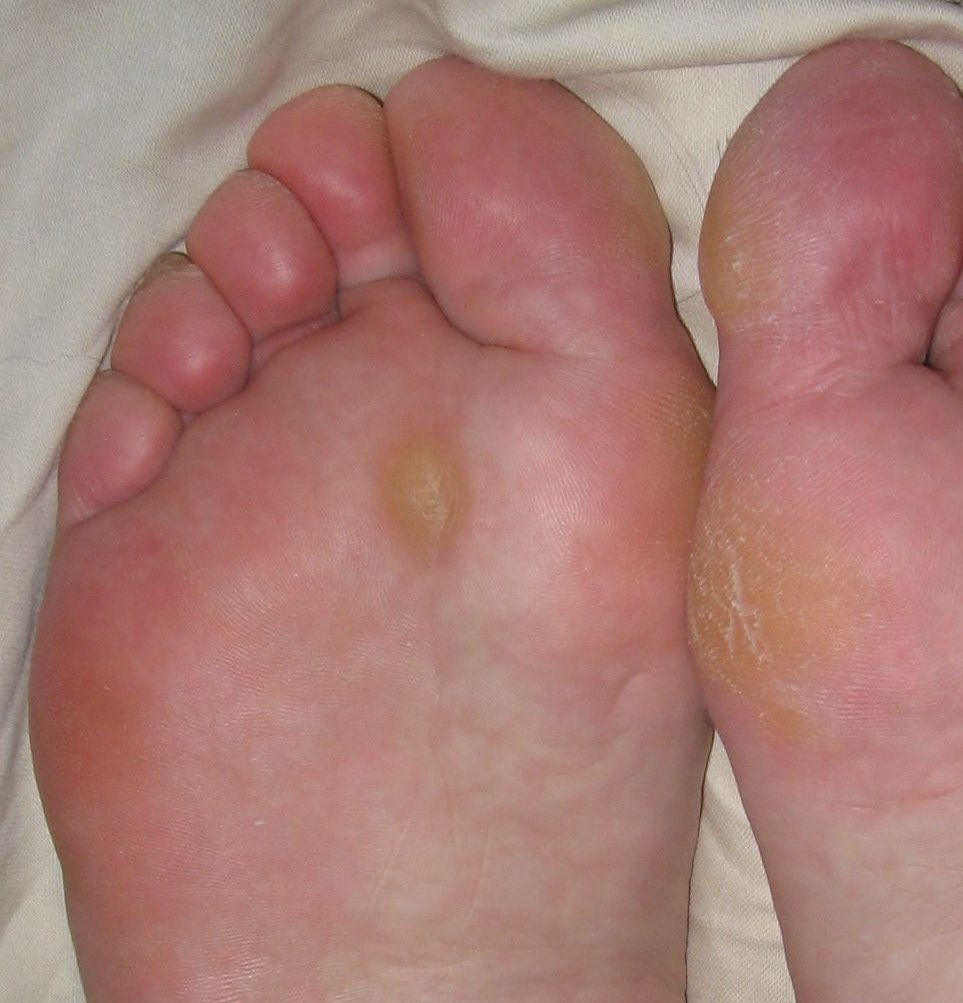
Callus is usually broader than a corn, but both can become uncomfortable when pressure keeps returning. Photo source
A corn is not simply dry skin. It is usually a concentrated plug of hard skin caused by repeated pressure, often over a toe joint, the side of a toe, or the ball of the foot. A callus is usually broader and flatter. That difference matters because corns tend to be smaller, deeper, and more painful when pressed, while callus often feels like a wider patch of hard skin under load.
The pressure may come from a tight shoe, a seam inside the shoe, a toe that sits against its neighbour, reduced padding under the forefoot, or a change in walking pattern. Dermatology guidance describes corns and calluses as a response to friction and pressure that make the skin thicken. That is why cutting the surface down without dealing with the pressure often gives only short relief.
What you can safely do at home

Shoe fit matters because pressure from the upper, toe box, seam, or sole can keep a corn coming back. Photo source
If you are generally well and the skin is not broken, sensible home care can reduce irritation. Warm water can soften hard skin, moisturiser can help dry skin, and a non medicated protective pad can reduce rubbing for a while. MedlinePlus gives the same broad pattern: reduce friction, improve shoe fit, and use protection while the area settles, because pressure and friction are usually the cause.
Shoe fit is often the quiet culprit. A shoe with too little toe room, a narrow front, a worn insole, or a ridge inside the shoe can keep feeding the same painful point. The simple test is whether the corn hurts less in a roomier shoe or slipper. If it does, that is a strong clue that pressure relief needs to be part of the plan, not just removal of hard skin.
Be more cautious if you have diabetes, poor circulation, reduced feeling, fragile skin, or a history of foot ulcers. Diabetes foot guidance stresses daily checking because small foot problems can become serious when sensation or blood flow is reduced. In that situation, it is safer to ask for professional help rather than trying to pare, file, or medicate the corn yourself.
What not to cut or scrape
The main risk at home is trying to dig the corn out. Sharp blades, razors, knives, and aggressive files can break healthy skin, especially if the corn is on a toe or between toes where the skin is thinner. Treatment guidance warns that trimming thickened skin with a scalpel is something a healthcare provider may do, but you should not try cutting it yourself because of infection risk.
Medicated corn plasters also need care. They often use salicylic acid, which can damage nearby healthy skin if it spreads beyond the hard area. That can be particularly risky for people with diabetes, poor circulation, or fragile skin. Cleveland Clinic makes the same safety distinction, noting that many people can treat simple corns at home, but people at higher infection risk should contact a healthcare provider.
Do not assume every hard lump is a corn. Warts, cysts, splinters, or other skin problems can look similar. Patient information notes that a clinician may need to distinguish corns and calluses from other causes of thickened skin, and that diabetes, numbness, or circulation problems change what is safe to do yourself. If the area bleeds, weeps, smells, changes colour, or becomes hot and swollen, stop self treatment and seek medical advice.
When to book professional corn care

Professional foot care can reduce hard skin safely and check why the pressure point keeps returning. Photo source
Book help if the corn is painful when you stand, keeps returning quickly, sits between the toes, or makes you alter how you walk. A professional foot care appointment can reduce thickened skin safely, check for pressure points, and advise on simple ways to protect the area afterwards. A patient leaflet from an NHS trust explains that a corn has a central core that may hurt when it presses on a nerve, which is why careful reduction can feel so relieving.
For people with diabetes, the threshold for getting help should be lower. NICE diabetic foot guidance is built around preventing and managing foot problems early, including risk assessment and timely care across settings. A painful corn is not automatically an emergency, but it should not be ignored if your skin heals slowly or you cannot feel pressure properly.
It is also reasonable to book professional care when the issue is becoming a mobility problem. Foot pain in later life can affect walking, stairs, balance, and ordinary daily tasks, and ageing guidance is clear that you do not have to put up with foot pain as you age. If a corn is making you avoid normal movement, it is already affecting more than the skin.
Why home visits help in Surrey
A home visit is useful when travelling to a clinic is harder than the treatment itself. That might be because you are older, recovering, caring for someone, short on transport, or simply trying to avoid walking on a painful corn. For many Surrey patients, corn removal at home means the foot can be treated in the place where the problem is affecting daily life.
A good appointment should also include practical questions, not just treatment. Which shoes hurt most? Does the corn return in the same spot? Is there numbness, swelling, redness, or broken skin? If you specifically need a registered podiatrist, the HCPC explains that its register lists professionals who meet standards for training, professional skills, behaviour, and health. For routine mobile foot care, ask clearly what the practitioner can treat and when they would recommend GP or podiatry referral.
How to prevent the corn coming back
Prevention is rarely one dramatic change. It is usually a few small adjustments that reduce pressure. That can mean roomier footwear, better socks, toe spacers where suitable, protective padding, moisturising dry skin, or regular foot care before the hard skin becomes painful again. NIDDK diabetes guidance is especially clear that people at risk should build foot checks into daily care because early attention helps prevent more serious foot problems.
If the same corn keeps returning every few weeks, treat that as useful information. It means the pressure point is still there. The right plan may be regular reduction, footwear changes, padding advice, or referral if the underlying shape of the toe or foot needs a different level of care. Corn removal gives relief, but pressure control is what makes the relief last longer.
Key Takeaways
- Corns and calluses usually form because pressure or rubbing keeps returning
- Safe home care focuses on pressure relief, moisturising, and avoiding sharp tools
- Do not cut, dig, or use medicated corn products if diabetes, poor circulation, numbness, or fragile skin is involved
- Professional corn care is sensible when pain affects walking or the corn keeps coming back
- A home visit can make treatment easier for older adults, carers, and anyone struggling to travel with foot pain
If a corn is making you limp, avoid shoes, or plan your day around foot pain, it is worth dealing with properly. Start with safer pressure relief at home, but do not force it with sharp tools or harsh products. For painful corns, recurring callus, reduced mobility, or diabetes related caution, a home visit with Rithik's Mobile Foot Care can give you gentle treatment and practical next steps without needing to travel.
Need Professional Foot Care?
Book a home visit and get expert treatment without leaving your house