
Compression Stockings and Foot Care
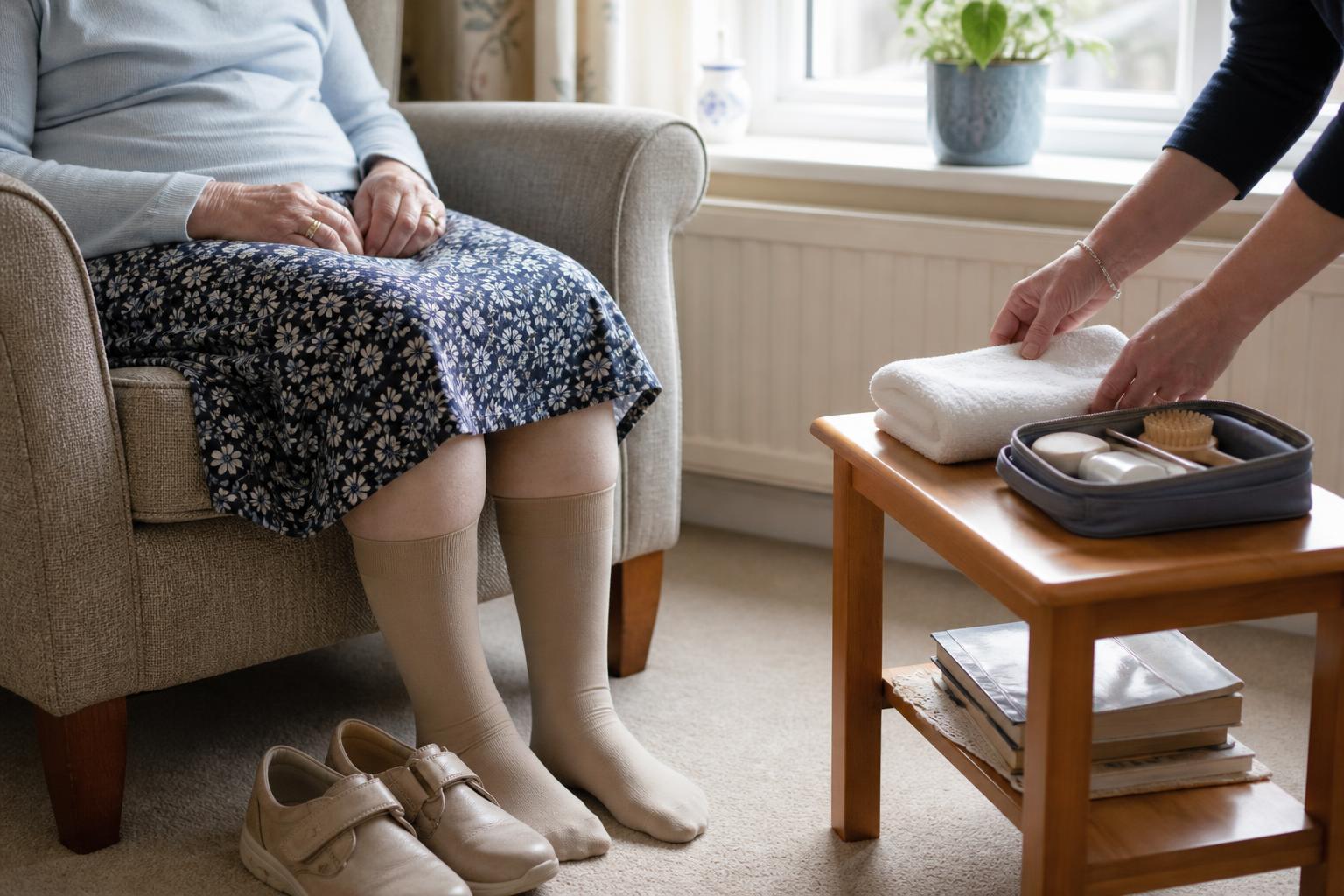
Compression stockings can help some leg swelling problems, but they also make daily foot checks harder if bending, grip, or eyesight is limited. Generated image
The practical search query this article answers is compression stockings foot care. It is for someone wearing compression stockings, or caring for an older relative who wears them, and wondering how to keep feet checked, clean, comfortable, and safe when stockings are difficult to remove or put back on.
Why stockings can hide foot problems
Compression stockings are often used for leg swelling, vein problems, or after certain medical advice, but they can unintentionally hide the feet from view. If someone only removes them quickly, or avoids removing them because they are hard to put back on, small changes can be missed until they become painful.
That matters because swelling itself can need medical judgement. NHS advice on swollen ankles, feet, and legs says oedema can be linked to sitting still, medicines, varicose veins, heart, kidney, liver, thyroid, injury, infection, or a blood clot, and it advises urgent help for sudden, severe, painful, hot, red, one-sided, or diabetes-related swelling. Routine foot care should not be used to explain away those warning signs.
For families, the practical issue is often simpler: the stockings come off, the nails look long, the skin looks dry, and nobody is sure whether it is still ordinary foot care or something that needs a GP, nurse, diabetes foot team, or lymphoedema service. A calm check is better than guessing.
Check the feet when stockings come off
A useful habit is to treat stocking removal as a foot check moment. Look at the toes, heels, between the toes, nail edges, soles, and any pressure marks. Check for redness, broken skin, blisters, cracks, weeping, new pain, colour change, rubbing from shoes, or deep grooves where fabric has bunched.
NHS oedema advice includes washing, drying, and moisturising the feet to help avoid infection, alongside raising legs, gentle exercise, and comfortable shoes where appropriate. It also says not to wear clothes, socks, or shoes that are too tight. That advice is especially relevant if a stocking has rolled, wrinkled, or left a tight band.
If the person has lymphoedema, the skin-care part becomes even more important. NHS lymphoedema treatment guidance describes compression as one part of a wider plan that can also include skin care, exercise, specialist massage, and reviews, and notes that compression may not be suitable for some people with arterial problems in the legs.
Do not start compression without advice
The safest rule is simple: do not start, change, or intensify compression because it seems like a good idea from a shop shelf. Compression level, length, fit, and timing need to match the reason it was recommended and the person's circulation, skin, swelling pattern, and other health conditions.
Patient guidance from MedlinePlus explains that compression stockings come in different pressures and lengths, and that people should talk to a healthcare provider about which kind of compression stocking is right. It also says stockings should be smoothed so they do not bunch or wrinkle.
The Lymphoedema Support Network gives a similar message for lymphoedema care: treatment may include skin care, exercise advice, manual lymphatic drainage, and compression garments or bandaging, used together to reduce swelling and limit infection. Foot care should respect that plan rather than interfere with it.
Extra care if diabetes is involved
Diabetes changes the threshold for getting help. A stocking can cover the very signs that need early attention, and reduced feeling can mean rubbing, pressure, cuts, or sores are not painful at first.
Diabetes UK explains that raised blood sugar over time can damage nerves and blood vessels in the feet, meaning people may lose feeling and cuts or sores may heal more slowly. It lists warning signs including swollen feet, numbness, wounds that do not heal, cramps, shiny skin, and hair loss. Those signs need medical or diabetes foot-team advice, not just routine trimming.
NICE public guidance says people with diabetes should have foot and lower-leg checks when diagnosed, at least yearly, and whenever they think there is a problem. The check includes skin, ulcers, hard skin, infection signs, feeling, blood flow, foot shape, and footwear, which is exactly why a covered foot should still be properly looked at rather than ignored.
When home visit foot care helps
Compression stockings can be hard work. Some people struggle because of arthritis, breathlessness, reduced grip, back pain, balance worries, poor eyesight, or fear that they will not get the stocking back on correctly. The result is that nails, hard skin, and shoe pressure get left too long.
A home visit can help when the main problem is access: the person cannot travel easily, cannot bend safely, or needs a calm appointment in familiar surroundings. NHS social care guidance notes that paid help at home can support people who have difficulty walking or getting around, while Age UK says some foot care services may be available at home if someone is housebound and that foot care can reduce pain and help older people stay active.
For RMFC, the commercial reason this query matters is clear. A carer searching this phrase is often already dealing with a practical booking barrier: a parent needs safe routine foot care, stockings make checks harder, travel is difficult, and the family wants someone appropriate to come to the home.
What to ask before booking
Before booking, explain that compression stockings are used and why, if known. Mention diabetes, lymphoedema, poor circulation, wounds, recent surgery, heart or kidney problems, sudden swelling, or any advice from a GP, nurse, vascular clinic, or lymphoedema team.
Also ask what the appointment can and cannot do. Routine mobile foot care may help with nail cutting, hard skin comfort, footwear pressure observations, and spotting changes that need referral. If a service describes regulated podiatry, the HCPC provides a public register where people can check registered health and care professionals. It should not replace urgent medical care for infection, unexplained swelling, wounds, or a suddenly painful leg or foot.
If you are unsure whether the problem is routine, contact Rithik's Mobile Foot Care with the details before booking. A clear conversation is better than forcing the wrong appointment.
Key Takeaways
- Compression stockings can make daily foot checks easier to miss.
- Check feet, toes, heels, nail edges, and pressure marks whenever stockings come off.
- Do not start or change compression without appropriate healthcare advice.
- Diabetes, wounds, sudden swelling, heat, redness, or one-sided swelling need medical advice.
- Home visit foot care can help when travel, bending, grip, or confidence make routine foot care difficult.
Compression stockings and foot care need to work together. The stockings may be part of a helpful treatment plan, but the feet still need regular checking, comfortable shoes, clean dry skin, and safe nail care. If stockings, swelling, diabetes, or reduced mobility are making that difficult at home, it is sensible to ask for the right help before a small foot problem becomes harder to manage.
Need Professional Foot Care?
Book a home visit and get expert treatment without leaving your house