
Bunion Corns: What Helps the Pressure
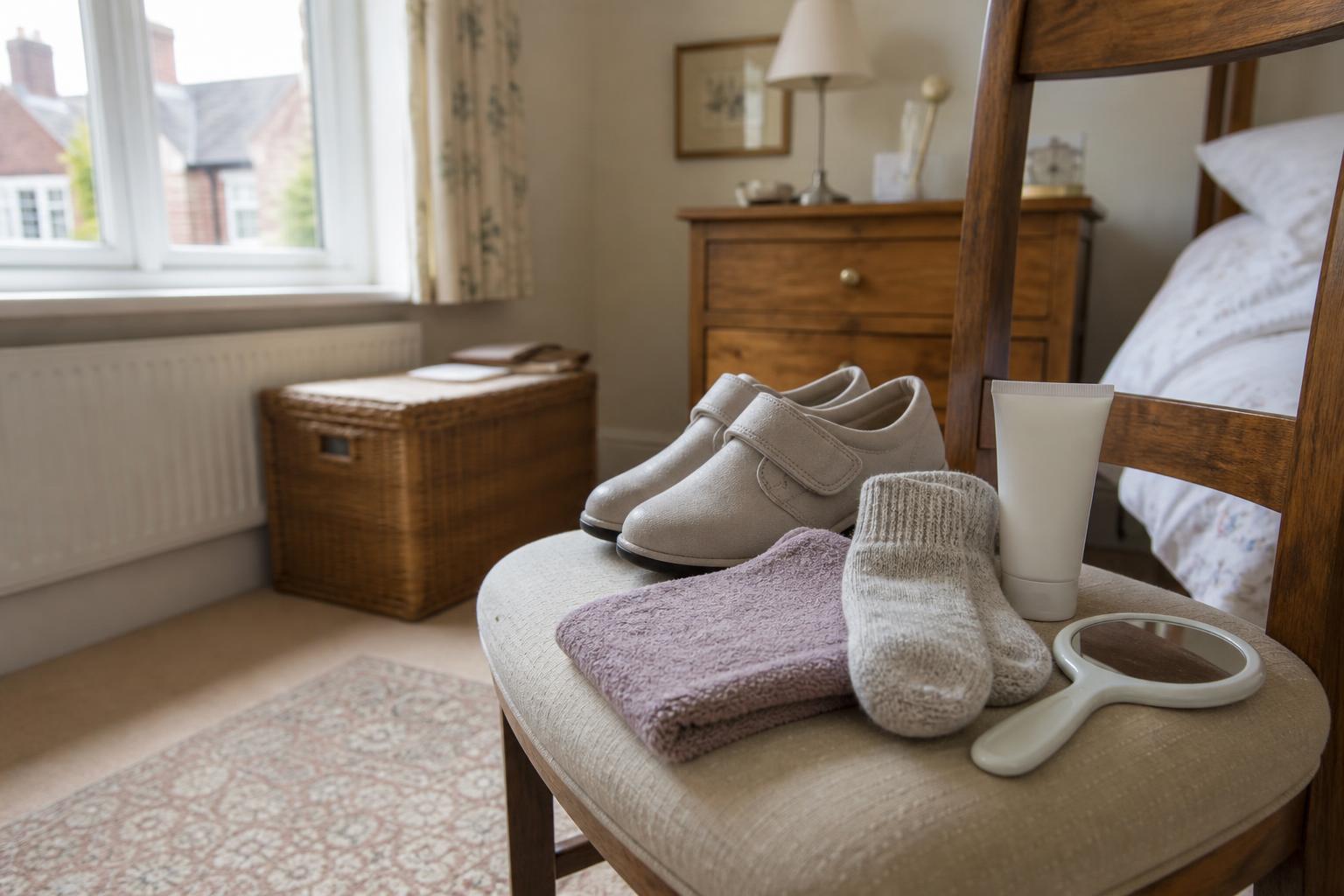
Bunion corn pain is often a pressure problem first, so footwear and skin checks matter before anyone reaches for sharp tools. Generated image
The practical search query this article answers is corn on bunion hurts in shoes. It is for someone with a bunion, big toe joint bump, hard skin, or a painful corn that rubs in shoes or makes walking uncomfortable. This article belongs to the pillar Corn, callus, cracked heel, and skin discomfort relief.
Why bunions can lead to corn pain
A bunion changes the shape of the forefoot. The big toe can lean toward the smaller toes, the joint can become more prominent, and shoes that used to feel fine may start rubbing one focused area again and again.
That repeated pressure is why a bunion can come with hard skin, callus, or a corn. NHS bunion guidance says bunions can cause hard or swollen skin and pain that is usually worse when wearing shoes and walking. If the pain sits where the shoe presses, the bunion shape and the footwear pressure both need checking.
A corn is not just dry skin. Dermatology guidance describes corns and calluses as localised thickened skin caused by pressure and friction, with corns often painful or inflamed. That is why a small hard area can hurt more than its size suggests.
Why cutting at it can make things worse
When a corn sits over a bunion, it is tempting to cut it flat or dig the hard centre out. That can leave broken skin over an area that is already under pressure. If the shoe continues to rub, the sore area can quickly become more painful.
NHS advice on corns and calluses is clear that older people, people with diabetes, circulation problems, or a weakened immune system should not try to treat corns and calluses themselves. The same page warns not to cut them off yourself, which makes self cutting a poor shortcut when the foot is higher risk.
The Royal College of Podiatry explains that corns form over bony areas and can have a central core that presses on a nerve. It also warns against cutting corns yourself, especially if you are elderly or have diabetes, and says acid corn plasters can burn healthy skin. The useful point is simple: pressure relief and careful reduction matter more than aggressive home removal.
What to check before treating it as routine
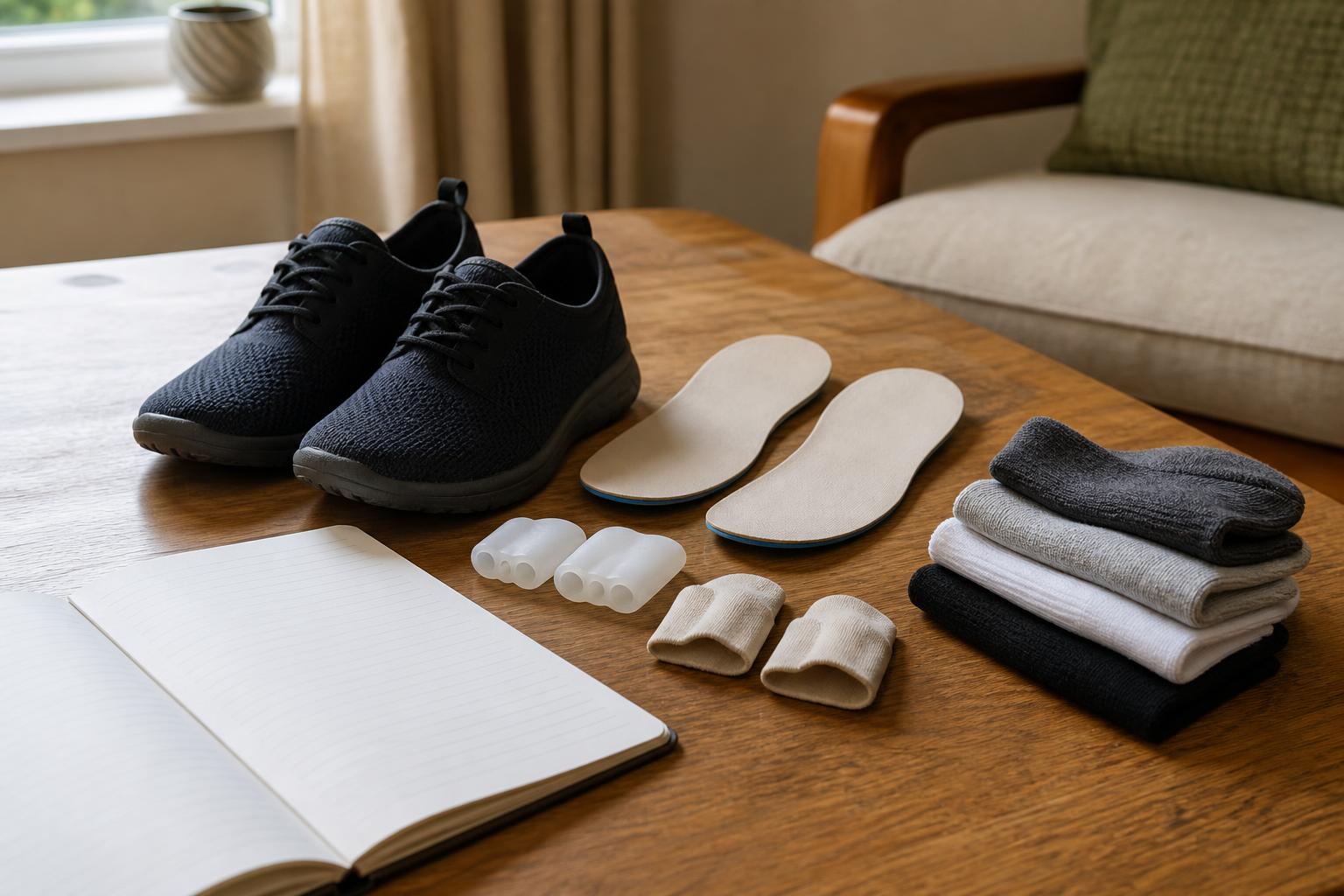
A practical pressure check looks at shoes, socks, toe room, and where the hard skin is being rubbed. Generated image
Look at the skin around the bunion and between the first and second toes. Check whether the area is red, hot, swollen, cracked, bleeding, discharging, suddenly darker, or too painful to touch. Also check whether the shoe is pressing directly on the bump or squeezing the toes together.
If diabetes is involved, be more cautious. NICE says diabetes foot checks look at skin, ulcers, hard skin, inflammation, infection, sensation, blood flow, foot shape, and footwear. So a corn over a bunion is not just a skin problem when feeling, circulation, or footwear pressure may change the risk.
Diabetes UK also advises people to check their feet, cut nails carefully, avoid blades and corn plasters, and get expert advice. If there is diabetes, numbness, poor circulation, a wound, or signs of infection, do not try to solve the corn with sharp tools or acid treatments at home.
What can help the pressure day to day
The most useful home step is often reducing pressure rather than attacking the corn. Wider shoes, a low heel, a soft sole, cushioned socks, and avoiding tight pointed footwear can reduce rubbing around the bunion.
NHS bunion advice suggests wide shoes with a low heel and soft sole, plus bunion pads to reduce rubbing. For corns and calluses, NHS advice also points toward wide well fitting supportive shoes, soft insoles, heel pads, moisturising, and avoiding long periods of standing when pain is severe. Together, that supports a pressure first approach to painful hard skin.
Mayo Clinic notes that bunions can come with corns or calluses where the first and second toes rub together, plus ongoing pain and difficulty finding shoes that fit. If the corn keeps returning in the same place, the repeated rubbing pattern is part of the problem.
When home visit foot care may help
Home visit foot care may help when the problem is stable but painful, the hard skin is difficult to manage safely, shoes are uncomfortable, or the person cannot comfortably travel to a clinic. The visit can focus on careful corn or callus reduction where appropriate, checking nearby skin, and discussing pressure relief.
This is especially relevant for older adults, carers, and people with reduced mobility. Age UK says foot care in later life can relieve pain, reduce infection risk, and help people who are unable to look after their own feet. That makes help with foot care at home a practical comfort and safety issue, not a cosmetic extra.
For RMFC patients in Surrey, the useful enquiry is specific. Explain where the corn or hard skin sits, whether there is a bunion, what shoes make it worse, whether walking is painful, and whether diabetes, poor circulation, numbness, blood thinners, wounds, redness, swelling, or discharge are involved. You can contact Rithik's Mobile Foot Care with those details before booking.
A simple decision rule
If the skin is hard, painful in shoes, and clearly linked to pressure, think pressure first. Do not cut it, dig it, or use strong treatments without checking whether your foot is higher risk.
If there is diabetes, poor circulation, numbness, broken skin, bleeding, discharge, spreading redness, heat, swelling, or severe pain, pause routine foot care and seek medical advice. If the foot looks stable but the corn keeps hurting or returning, home visit foot care may be a sensible next step.
Key Takeaways
- A bunion can create shoe pressure that leads to hard skin, callus, or a painful corn.
- Do not cut or dig at a corn over a bunion, especially if you are older, diabetic, or have circulation or sensation problems.
- Check for redness, heat, swelling, bleeding, discharge, broken skin, sudden colour change, and severe pain before treating it as routine.
- Wider shoes, cushioned socks, padding, moisturising, and reducing rubbing may help pressure, but they do not remove the bunion itself.
- Home visit foot care may help with stable corn or callus discomfort when travel, bending, eyesight, or mobility make self care harder.
Bunion corn pain is usually a pressure problem before it is a skin problem. The safer plan is to check the skin, reduce rubbing, avoid sharp or acid treatments, and get the right level of help if the corn keeps hurting or the foot is higher risk. For many older adults and carers, a calm home visit can make that decision easier.
Need Professional Foot Care?
Book a home visit and get expert treatment without leaving your house