
Breathless Cutting Toenails: What Helps

If bending to reach toenails causes breathlessness, the safer answer is planning, support, and knowing when to get medical advice. Generated image
The practical search query this article answers is breathless cutting toenails. It is for an older adult, partner, adult child, or carer who has noticed that bending to reach the feet brings on breathlessness, fatigue, panic, coughing, dizziness, or a need to stop before the nails are safely finished.
Why toenail cutting can make breathing feel harder
Toenail cutting asks more from the body than people realise. The person may need to bend forwards, hold the leg still, see a small nail edge, grip clippers, breathe steadily, and then get back upright. If they already live with breathlessness, heart problems, lung disease, frailty, weight change, anxiety, or poor stamina, that position can turn a routine nail trim into a stressful task.
The NHS says shortness of breath is not always serious, but it can sometimes need urgent help, especially with severe difficulty breathing, chest tightness, pain spreading to the arm, back, neck, or jaw, blue or grey lips or skin, sudden confusion, coughing blood, or leg pain and swelling. That means new or severe breathlessness should be treated as a health concern first, not a foot care inconvenience.
The commercial reason this topic matters for RMFC is clear. The searcher is often not looking for a generic foot health lesson. They need home visit foot care, mobile foot care, podiatrist at home, chiropodist at home, or toenail cutting at home because the physical position needed for self care has become the real barrier.
When to pause and get medical advice first
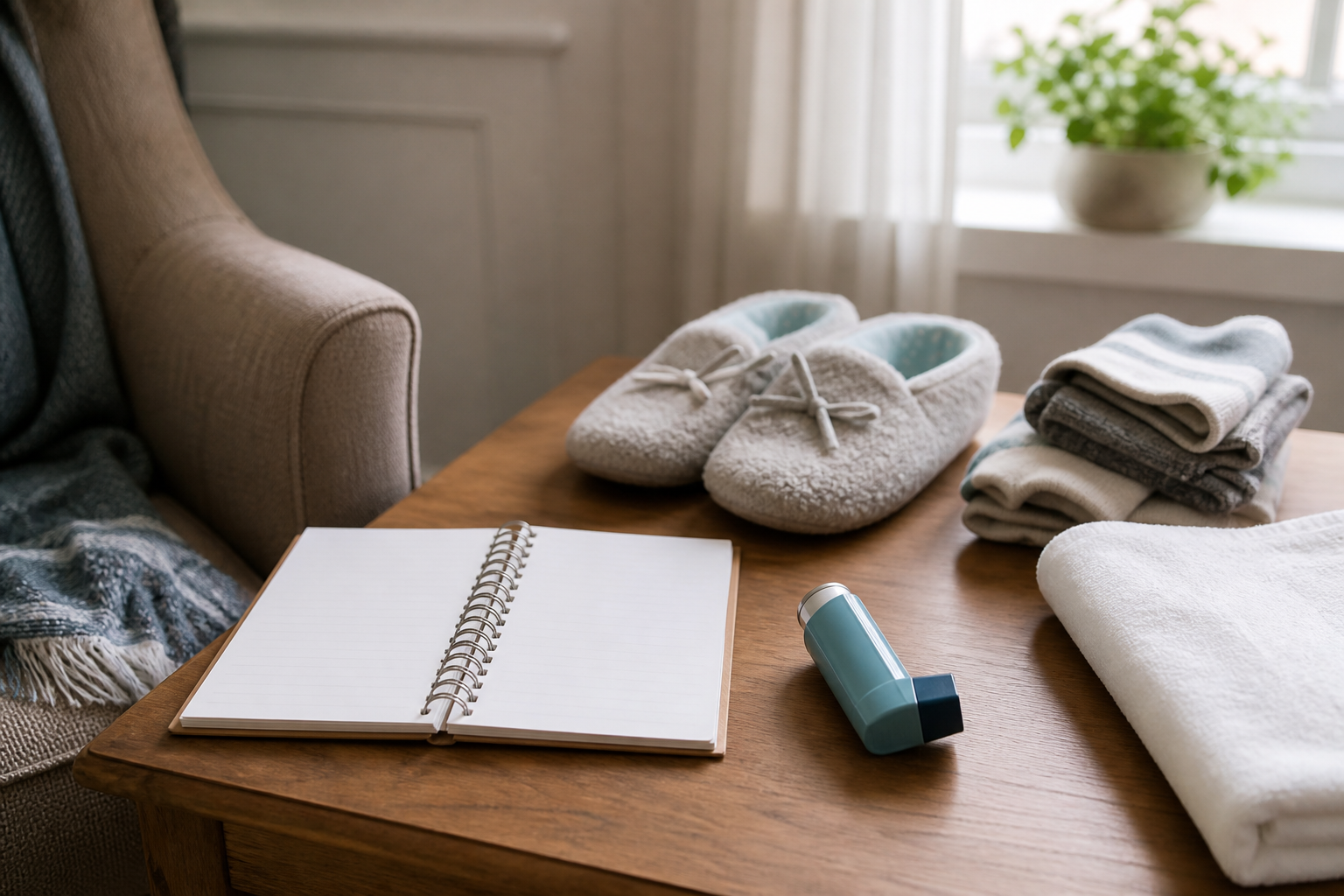
Before booking foot care, note when breathlessness happens and whether any warning signs are present. Generated image
Pause routine foot care if breathlessness is new, worse than usual, happening at rest, linked with chest pain, fainting, confusion, blue lips, coughing blood, one sided leg swelling, feverish symptoms, or the person cannot speak normally. Nail cutting can wait when breathing has changed.
Asthma and Lung UK describes breathlessness as an important symptom, even though their public page did not provide detailed extractable guidance during this run. The practical point remains conservative: if breathlessness is unusual for the person, worsening, or frightening, seek appropriate health advice before treating the problem as ordinary nail care. For stable long term breathlessness, plan the foot care around the person's best time of day and usual breathing plan.
Also check the feet before anyone cuts. Look for redness, heat, swelling, broken skin, discharge, severe pain, sudden colour change, a nail digging into skin, or hard skin someone is tempted to cut with a blade. If breathing is difficult and the foot also looks worrying, the safest next step is medical advice before routine care.
What families can change at home
Do not ask the person to bend over a bath edge, perch on a low stool, twist on a bed, or hold their breath while trying to reach. Choose a firm chair, good light, clear floor space, and a position where both feet can be supported. The aim is to reduce effort, not prove that the person can still manage.
Living Made Easy provides impartial advice and guidance on aids, equipment, and practical barriers to independent living. That is relevant because the right setup should make everyday tasks easier, while the wrong setup can make breathlessness, bending, and balance worse.
If the person is also unsteady, treat this as a falls risk. NICE falls guidance includes home hazard assessment and tailored approaches for people at risk, which supports a simple rule for foot care: do not create an avoidable fall risk for a nail trim.
Why feet still need checking
Avoiding nail cutting for a few weeks may feel safer, but neglected feet can create their own problems. Long nails can catch on socks, press into shoes, scratch nearby toes, or make someone choose loose slippers that feel easier but give less support. Hard skin, cracked heels, corns, swelling, and shoe pressure can also change how someone walks.
Age UK explains that foot care in later life can reduce pain, infection risk, and falls risk, and that basic services may include toenail cutting, with some access at home for people who are housebound. That supports the practical value of getting suitable help when older people cannot look after their own feet.
If diabetes is involved, be more cautious. Diabetes UK explains that nerve and blood vessel damage can reduce feeling and slow healing in the feet. If the person cannot bend because they become breathless, they may also be unable to inspect the soles properly, so small changes can be easier to miss.
When a home visit is a sensible option
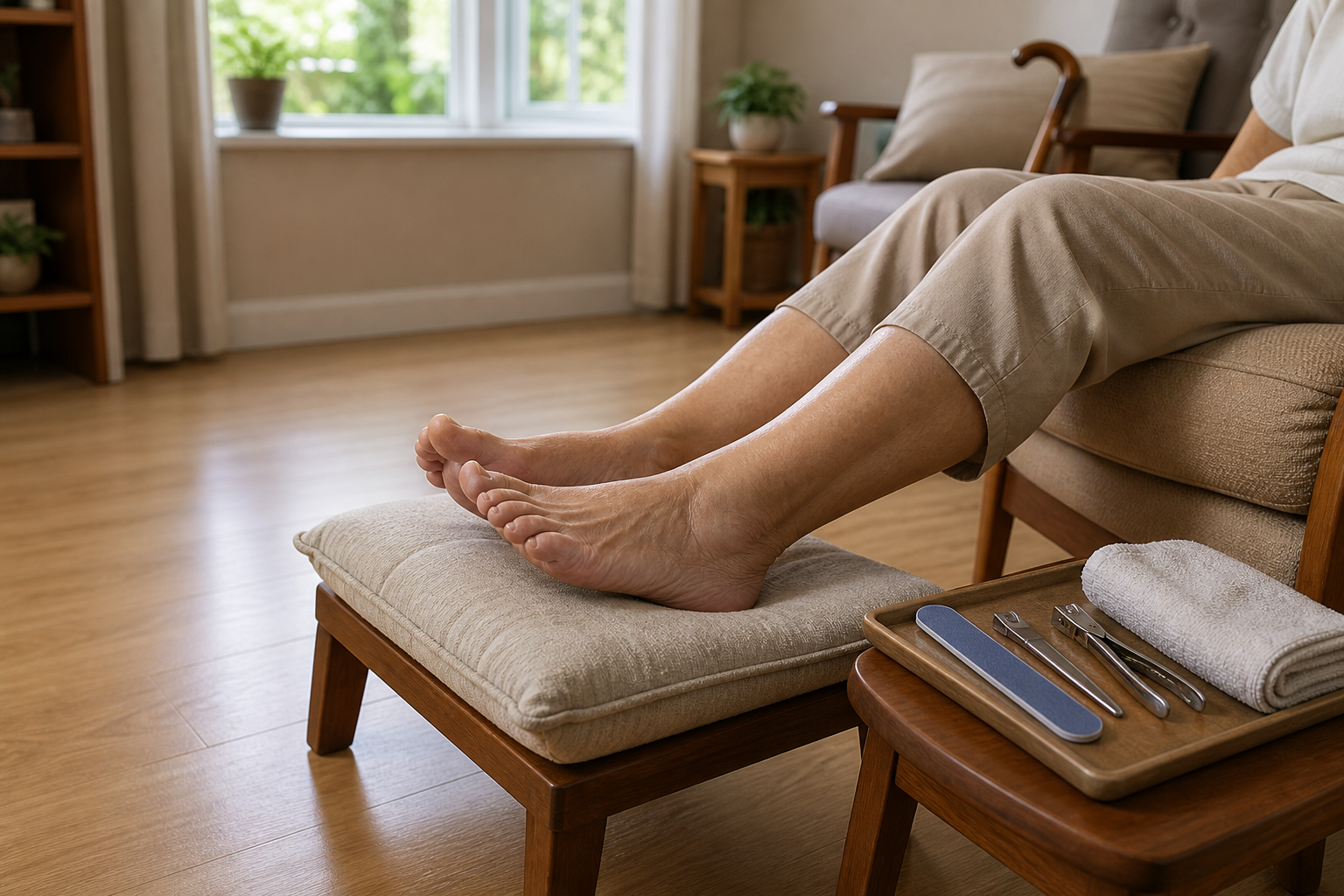
Home visit foot care can remove the travel and bending barrier when the foot problem is suitable for routine care. Generated image
A home visit can help when the foot issue is routine but the body position is not. Common examples include long toenails, thick nails, hard skin, cracked heels, corns, sore shoes, or a carer who is worried that bending, rushing, or poor visibility will make the appointment unsafe.
HSE guidance on care in people's own homes says risks vary according to the individual's needs, the environment, the type of care, and the competence of the person providing it. For mobile foot care, that means the home setup and the person both matter, not only the nail length.
For Surrey families, RMFC can help with routine home visit foot care where suitable, including toenail cutting, thickened nails, corns, callus, cracked heels, and general foot comfort. If breathlessness is new, severe, worsening, or medically concerning, health advice should come first. If breathing is stable but bending and travel are the barriers, a calm home appointment may be the safer practical route.
How to explain the problem before booking
A useful enquiry is simple. Say that bending to cut toenails makes the person breathless. Add whether this is new or usual for them, whether they use inhalers or oxygen, whether walking to a clinic is difficult, and whether there is chest pain, dizziness, falls, swelling, wounds, diabetes, poor circulation, reduced feeling, or blood thinner use.
Carers UK recognises that arranging support for someone can feel difficult when you do not know where to start. Foot care often sits in that grey area between personal care, health worry, and family logistics, so clear notes help turn worry into a practical plan.
If the person feels embarrassed or defensive, keep the conversation about comfort and independence. If memory problems are involved, Alzheimer's Society guidance on washing and dressing is a reminder that personal care should protect privacy, preferences, and dignity. Even with feet, calm consent is safer than pressure.
Key Takeaways
- If breathlessness is new, severe, worsening, or linked with chest pain, confusion, fainting, or blue lips, get medical advice before routine foot care.
- Toenail cutting can become unsafe when bending, breath holding, poor balance, poor eyesight, or fatigue are part of the task.
- A stable chair, good light, clear floor space, and supported feet are safer than cutting nails while twisting, perching, or bending over a bath.
- Diabetes, poor circulation, wounds, swelling, infection signs, or reduced feeling should lower the threshold for professional or medical advice.
- Home visit foot care can help when the foot problem is routine but breathlessness, travel, bending, or family confidence makes self care difficult.
Breathless cutting toenails is not a small issue if the position makes someone feel unsafe. First, rule out new or worrying breathlessness. Then check the feet, reduce bending and fall risk, and decide whether the nail problem is suitable for routine home visit foot care. If the concern is stable and practical, RMFC can help make foot care calmer at home. If breathing, wounds, infection signs, diabetes changes, or severe pain are involved, medical advice should come first.
Need Professional Foot Care?
Book a home visit and get expert treatment without leaving your house