
Bed Bound Foot Care at Home: What Helps
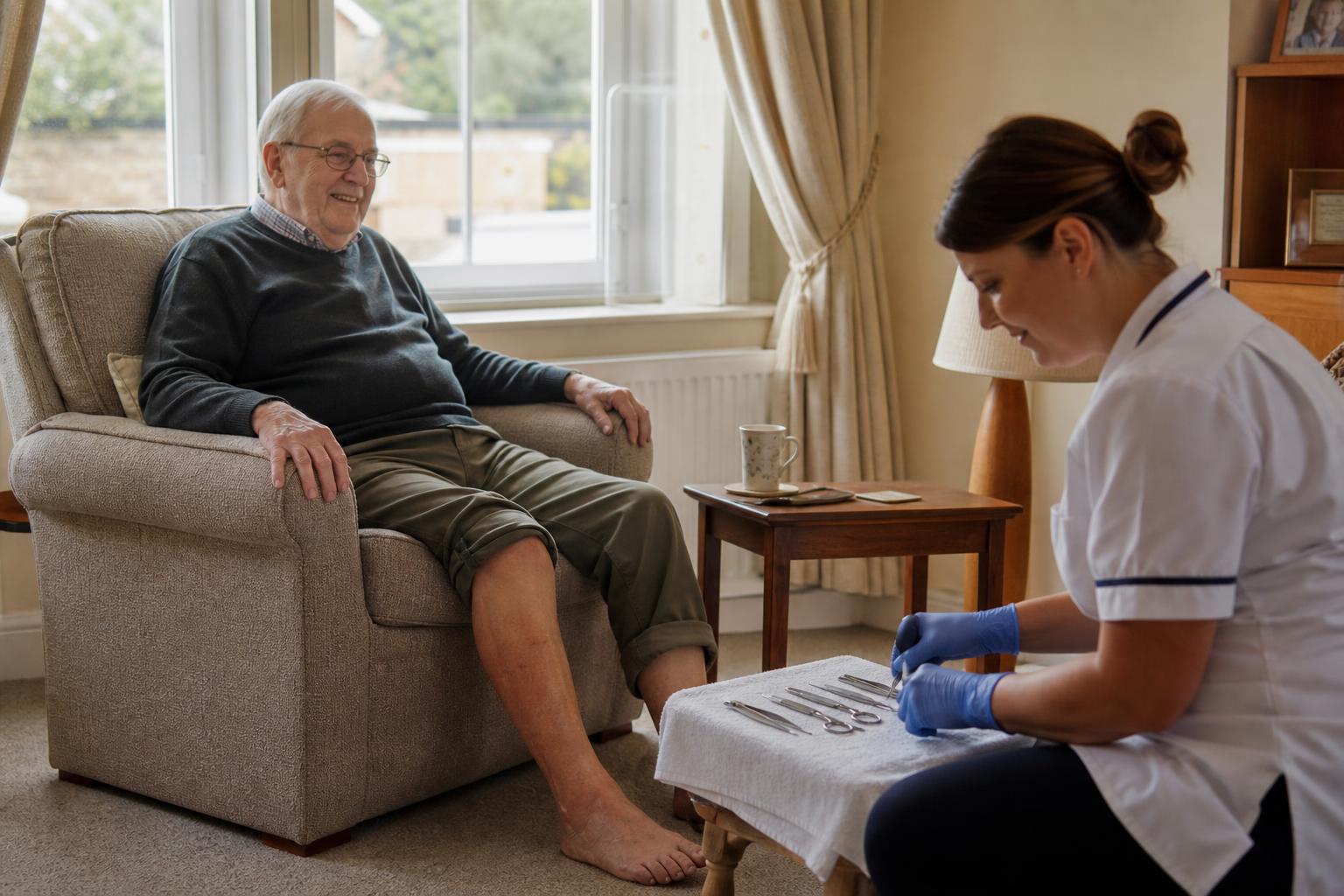
Bed bound foot care is easier to plan when the setup is calm, accessible, and focused on comfort before nail care.
The practical search query this article answers is bed bound foot care at home. It is for the family member, carer, spouse, or adult child who can see that an older or disabled person needs foot care, but bed rest, frailty, pain, transfers, pressure risk, diabetes, dementia, or reduced mobility make ordinary toenail cutting and foot checks difficult.
Why bed bound foot care is different
When someone is bed bound, foot care is not just a grooming task. The problem is access. The person may not be able to sit safely in a chair, bend the knees comfortably, hold the foot still, describe pain clearly, or travel to a clinic. That changes how families should think about toenail cutting, hard skin, heel checks, and appointment planning.
This is why search phrases such as home visit foot care, mobile foot care, podiatrist at home, chiropodist at home, and toenail cutting at home matter. The person searching is often trying to solve a practical care problem: the feet need attention, but the usual route to care is no longer realistic.
Age UK notes that foot care in later life can reduce pain, infection risk, and falls risk, and that some services can be accessed at home if someone is housebound. For a bed bound person, that home access point is often the difference between routine care happening and foot problems being left until they hurt.
The Royal College of Podiatry explains that ageing feet can become more fragile, painful, and harder to care for, especially when mobility is affected. In practical terms, routine foot care protects comfort and movement, even when the person is not walking far.
Start with a skin and pressure check
Before anyone trims a nail, look at the whole foot in good light. Check the heels, soles, sides of the feet, tops of the toes, nail edges, and between the toes. Look for redness, purple or blue colour change, heat, swelling, broken skin, blisters, discharge, new odour, or any area that looks different from the other foot.
The NHS explains that pressure ulcers often form on bony areas such as the heels and are more likely when a person has difficulty moving. That makes heel skin changes in bed a reason to pause and get the right advice, not a side detail before nail cutting.
If the person has diabetes, be even more cautious. Diabetes UK explains that diabetes can damage nerves and blood supply in the feet, so pain, cuts, rubbing, or pressure may not be felt normally. For carers, the important step is to treat new diabetic foot changes as higher risk rather than routine foot care.
NICE guidance on diabetic foot problems is written for clinical pathways, but it reinforces the same household rule: diabetic foot risk needs the right route. If there is broken skin, infection, sudden swelling, colour change, severe pain, or loss of feeling, seek medical advice before arranging routine nail care.
When nail cutting should wait
Do not cut toenails if the toe is red, hot, swollen, weeping, bleeding, very painful, or has pus. Do not cut if the nail corner has grown into the skin, if the person cannot keep the foot still, if ordinary clippers need force, or if the carer cannot see the nail edge clearly.
The NHS says toenails can become thicker or more brittle as people get older, and advises podiatry help when toenails are too tough to cut or cannot be reached. That wording fits many bed bound situations exactly: the issue is not laziness, it is safe access.
If a nail edge is painful or hidden in the skin, do not dig down the side. NHS ingrown toenail advice warns against cutting the toenail when trying to manage an ingrown toenail at home. A bed bound person may struggle to move away quickly if it hurts, so painful nail corners need proper assessment.
Some neurological conditions can make feet harder to position or keep still. Parkinson's UK describes foot and walking problems that can affect comfort and movement, and the Stroke Association explains how physical changes such as foot drop can affect the foot after stroke. Those examples matter because movement changes can alter foot care and post stroke foot position can change pressure.
Make the bedside setup safer
A good setup reduces strain for the person and the carer. Use bright light, clear floor space, a towel, the usual socks and slippers, and enough room for the practitioner to work without twisting. Keep pets away during the appointment. If the person needs a hoist, hospital bed adjustment, or help turning, plan that before the visit starts.
The Health and Safety Executive's manual handling advice is aimed at workplace safety, but the household lesson is still useful: avoid awkward handling, poor posture, and unnecessary lifting. For family carers, reducing manual handling strain is part of making care safer.
If dementia is involved, the setup should also protect dignity and calm. Alzheimer's Society guidance on washing and dressing highlights privacy, reassurance, and how personal care can feel difficult as dementia progresses. Foot care is not the same task, but dignity during personal care is just as important when someone is anxious about their feet being touched.
Adaptive equipment and home layout can also affect whether care is safe. AbilityNet's home adaptation information is broad, but it points to the bigger issue: the home environment can make daily care easier or harder.
What carers should write down before a visit
Short notes are more useful than vague worry. Write down which foot or toe is the problem, when it started, whether pain is constant or only with socks and shoes, whether there is diabetes, poor circulation, reduced feeling, blood thinning medication, recent falls, a wound history, dementia, Parkinson's, stroke, or recent hospital discharge.
Carers UK says arranging support can feel difficult because families may not know where to start. Turning foot care concerns into a clear note makes arranging practical help less overwhelming.
If foot care is only one part of a wider care problem, it may also be worth exploring a needs assessment. GOV.UK explains that a social care assessment can look at healthcare, equipment, adaptations, and help at home, so wider home support may be relevant if several daily tasks have become unsafe.
Keep the person's normal footwear nearby, even if they are not walking much. Socks, slippers, pressure points, and shoe fit can explain why a nail is catching or why hard skin keeps returning.
What home visit foot care can help with
A suitable home visit can help with routine toenail cutting, thick or hard nails where appropriate, rough edges, basic foot checks, pressure areas caused by footwear or socks, and advice on what to watch between visits. It can also reduce pressure on family members who feel responsible but are not confident using clippers safely.
For bed bound adults in Surrey, home visit foot care is commercially and practically relevant because the main barrier is access. The person may not be able to travel, transfer easily, wait in a clinic, or sit in a standard treatment chair. Bringing care to the home lets the appointment start from the person's real position and comfort level.
If the need is routine and there are no urgent warning signs, booking a home visit with Rithik's Mobile Foot Care can be a practical next step. If there is broken skin, pus, spreading redness, severe pain, sudden swelling, feverish symptoms, a pressure sore, or a diabetes related change, seek medical advice first.
Key Takeaways
- Bed bound foot care is an access and safety problem, not just a grooming task.
- Check heels, skin, toes, nail edges, and between the toes before anyone cuts nails.
- Do not cut if there is redness, heat, swelling, pus, bleeding, broken skin, severe pain, or a hidden nail corner.
- Diabetes, reduced feeling, pressure sores, dementia, Parkinson's, stroke, or recent hospital discharge should lower the threshold for professional advice.
- A clear bedside setup and short symptom notes make a home visit safer and more useful.
When someone is bed bound, foot care needs more thought than ordinary nail trimming. The safest route starts with a skin and pressure check, clear warning signs, a calm bedside setup, and honest notes about diabetes, pain, movement, and recent changes. If the foot looks healthy and the need is routine, home visit foot care can make care easier to arrange. If the foot shows warning signs, medical advice should come first.
Need Professional Foot Care?
Book a home visit and get expert treatment without leaving your house